College Sonar
Compare collegesHow it worksFor colleges

Loading

Explore

Look up a collegeDegrees near youCompare collegesTop degrees by stateWhat colleges are like

Understand

How it worksHow badges are awarded

About

For collegesContact us

College Sonar by Optivara © 2026

Florida State University

Tallahassee, FL

Photo: Ernie Stephens · CC0

Selective · 59 of 65 programs pay back

33,491 undergraduates, 17 students for every faculty member · Division I-FBS athletics

What this college is like

Best Financial Gain

Estimated over 20 years

$876k

Computer Engineering

Worst Financial Gain

Estimated over 20 years

-$66k

Dance

Customize by family incomeUnder $30k$30k to $48k$48k to $75k$75k to $110kOver $110k
Program20 yr Financial Gain
  1. 1Computer Engineering$114,802 annual earnings 4 years after graduation, a median across 22 graduates$876k
  2. 2Management Information Systems and Services$103,648 annual earnings 4 years after graduation, a median across 108 graduates$733k
  3. 3Industrial Engineering$96,504 annual earnings 4 years after graduation, a median across 33 graduates$642k
  4. 4Management Sciences and Quantitative Methods$94,887 annual earnings 4 years after graduation, a median across 72 graduates$622k
  5. 5Security Science and Technology$93,841 annual earnings 4 years after graduation, a median across 49 graduates$609k
  6. 6Electrical Electronics and Communications Engineering$93,740 annual earnings 4 years after graduation, a median across 45 graduates$607k
  7. 7Computer and Information Sciences General$93,727 annual earnings 4 years after graduation, a median across 409 graduates$607k
  8. 8Insurance$92,064 annual earnings 4 years after graduation, a median across 127 graduates$586k
  9. 9Accounting and Related Services$91,056 annual earnings 4 years after graduation, a median across 223 graduates$573k
  10. 10Chemical Engineering$90,815 annual earnings 4 years after graduation, a median across 84 graduates$570k
View all 65 programs →
  1. 11Mechanical Engineering$89,622 annual earnings 4 years after graduation, a median across 129 graduates$555k
  2. 12Finance and Financial Management Services$87,089 annual earnings 4 years after graduation, a median across 585 graduates$523k
  3. 13Marketing$84,981 annual earnings 4 years after graduation, a median across 486 graduates$496k
  4. 14Civil Engineering$84,340 annual earnings 4 years after graduation, a median across 103 graduates$488k
  5. 15Real Estate$80,900 annual earnings 4 years after graduation, a median across 133 graduates$444k
  6. 16Registered Nursing Nursing Administration Nursing Research and Clinical Nursing$78,811 annual earnings 4 years after graduation, a median across 104 graduates$417k
  7. 17Statistics$77,605 annual earnings 4 years after graduation, a median across 54 graduates$402k
  8. 18Business Administration Management and Operations$77,320 annual earnings 4 years after graduation, a median across 245 graduates$398k
  9. 19Business/Commerce General$74,716 annual earnings 4 years after graduation, a median across 56 graduates$365k
  10. 20Design and Applied Arts$73,888 annual earnings 4 years after graduation, a median across 46 graduates$354k
  11. 21Economics$73,527 annual earnings 4 years after graduation, a median across 332 graduates$350k
  12. 22Biochemistry Biophysics and Molecular Biology$69,875 annual earnings 4 years after graduation, a median across 41 graduates$303k
  13. 23Mathematics$68,131 annual earnings 4 years after graduation, a median across 52 graduates$281k
  14. 24Political Science and Government$68,059 annual earnings 4 years after graduation, a median across 390 graduates$280k
  15. 25Communication Disorders Sciences and Services$67,180 annual earnings 4 years after graduation, a median across 83 graduates$269k
  16. 26Area Studies$67,110 annual earnings 4 years after graduation, a median across 20 graduates$268k
  17. 27Atmospheric Sciences and Meteorology$66,943 annual earnings 4 years after graduation, a median across 20 graduates$266k
  18. 28Chemistry$66,724 annual earnings 4 years after graduation, a median across 32 graduates$263k
  19. 29Geological and Earth Sciences/Geosciences$66,157 annual earnings 4 years after graduation, a median across 18 graduates$256k
  20. 30Public Relations Advertising and Applied Communication$65,941 annual earnings 4 years after graduation, a median across 121 graduates$253k
  21. 31Apparel and Textiles$64,807 annual earnings 4 years after graduation, a median across 182 graduates$239k
  22. 32International Relations and National Security Studies$63,984 annual earnings 4 years after graduation, a median across 361 graduates$228k
  23. 33Hospitality Administration/Management$62,673 annual earnings 4 years after graduation, a median across 192 graduates$212k
  24. 34Human Development Family Studies and Related Services$62,663 annual earnings 4 years after graduation, a median across 185 graduates$211k
  25. 35Physiology Pathology and Related Sciences$61,342 annual earnings 4 years after graduation, a median across 137 graduates$195k
  26. 36Sports Kinesiology and Physical Education/Fitness$60,909 annual earnings 4 years after graduation, a median across 138 graduates$189k
  27. 37Radio Television and Digital Communication$60,876 annual earnings 4 years after graduation, a median across 212 graduates$189k
  28. 38Dietetics and Clinical Nutrition Services$60,380 annual earnings 4 years after graduation, a median across 45 graduates$182k
  29. 39Entrepreneurial and Small Business Operations$58,824 annual earnings 4 years after graduation, a median across 23 graduates$163k
  30. 40Social Sciences General$58,460 annual earnings 4 years after graduation, a median across 327 graduates$158k
  31. 41Allied Health Diagnostic Intervention and Treatment Professions$57,647 annual earnings 4 years after graduation, a median across 20 graduates$148k
  32. 42Special Education and Teaching$57,573 annual earnings 4 years after graduation, a median across 40 graduates$147k
  33. 43Criminal Justice and Corrections$57,417 annual earnings 4 years after graduation, a median across 593 graduates$145k
  34. 44Teacher Education and Professional Development Specific Subject Areas$57,287 annual earnings 4 years after graduation, a median across 85 graduates$143k
  35. 45History$56,834 annual earnings 4 years after graduation, a median across 82 graduates$137k
  36. 46Psychology General$54,728 annual earnings 4 years after graduation, a median across 666 graduates$110k
  37. 47Natural Resources Conservation and Research$54,288 annual earnings 4 years after graduation, a median across 188 graduates$105k
  38. 48English Language and Literature General$52,602 annual earnings 4 years after graduation, a median across 468 graduates$83k
  39. 49Geography and Cartography$52,537 annual earnings 4 years after graduation, a median across 32 graduates$82k
  40. 50Teacher Education and Professional Development Specific Levels and Methods$51,863 annual earnings 4 years after graduation, a median across 96 graduates$74k
  41. 51Liberal Arts and Sciences General Studies and Humanities$51,587 annual earnings 4 years after graduation, a median across 107 graduates$70k
  42. 52Biology General$51,256 annual earnings 4 years after graduation, a median across 195 graduates$66k
  43. 53Romance Languages Literatures and Linguistics$51,157 annual earnings 4 years after graduation, a median across 50 graduates$65k
  44. 54Social Work$50,723 annual earnings 4 years after graduation, a median across 114 graduates$59k
  45. 55Sociology$50,612 annual earnings 4 years after graduation, a median across 240 graduates$58k
  46. 56Classics and Classical Languages Literatures and Linguistics$50,542 annual earnings 4 years after graduation, a median across 23 graduates$57k
  47. 57Parks Recreation and Leisure Facilities Management$48,260 annual earnings 4 years after graduation, a median across 25 graduates$28k
  48. 58Philosophy$47,153 annual earnings 4 years after graduation, a median across 42 graduates$14k
  49. 59Film/Video and Photographic Arts$46,180 annual earnings 4 years after graduation, a median across 31 graduates$1,503
  50. 60East Asian Languages Literatures and Linguistics$44,502 annual earnings 4 years after graduation, a median across 16 graduates-$20k
  51. 61Music$44,454 annual earnings 4 years after graduation, a median across 75 graduates-$20k
  52. 62Drama/Theatre Arts and Stagecraft$44,115 annual earnings 4 years after graduation, a median across 76 graduates-$25k
  53. 63Anthropology$42,791 annual earnings 4 years after graduation, a median across 40 graduates-$42k
  54. 64Fine and Studio Arts$41,067 annual earnings 4 years after graduation, a median across 151 graduates-$64k
  55. 65Dance$40,892 annual earnings 4 years after graduation, a median across 22 graduates-$66k
Other colleges to consider

Every college here returns more than this one’s best program, within 250 miles. Nothing within 50 miles returns more, so the search was widened to 250 miles rather than showing you almost nothing.

Some of these admit a different share of applicants, marked on each row. A more selective college is a different application, not a free upgrade, and part of why its graduates earn more is who it admitted in the first place.
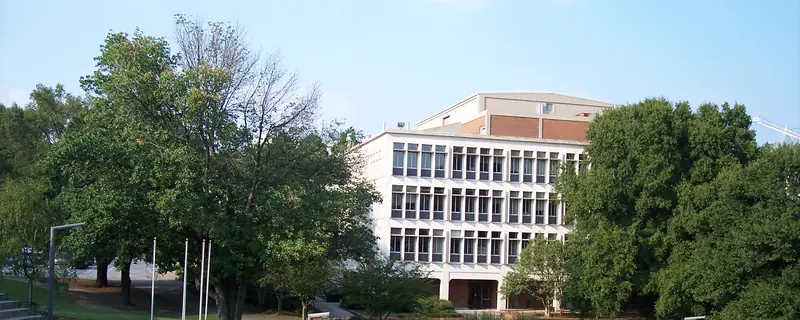
  1. 1Emory University-Oxford CollegeComputer Science · Oxford · 221 mi · $159,541 annual earnings 4 years after graduation, a median across 34 graduates2 campusesadmits 13%$1.53M
  2. 2Georgia Tech campusGeorgia Institute of Technology-Main CampusComputer and Information Sciences General · Atlanta · 230 mi · $150,628 annual earnings 4 years after graduation, a median across 451 graduates$1.47M
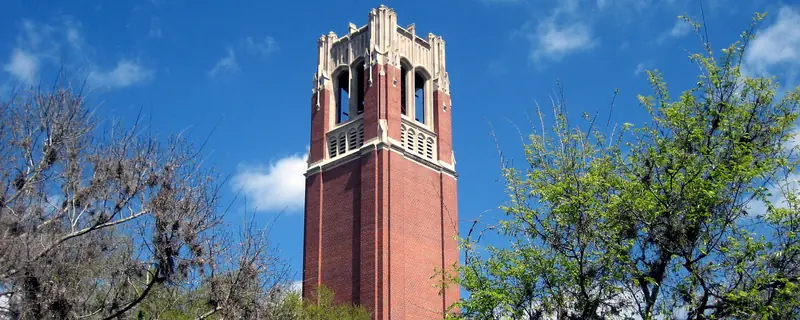
  3. 3Century Tower (University of Florida)University of FloridaComputer Engineering · Gainesville · 129 mi · $128,140 annual earnings 4 years after graduation, a median across 95 graduates2 campuses$1.14M
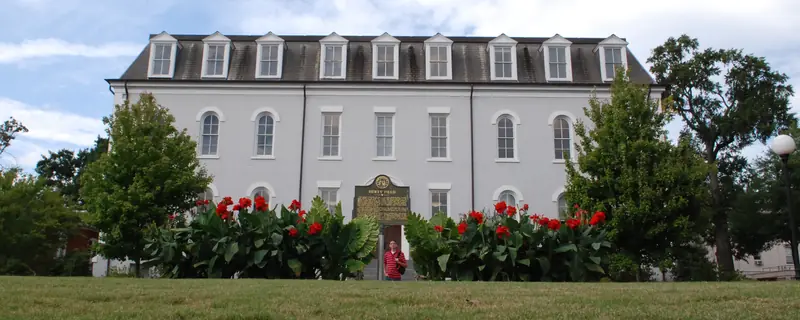
  4. 4MooreHallSouthSideUniversity of GeorgiaManagement Information Systems and Services · Athens · 249 mi · $113,184 annual earnings 4 years after graduation, a median across 194 graduates$888k

Campus photographs: Georgia Institute of Technology-Main Campus by Joseph Zollo (CC BY 2.0); University of Florida by Kate Haskell (CC BY 2.0); University of Georgia by Josh Hallett from Winter Haven, FL, USA (CC BY-SA 2.0)

The same programs elsewhere

Holding the subject fixed and changing the college, for this college’s three strongest programs. The list above compares whole colleges at their best; this one answers the narrower question a student who already knows their subject is actually asking.

Computer Engineering31 colleges pay more
  1. 1Georgia Tech campusGeorgia Institute of Technology-Main CampusAtlanta · 230 mi · $128,497 annual earnings 4 years after graduation, a median across 125 graduates$1.16M
  2. 2Century Tower (University of Florida)University of FloridaGainesville · 129 mi · $128,140 annual earnings 4 years after graduation, a median across 95 graduates2 campuses$1.14M

Campus photographs: Georgia Institute of Technology-Main Campus by Joseph Zollo (CC BY 2.0); University of Florida by Kate Haskell (CC BY 2.0)

Management Information Systems and Services8 colleges pay more
  1. 1MooreHallSouthSideUniversity of GeorgiaAthens · 249 mi · $113,184 annual earnings 4 years after graduation, a median across 194 graduates$888k

Campus photograph: University of Georgia by Josh Hallett from Winter Haven, FL, USA (CC BY-SA 2.0)

Industrial Engineering15 colleges pay more
  1. 1Georgia Tech campusGeorgia Institute of Technology-Main CampusAtlanta · 230 mi · $128,003 annual earnings 4 years after graduation, a median across 217 graduates$1.15M

Campus photograph: Georgia Institute of Technology-Main Campus by Joseph Zollo (CC BY 2.0)

What this college is like

Measured from federal filings, not from a survey. Each figure is compared against four-year colleges, because medians differ too much between sectors for a national comparison to describe anything but the sector.

Teaching
Students per instructor?
17:1
▼more students per instructor than 76% of four-year colleges
Staying and finishing
Come back after year one?
96%
▲higher than 96% of four-year colleges
Finish their credential?
72.7%
▲higher than 91% of four-year colleges
Cost and aid
Yearly cost, family under $30,000?
$5,438
▲cheaper than 92% of four-year colleges
Get a grant from the college?
50%
▼a lower share than 84% of four-year colleges
Receive a Pell Grant?
21%
a lower share than 84% of four-year colleges
The campus
Undergraduates?
33,491
larger than 98% of four-year colleges
Beds per 100 undergraduates?
20
fewer than 92% of four-year colleges
Study fully online?
5%
about typical for four-year colleges
Graduate students, share of enrollment?
19.8%
more than 64% of four-year colleges
Play a varsity sport?
1.6%
fewer than 98% of four-year colleges
Who else is there
Mix of student backgrounds?
61 of 100
about typical for four-year colleges
Choice of subject
Broad subject areas awarded?
26
▲more than 95% of four-year colleges
Also on record
Women and men
56% / 44%
reported, not ranked
Setting
City
reported, not ranked
On-campus housing
Yes
residential
Athletic division
NCAA Division I-FBS
reported, not ranked

Compare every college in this metro

What students are saying

Students and recent alumni of Florida State University, in their own words, on Reddit. Every quotation links to the thread it came from.

What came up most

many threads · August to October 2026
NegativeCampus parking shortages and difficult commuting were a recurring negative topic.
After much trial and error, I’ve come to find that the only way I am guaranteed to find a parking space somewhat close to campus is by getting there between 7:20-7:30am, no matter what weekday.
r/fsu
NegativeFinancial aid, grants, and paying for attendance were discussed mostly negatively.
I am really distraught because I do not have money for my appartment now what do I do. Can i fight this?
r/fsu
MixedStudent housing and nearby apartment conditions were discussed with mixed views.
I signed sort of late and didn’t have much other options (because of price, transportation, other reasons, etc.).
r/fsu
MixedSocial connection, loneliness, and making college life work were discussed with mixed sentiment.
I’ve been on campus in Tallahassee for 2 years now, and I have never felt more miserable in my entire life.
r/fsu
MixedSafety around campus and nearby housing was discussed with mixed concern and reassurance.
There is a heavy police presence in the area of FSU COLLEGE OF LAW LIBRARY. Avoid the area until further notice. More information will be provided when available. No credible threat or danger has been established for the Tallahassee campus.
r/fsu

What students criticized

several threads · November to October 2026
NegativeA first-semester freshman criticized FSU's pervasive party and drinking culture as alienating for non-drinkers.
Even in the honors program, everyone drinks. So for a non drinker, it feels like you're constantly bombarded with this drinking culture
r/fsu
NegativeA student described FSU orientation as exhausting, unhelpful, and overly lecture-based.
They lecture u for 12 hours. It sucks ass honestly.
r/fsu
NegativeA senior said the loss of multiple grants left them unable to afford their apartment and facing substantial unmet need.
I am really distraught because I do not have money for my appartment now what do I do.
r/fsu
NegativeA first-semester student complained that commuter parking required arriving very early and still offered no dependable alternative.
the fact that there is no other option is what grinds my gears.
r/fsu
NegativeA junior described severe loneliness and dissatisfaction with life at FSU/Tallahassee, including dissatisfaction with university healthcare.
I have never felt more miserable in my entire life.
r/fsu

Compare Florida State University with another college · up to four side by side, on return and on what each place is like.

10,733Average annual costAfter grants · In-state · Family income $48k–$75k
86%Finish within six years
33,491Undergraduates
24%Applicants admitted

Where students come from

  • Floridain state80%
  • Georgia3%
  • New Jersey2%
  • New York2%
  • Outside the US1%

Share of the 5,850 students who entered as first-year undergraduates in 2024. The states shown are the three largest outside Florida, so these do not add to 100%.

At a glance
SettingCity
Undergraduates?33,491
Graduate students8,250
Accepts24%
U.S. News national?#59
Admitted students who enroll?31%
WebsiteVisit fsu.edu
AdmissionsAY2024
Applicants78,272
Admitted18,954
Enrolled5,855
SAT middle 50%?1270-1410
ACT middle 50%29-32
Test scores?required
CostAY2022
Published price, out of state?$21,683
Published price, in state?$7,239
Room and board$12,740
Full year’s cost after grants, by income, in state
Under $30k$5,438
$30k-$48k$6,953
$48k-$75k$10,733
$75k-$110k$14,901
Over $110k$16,511

These are in-state figures. A public college charges more to students from other states, and no out-of-state net price is published, so if you would not be a resident here, read the published prices above for the size of the difference.

Aid · AY2023
Average grant?$3,732 to 50%
Pell students?21%
Federal loan debt · October 2026
Students who borrow?20%
Owed at graduation?$13,000
Monthly, over 10 years?$148/mo
Owed if they leave early?$8,250
Outcomes2018 cohort
Graduate in 4 years73%
Graduate in 6 years86%
Return after year 1?96%
Students per faculty17:1
Most-awarded programs, bachelor'sAY2025
Psychology General751 degrees
Finance and Financial Management Services746 degrees
Marketing566 degrees
Criminal Justice and Corrections540 degrees
Biology General500 degrees
AthleticsAY2024
DivisionNCAA Division I-FBS
Athletes476
Share of undergraduates?2%
Athletic aid$7,831,248
StudentsAY2024
Women / men56% / 44%
White57%
Hispanic23%
Black7%
Asian4%
Two or more4%
International2%

Notes and sources

Total gain after 20 years is what a graduate is ahead at that point: what the degree pays above a high-school graduate in the same state, less four years of net price and the wages given up while studying, weighted by the share of students who finish. At this college that share is 86%, and it is the same for every program on this page because the federal data reports completion for the institution rather than for individual programs. Four-year and open-admission colleges are ranked separately and never pooled.

Annual earnings 4 years after graduation is the median earnings of that program’s graduates at that point, for students who received federal aid, and is published by program. There is no program-level cost anywhere in the federal data, so net price is the college’s figure applied to each program alike. That is sound for ordering programs against one another and should not be read as a precise figure for any one of them.

Cost on this page is always net price, never the published sticker price. Net price is the college’s full cost of attendance for a year, meaning tuition, required fees, books and supplies, and housing and food, with grant and scholarship aid from federal, state and institutional sources subtracted. Loans are not subtracted, because a loan is not a discount. It is an average for first-time full-time undergraduates receiving federal aid, reported by the college in the income bands shown, so it describes a typical family in that band rather than any particular one. A student living at home, paying out-of-state rates or holding an outside scholarship will not see this figure.

Federal loan debt comes from the College Scorecard and is a median among students who borrowed, not an average across everyone. A college where few students take loans can show a high figure and a small bill for most families, so the share who borrow is printed above it and neither should be read without the other. It counts federal student loans only: private loans and Parent PLUS borrowing are not in it and are not published anywhere comparable, which makes this a floor on what a family owes rather than a total. The figure for students who leave without finishing is the same loans without the degree they were taken for. Default rates are deliberately absent: federal repayment was suspended, so the published three-year rate is zero at almost every college in the country and says nothing about any of them.

Most-awarded programs are degrees conferred in AY2025, first majors only, so a double major counts once. Where two programs are within a few degrees of each other the order between them is not meaningful.

Quotations from students were found by a language model searching Reddit, and selected from threads discussing this college in the window shown beside them. Reddit only, so this is not a survey and not a representative sample: who posts and how much varies enormously by the size and type of a college, and for that reason nothing there is scored, totalled or compared between colleges. Post dates are the model’s own reckoning rather than a retrieved field, so treat them as inside the window and not as exact. Each quotation links to its thread.

What this college is like compares each measure against four-year colleges, because medians differ too much between sectors for a national comparison to describe anything but the sector. A position of “higher than 90%” means the college matches or beats nine in ten of them on that measure, which is why the measured figure is printed beside it. Six of those measures have a better end and carry a mark; the rest are positions with no better end and carry none. There is no overall score, because combining them would need weights and the weights would be our opinion rather than a measurement.

Sources. IPEDS, the Department of Education’s annual survey, except where stated. Each block in the column beside shows its own year, because the underlying files are released on different schedules and a single date across all of them would be false. Published tuition is a sticker price and is never used as a cost; net price is. Test scores are the middle 50% of enrolled students who submitted a score, not of admitted applicants, which is why they differ from the figures other guides print. Where a US News rank is shown it is the current edition, published as a fact about the college rather than an endorsement of the ranking.

The photograph at the top of this page was taken by a member of the public and published under a license that permits reuse with credit. It is not supplied by the college, is not endorsed by it, and shows one building on one day rather than the campus as a whole. We do not generate campus images or buy stock photographs of real places, because a picture of a campus that is not that campus is a lie about somewhere real. Full credit: “Westcott Building and fountain at Florida State University.jpg”, Ernie Stephens, via Wikimedia Commons. CC0. Source: https://commons.wikimedia.org/wiki/File:Westcott_Building_and_fountain_at_Florida_State_University.jpg. License/status: https://creativecommons.org/publicdomain/zero/1.0/.

Full methodology