
Loading
Waltham, MA
Competitive · 19 of 19 programs pay back
4,177 undergraduates, 10 students for every faculty member · Division III without football athletics
Estimated over 20 years
$920k
Computer Science
Estimated over 20 years
$35k
Area Studies
Every college here returns more than this one’s best program, within 250 miles. Only 27% of students here come from MA, so the search is wider than the usual 50 miles: for a college people travel to, the colleges down the road are not the real alternatives.
Some of these admit a different share of applicants, marked on each row. A more selective college is a different application, not a free upgrade, and part of why its graduates earn more is who it admitted in the first place.
 Stevens Institute of TechnologyApplied Mathematics · Hoboken · 182 mi · $156,419 annual earnings 4 years after graduation, a median across 39 graduates$1.28M
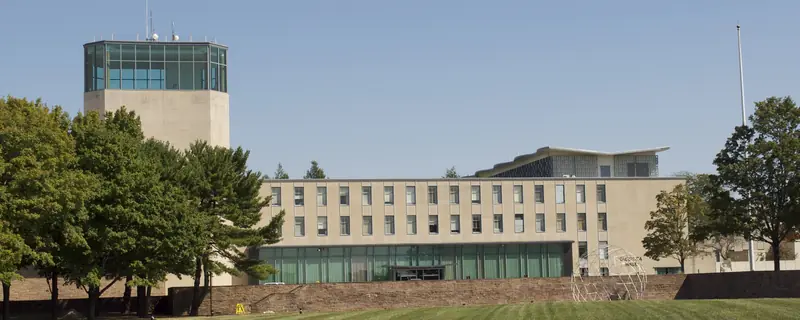 Lehigh UniversityComputer Science · Bethlehem · 245 mi · $141,691 annual earnings 4 years after graduation, a median across 71 graduatesadmits under 40%$1.17M
 Rensselaer Polytechnic InstituteComputer Science · Troy · 126 mi · $141,528 annual earnings 4 years after graduation, a median across 242 graduates2 campuses$1.09M
Campus photographs: Stevens Institute of Technology by Sharkface217 (Public domain); Lehigh University by IR393DEME (CC BY-SA 3.0); Rensselaer Polytechnic Institute by Matt H. Wade / UpstateNYer (CC BY-SA 3.0)
Holding the subject fixed and changing the college, for this college’s three strongest programs. The list above compares whole colleges at their best; this one answers the narrower question a student who already knows their subject is actually asking.
 Massachusetts Institute of TechnologyCambridge · 9 mi · $225,141 annual earnings 4 years after graduation, a median across 213 graduatesadmits under 40%$2.62M
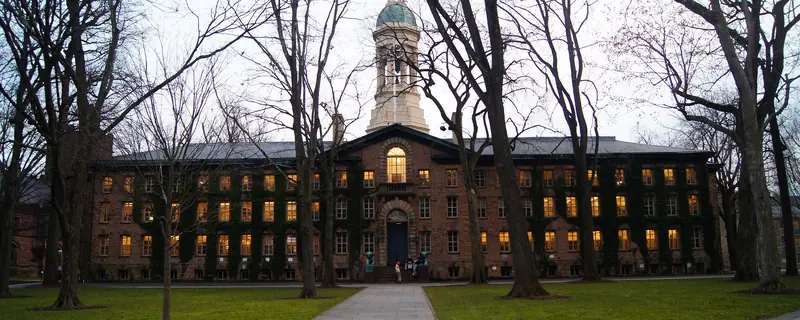 Princeton UniversityPrinceton · 225 mi · $217,973 annual earnings 4 years after graduation, a median across 30 graduatesadmits under 40%$2.49M
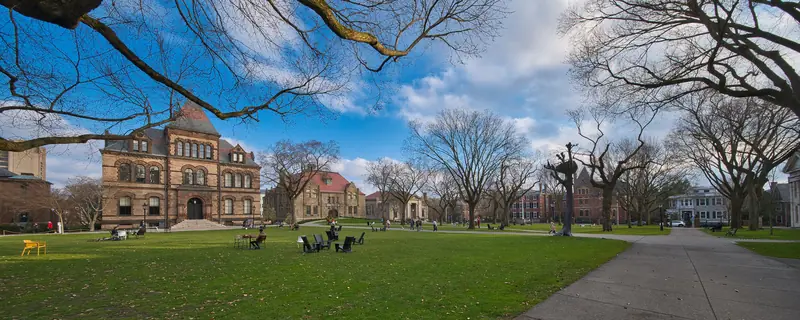 Brown UniversityProvidence · 38 mi · $214,479 annual earnings 4 years after graduation, a median across 116 graduatesadmits under 40%$2.38M
Campus photographs: Massachusetts Institute of Technology by Peacearth (CC BY-SA 4.0); Princeton University by Rohit Hirway (CC BY-SA 3.0); Brown University by Chris Rycroft (CC BY 2.0)
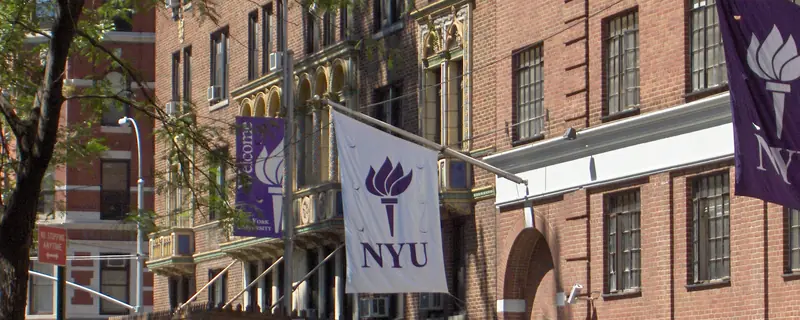 New York UniversityNew York · 181 mi · $137,804 annual earnings 4 years after graduation, a median across 285 graduatesadmits under 40%$1.08M
 Northeastern UniversityBoston · 9 mi · $113,620 annual earnings 4 years after graduation, a median across 604 graduates3 campusesadmits under 40%$855k
Campus photographs: New York University by Jonathan71 (CC BY-SA 2.5); Northeastern University by Piotr Konieczny / Piotrus (CC BY-SA 3.0)
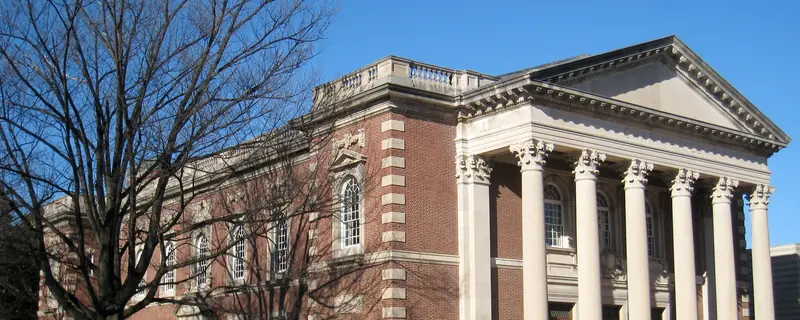 Williams CollegeWilliamstown · 102 mi · $166,678 annual earnings 4 years after graduation, a median across 54 graduatesadmits under 40%$1.69MPrinceton UniversityPrinceton · 225 mi · $160,763 annual earnings 4 years after graduation, a median across 48 graduatesadmits under 40%$1.66M
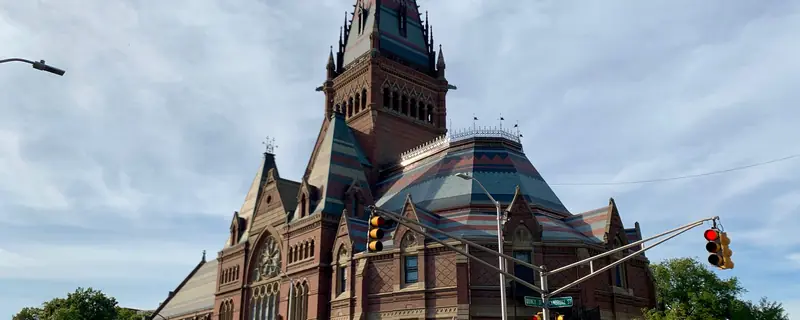 Harvard UniversityCambridge · 7 mi · $155,592 annual earnings 4 years after graduation, a median across 94 graduatesadmits under 40%$1.61M
Campus photographs: Williams College by Daderot (Public domain); Princeton University by Rohit Hirway (CC BY-SA 3.0); Harvard University by Ryan Pflaum (CC BY-SA 4.0)
Measured from federal filings, not from a survey. Each figure is compared against four-year colleges, because medians differ too much between sectors for a national comparison to describe anything but the sector.
Students and recent alumni of Brandeis University, in their own words, on Reddit. Every quotation links to the thread it came from.
Brandies is very much looking to increase its transfer population and you're certainly qualified with what you've written.r/brandeis
The academics here are top-notch. Every Professor here that I have had so far is absolutely incredible.r/brandeis
I think a lot of the facilities aren't the best and very inconsistent across campus. In terms of Dining, the food is pretty low quality, and the dining hours are very frustrating, but it could be much worse, and its sometimes enjoyable.r/brandeis
The short answer is yes, Brandeis's finances drive significant problems with the school's ability to maintain research buildings, as well as ancillary research support services.r/brandeis
The academics here are top-notch. Every Professor here that I have had so far is absolutely incredible, and the fact that so many students end up completing triple/double majors and minors is a testament to that. There is a lot of freedom in picking classes you actually like. Adjacent to this, our library services are also incredible, with a great building and some very smart Librarians, archives, and tech.r/brandeis
the location near Boston and therefore so many other universities (although in a suburban enviornment) provides for some great opportunities (internships, research, award-winning professors, social life, food/concerts, etc.). For this alone, it is an incredible school.r/brandeis
if your goal is research, internship opportunities, great connections with amazing award winning professors, and a great overall education then Brandeis is amazing. I am a commuter student so the facilities dont effect me.r/brandeis
i haven't had any issues so far. some housing is single gender and some is coed, and you can request coed housing and a floor with a gender neutral bathroom. there's a couple different student groups you might like, there's a more general lgbtq one called triskelion and then other more specific ones. i haven't encountered negative attitudes around trans people except for like one or two people. most people here are really chill, it's a very liberal school and all.r/brandeis
making friends is pretty easy here. the people are nice and friendly, and there are a lot of economics/business/finance related events on campus where you can meet people. I have more friends here than I did in high school despite being a freshman. classes aren't too bad. professors are very kind and helpful here.r/brandeis
overall people are really nice. i’d say there’s a huge mixed bag of people. athletes, “nerds,” stoners, literally any crowd imaginable is here and 98% of people are wonderful. professors can be hit or miss and as much as i worship my profs, sometimes they don’t answer emails ... but they’re usually really great in office hours too!r/brandeis
but you’d really like the culture here. parties r really lowkey and academic culture is pretty strong. super small school i stg everyone knows everyone and everything. i love it here but theres def some downsides…r/brandeis
Compare Brandeis University with another college · up to four side by side, on return and on what each place is like.
Share of the 735 students who entered as first-year undergraduates in 2024. The states shown are the three largest outside Massachusetts, so these do not add to 100%.
Total gain after 20 years is what a graduate is ahead at that point: what the degree pays above a high-school graduate in the same state, less four years of net price and the wages given up while studying, weighted by the share of students who finish. At this college that share is 86%, and it is the same for every program on this page because the federal data reports completion for the institution rather than for individual programs. Four-year and open-admission colleges are ranked separately and never pooled.
Annual earnings 4 years after graduation is the median earnings of that program’s graduates at that point, for students who received federal aid, and is published by program. There is no program-level cost anywhere in the federal data, so net price is the college’s figure applied to each program alike. That is sound for ordering programs against one another and should not be read as a precise figure for any one of them.
Cost on this page is always net price, never the published sticker price. Net price is the college’s full cost of attendance for a year, meaning tuition, required fees, books and supplies, and housing and food, with grant and scholarship aid from federal, state and institutional sources subtracted. Loans are not subtracted, because a loan is not a discount. It is an average for first-time full-time undergraduates receiving federal aid, reported by the college in the income bands shown, so it describes a typical family in that band rather than any particular one. A student living at home, paying out-of-state rates or holding an outside scholarship will not see this figure.
Federal loan debt comes from the College Scorecard and is a median among students who borrowed, not an average across everyone. A college where few students take loans can show a high figure and a small bill for most families, so the share who borrow is printed above it and neither should be read without the other. It counts federal student loans only: private loans and Parent PLUS borrowing are not in it and are not published anywhere comparable, which makes this a floor on what a family owes rather than a total. The figure for students who leave without finishing is the same loans without the degree they were taken for. Default rates are deliberately absent: federal repayment was suspended, so the published three-year rate is zero at almost every college in the country and says nothing about any of them.
Most-awarded programs are degrees conferred in AY2025, first majors only, so a double major counts once. Where two programs are within a few degrees of each other the order between them is not meaningful.
Quotations from students were found by a language model searching Reddit, and selected from threads discussing this college in the window shown beside them. Reddit only, so this is not a survey and not a representative sample: who posts and how much varies enormously by the size and type of a college, and for that reason nothing there is scored, totalled or compared between colleges. Post dates are the model’s own reckoning rather than a retrieved field, so treat them as inside the window and not as exact. Each quotation links to its thread.
What this college is like compares each measure against four-year colleges, because medians differ too much between sectors for a national comparison to describe anything but the sector. A position of “higher than 90%” means the college matches or beats nine in ten of them on that measure, which is why the measured figure is printed beside it. Six of those measures have a better end and carry a mark; the rest are positions with no better end and carry none. There is no overall score, because combining them would need weights and the weights would be our opinion rather than a measurement.
Sources. IPEDS, the Department of Education’s annual survey, except where stated. Each block in the column beside shows its own year, because the underlying files are released on different schedules and a single date across all of them would be false. Published tuition is a sticker price and is never used as a cost; net price is. Test scores are the middle 50% of enrolled students who submitted a score, not of admitted applicants, which is why they differ from the figures other guides print. Where a US News rank is shown it is the current edition, published as a fact about the college rather than an endorsement of the ranking.
The photograph at the top of this page was taken by a member of the public and published under a license that permits reuse with credit. It is not supplied by the college, is not endorsed by it, and shows one building on one day rather than the campus as a whole. We do not generate campus images or buy stock photographs of real places, because a picture of a campus that is not that campus is a lie about somewhere real. Full credit: “Brandeis University aerial 2.JPG”, Nick Allen, via Wikimedia Commons. CC BY-SA 4.0. Source: https://commons.wikimedia.org/wiki/File:Brandeis_University_aerial_2.JPG. License/status: https://creativecommons.org/licenses/by-sa/4.0/.