Loading
Villanova, PA
Selective · 28 of 28 programs pay back
7,516 undergraduates, 10 students for every faculty member · Division I-FCS athletics
Estimated over 20 years
$1.11M
Finance and Financial Management Services
Estimated over 20 years
$30k
Liberal Arts and Sciences General Studies and Humanities
Every college here returns more than this one’s best program, within 250 miles. Only 21% of students here come from PA, so the search is wider than the usual 50 miles: for a college people travel to, the colleges down the road are not the real alternatives.
Some of these admit a different share of applicants, marked on each row. A more selective college is a different application, not a free upgrade, and part of why its graduates earn more is who it admitted in the first place.
 Colgate UniversityComputer Science · Hamilton · 193 mi · $161,980 annual earnings 4 years after graduation, a median across 27 graduates$1.52M
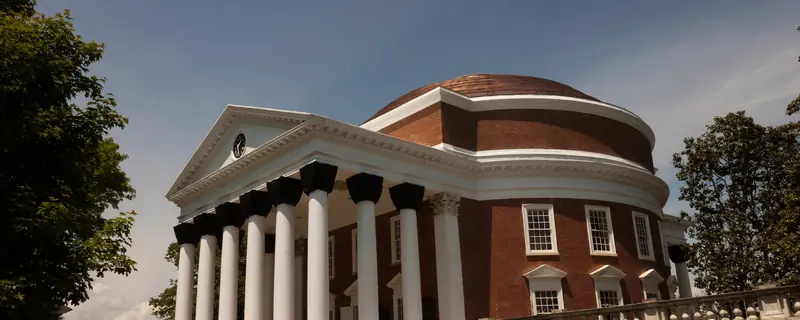 University of Virginia-Main CampusComputer Engineering · Charlottesville · 219 mi · $148,175 annual earnings 4 years after graduation, a median across 30 graduates$1.39M
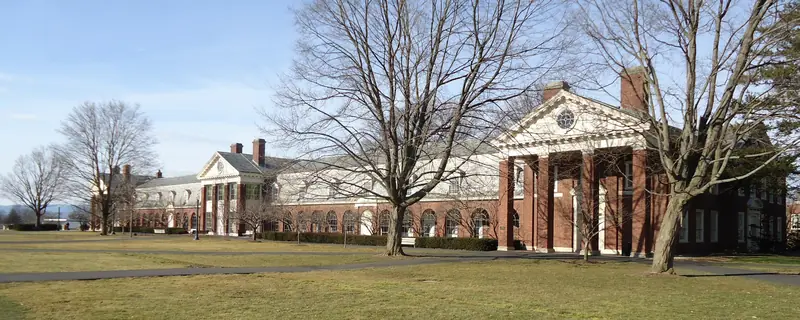 Bucknell UniversityComputer Engineering · Lewisburg · 103 mi · $156,885 annual earnings 4 years after graduation, a median across 31 graduates$1.33M
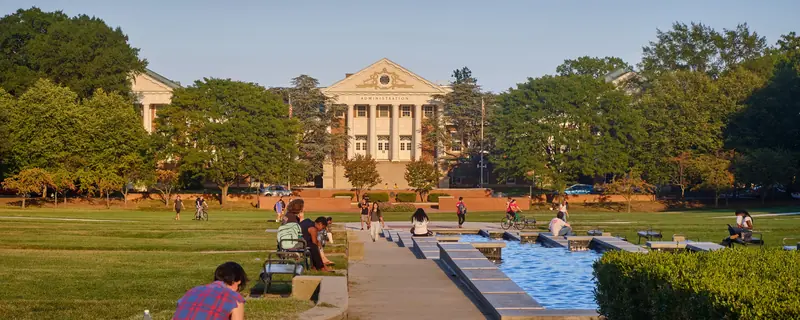 University of Maryland-College ParkComputer Engineering · College Park · 112 mi · $152,422 annual earnings 4 years after graduation, a median across 72 graduatesadmits 40-70%$1.31M
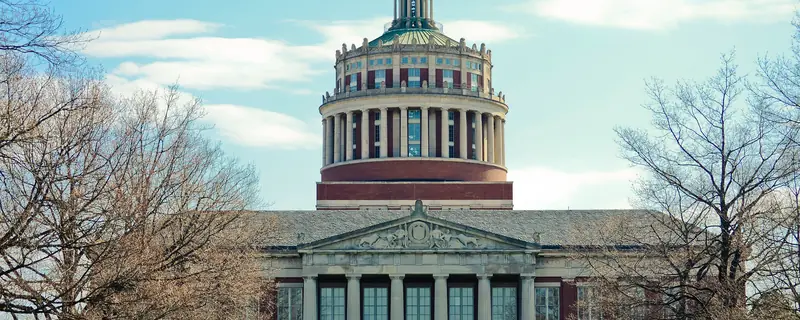 University of RochesterComputer Science · Rochester · 244 mi · $155,464 annual earnings 4 years after graduation, a median across 82 graduatesadmits 40-70%$1.31M
 Stevens Institute of TechnologyApplied Mathematics · Hoboken · 85 mi · $156,419 annual earnings 4 years after graduation, a median across 39 graduatesadmits 40-70%$1.28M
Campus photographs: Colgate University by Balon Greyjoy (CC0); University of Virginia-Main Campus by Robert Emerson (CC BY-SA 3.0); Bucknell University by Tomwsulcer (CC0); University of Maryland-College Park by Blacktupelo (CC BY-SA 4.0); University of Rochester by Ryan Hyde (CC BY-SA 2.0); Stevens Institute of Technology by Sharkface217 (Public domain)
Holding the subject fixed and changing the college, for this college’s three strongest programs. The list above compares whole colleges at their best; this one answers the narrower question a student who already knows their subject is actually asking.
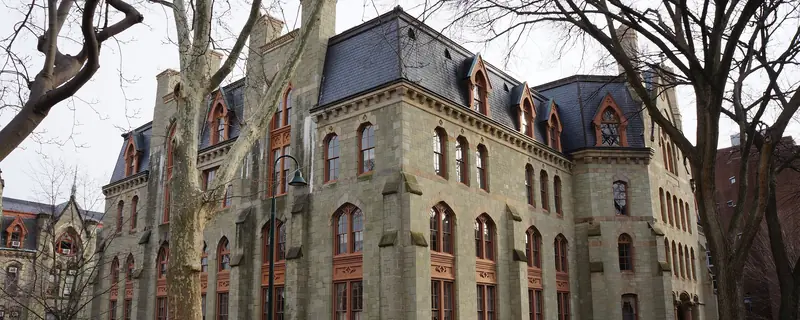 University of PennsylvaniaPhiladelphia · 10 mi · $202,069 annual earnings 4 years after graduation, a median across 111 graduates$2.25M
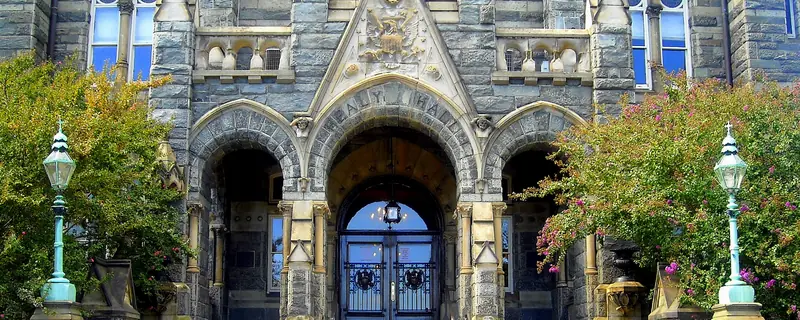 Georgetown UniversityWashington · 121 mi · $152,744 annual earnings 4 years after graduation, a median across 121 graduates$1.48M
Campus photographs: University of Pennsylvania by Michel Alexandre Salim (CC BY-SA 2.0); Georgetown University by AgnosticPreachersKid (CC BY-SA 3.0)
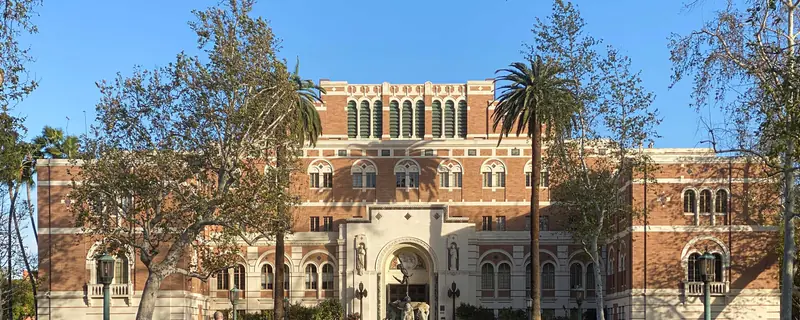 University of Southern CaliforniaLos Angeles · 2382 mi · $143,977 annual earnings 4 years after graduation, a median across 31 graduates$1.26M
Campus photograph: University of Southern California by EEJCC (CC BY-SA 4.0)
University of PennsylvaniaPhiladelphia · 10 mi · $241,380 annual earnings 4 years after graduation, a median across 40 graduates$2.81M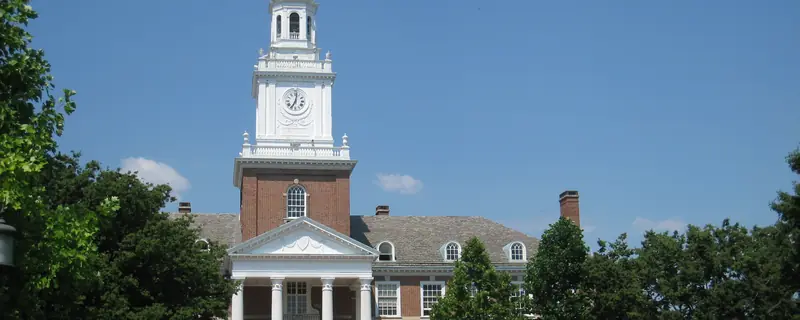 Johns Hopkins UniversityBaltimore · 84 mi · $196,467 annual earnings 4 years after graduation, a median across 58 graduates$2.10M
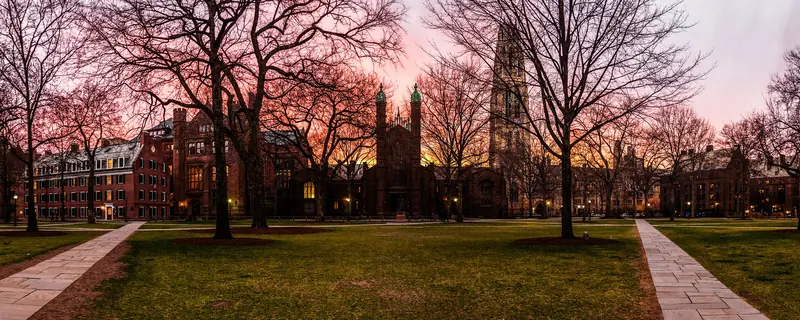 Yale UniversityNew Haven · 154 mi · $188,157 annual earnings 4 years after graduation, a median across 31 graduates$2.03M
Campus photographs: University of Pennsylvania by Michel Alexandre Salim (CC BY-SA 2.0); Johns Hopkins University by Daderot (Public domain); Yale University by Namkota (CC BY-SA 4.0)
Measured from federal filings, not from a survey. Each figure is compared against four-year colleges, because medians differ too much between sectors for a national comparison to describe anything but the sector.
Students and recent alumni of Villanova University, in their own words, on Reddit. Every quotation links to the thread it came from.
The 28-21 loss to Colgate knocked Nova out of the top 25, and it was the third one-score result in a row.r/villanova
I came here knowing that it would be harder for me to make friends since I come from a lower in come backround and most of the people here are very wealthy, but I didn't think it would be this bad.r/villanova
Current rising sophomore. I personally had a very good time at Villanova as a freshman and kept nearly perfect grades while going off campus and socializing a decent amount.r/villanova
I just graduated and it is not too quiet or socially dead outside of academics. I was member of fraternity, sports club, and other organizations all of which host a myriad of fun social events.r/villanova
The student culture is great imo- I think Villanova makes it really easy to find a niche and a group of people who you can bond with, whether it’s through classes, clubs, or learning communities that are all in the same dorm.r/villanova
I made friends during the first month that I am still friends with now (1 year post grad). ... nova was the first place I made friends who were also from the Caribbean and 1st to 1.5 gen immigrants like me!r/villanova
I loved stovs so much. Literally so worth it especially as a student of color. I’m a rising senior and still talk to ppl in my stovs group and I live with one! Starting classes early was SO HELPFUL for learning how college actually is.r/villanova
Compare Villanova University with another college · up to four side by side, on return and on what each place is like.
Share of the 1,740 students who entered as first-year undergraduates in 2024. The states shown are the three largest outside Pennsylvania, so these do not add to 100%.
Total gain after 20 years is what a graduate is ahead at that point: what the degree pays above a high-school graduate in the same state, less four years of net price and the wages given up while studying, weighted by the share of students who finish. At this college that share is 92%, and it is the same for every program on this page because the federal data reports completion for the institution rather than for individual programs. Four-year and open-admission colleges are ranked separately and never pooled.
Annual earnings 4 years after graduation is the median earnings of that program’s graduates at that point, for students who received federal aid, and is published by program. There is no program-level cost anywhere in the federal data, so net price is the college’s figure applied to each program alike. That is sound for ordering programs against one another and should not be read as a precise figure for any one of them.
Cost on this page is always net price, never the published sticker price. Net price is the college’s full cost of attendance for a year, meaning tuition, required fees, books and supplies, and housing and food, with grant and scholarship aid from federal, state and institutional sources subtracted. Loans are not subtracted, because a loan is not a discount. It is an average for first-time full-time undergraduates receiving federal aid, reported by the college in the income bands shown, so it describes a typical family in that band rather than any particular one. A student living at home, paying out-of-state rates or holding an outside scholarship will not see this figure.
Federal loan debt comes from the College Scorecard and is a median among students who borrowed, not an average across everyone. A college where few students take loans can show a high figure and a small bill for most families, so the share who borrow is printed above it and neither should be read without the other. It counts federal student loans only: private loans and Parent PLUS borrowing are not in it and are not published anywhere comparable, which makes this a floor on what a family owes rather than a total. The figure for students who leave without finishing is the same loans without the degree they were taken for. Default rates are deliberately absent: federal repayment was suspended, so the published three-year rate is zero at almost every college in the country and says nothing about any of them.
Most-awarded programs are degrees conferred in AY2025, first majors only, so a double major counts once. Where two programs are within a few degrees of each other the order between them is not meaningful.
Quotations from students were found by a language model searching Reddit, and selected from threads discussing this college in the window shown beside them. Reddit only, so this is not a survey and not a representative sample: who posts and how much varies enormously by the size and type of a college, and for that reason nothing there is scored, totalled or compared between colleges. Post dates are the model’s own reckoning rather than a retrieved field, so treat them as inside the window and not as exact. Each quotation links to its thread.
What this college is like compares each measure against four-year colleges, because medians differ too much between sectors for a national comparison to describe anything but the sector. A position of “higher than 90%” means the college matches or beats nine in ten of them on that measure, which is why the measured figure is printed beside it. Six of those measures have a better end and carry a mark; the rest are positions with no better end and carry none. There is no overall score, because combining them would need weights and the weights would be our opinion rather than a measurement.
Sources. IPEDS, the Department of Education’s annual survey, except where stated. Each block in the column beside shows its own year, because the underlying files are released on different schedules and a single date across all of them would be false. Published tuition is a sticker price and is never used as a cost; net price is. Test scores are the middle 50% of enrolled students who submitted a score, not of admitted applicants, which is why they differ from the figures other guides print. Where a US News rank is shown it is the current edition, published as a fact about the college rather than an endorsement of the ranking.
The photograph at the top of this page was taken by a member of the public and published under a license that permits reuse with credit. It is not supplied by the college, is not endorsed by it, and shows one building on one day rather than the campus as a whole. We do not generate campus images or buy stock photographs of real places, because a picture of a campus that is not that campus is a lie about somewhere real. Full credit: "Villanova University A panoramic shot.jpg" by Alertjean, via Wikimedia Commons, CC BY 3.0. Source: https://commons.wikimedia.org/wiki/File:Villanova_University_A_panoramic_shot.jpg. License/status: https://creativecommons.org/licenses/by/3.0.