Loading
Vermillion, SD
Broad access · 12 of 25 programs pay back
5,585 undergraduates, 16 students for every faculty member · Division I-FCS athletics · 30% of undergraduates study fully online
Estimated over 20 years
$136k
Registered Nursing Nursing Administration Nursing Research and Clinical Nursing
Estimated over 20 years
-$265k
English Language and Literature General
Every college here returns more than this one’s best program, within 250 miles. Only 2 colleges within 50 miles return more, so the search was widened to 250 miles rather than showing you almost nothing.
Some of these admit a different share of applicants, marked on each row. A more selective college is a different application, not a free upgrade, and part of why its graduates earn more is who it admitted in the first place.
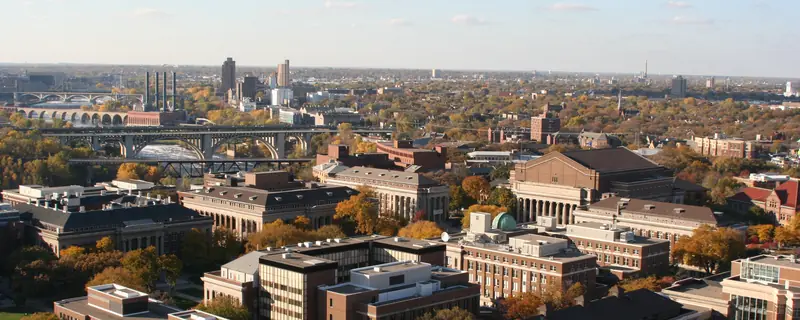 University of Minnesota-Twin CitiesComputer Engineering · Minneapolis · 238 mi · $119,781 annual earnings 4 years after graduation, a median across 67 graduates2 campuses$864k
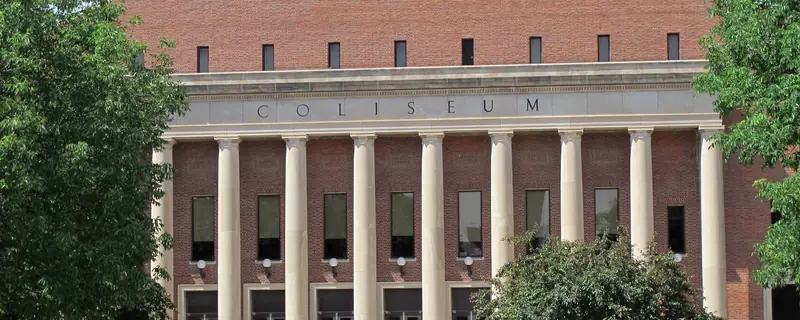 University of Nebraska-LincolnComputer and Information Sciences General · Lincoln · 137 mi · $116,221 annual earnings 4 years after graduation, a median across 80 graduates2 campuses$592k
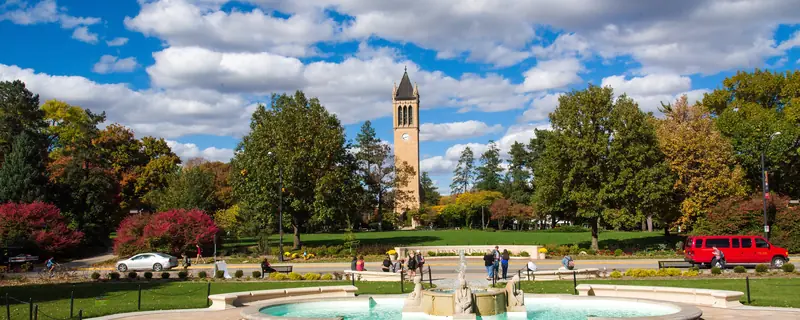 Iowa State UniversityComputer Engineering · Ames · 175 mi · $105,753 annual earnings 4 years after graduation, a median across 306 graduates$586k
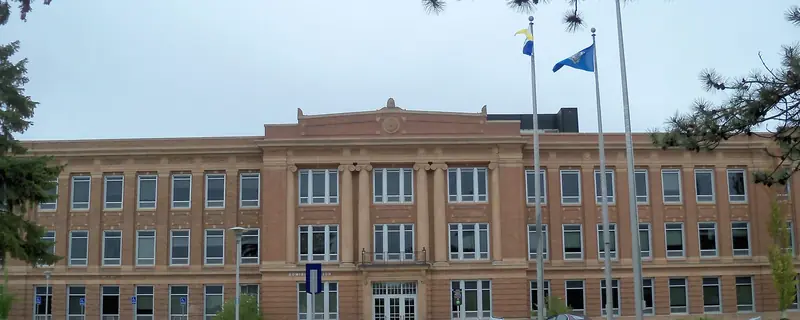 South Dakota State UniversityPharmacy Pharmaceutical Sciences and Administration · Brookings · 106 mi · $122,169 annual earnings 4 years after graduation, a median across 112 graduates$582k
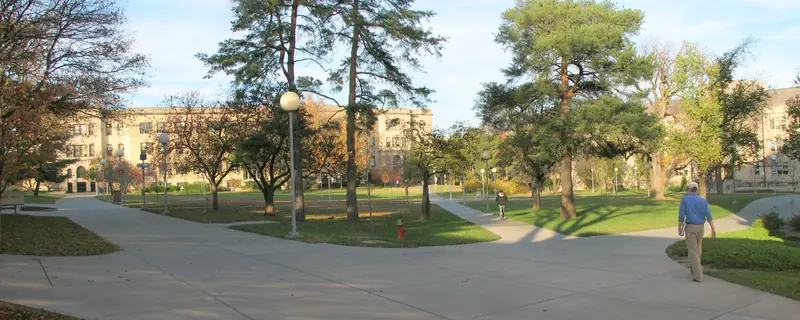 Kansas State UniversityComputer and Information Sciences General · Manhattan · 249 mi · $107,194 annual earnings 4 years after graduation, a median across 88 graduates$570k
Campus photographs: University of Minnesota-Twin Cities by Ben Franske (CC BY-SA 4.0); University of Nebraska-Lincoln by Hanyou23 (CC BY-SA 4.0); Iowa State University by Dirk DBQ / Dirk Hansen (CC BY 2.0); South Dakota State University by AlexiusHoratius (CC BY-SA 3.0); Kansas State University by J. Corbett (Public domain)
Holding the subject fixed and changing the college, for this college’s three strongest programs. The list above compares whole colleges at their best; this one answers the narrower question a student who already knows their subject is actually asking.
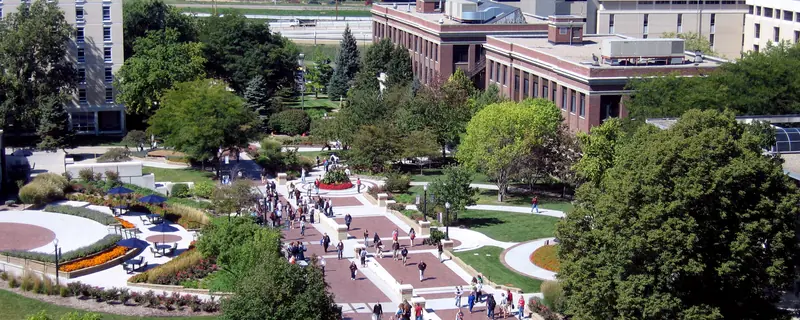 Creighton UniversityOmaha · 116 mi · $79,977 annual earnings 4 years after graduation, a median across 31 graduates$312kUniversity of Minnesota-Twin CitiesMinneapolis · 238 mi · $72,862 annual earnings 4 years after graduation, a median across 79 graduates2 campuses$269k
Campus photographs: Creighton University by Bluejayscholar (CC BY-SA 3.0); University of Minnesota-Twin Cities by Ben Franske (CC BY-SA 4.0)
University of Minnesota-Twin CitiesMinneapolis · 238 mi · $82,960 annual earnings 4 years after graduation, a median across 150 graduates2 campuses$397kCreighton UniversityOmaha · 116 mi · $84,294 annual earnings 4 years after graduation, a median across 230 graduates$366k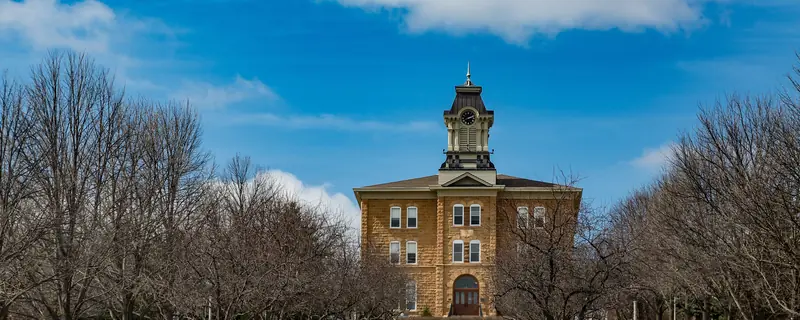 Gustavus Adolphus CollegeSaint Peter · 182 mi · $86,114 annual earnings 4 years after graduation, a median across 41 graduatesadmits 40-70%$352k
Campus photographs: University of Minnesota-Twin Cities by Ben Franske (CC BY-SA 4.0); Creighton University by Bluejayscholar (CC BY-SA 3.0); Gustavus Adolphus College by Tony Webster (CC BY 2.0)
Measured from federal filings, not from a survey. Each figure is compared against four-year colleges, because medians differ too much between sectors for a national comparison to describe anything but the sector.
Compare University of South Dakota with another college · up to four side by side, on return and on what each place is like.
Share of the 1,418 students who entered as first-year undergraduates in 2024. The states shown are the three largest outside South Dakota, so these do not add to 100%.
Total gain after 20 years is what a graduate is ahead at that point: what the degree pays above a high-school graduate in the same state, less four years of net price and the wages given up while studying, weighted by the share of students who finish. At this college that share is 60%, and it is the same for every program on this page because the federal data reports completion for the institution rather than for individual programs. Four-year and open-admission colleges are ranked separately and never pooled.
Annual earnings 4 years after graduation is the median earnings of that program’s graduates at that point, for students who received federal aid, and is published by program. There is no program-level cost anywhere in the federal data, so net price is the college’s figure applied to each program alike. That is sound for ordering programs against one another and should not be read as a precise figure for any one of them.
Cost on this page is always net price, never the published sticker price. Net price is the college’s full cost of attendance for a year, meaning tuition, required fees, books and supplies, and housing and food, with grant and scholarship aid from federal, state and institutional sources subtracted. Loans are not subtracted, because a loan is not a discount. It is an average for first-time full-time undergraduates receiving federal aid, reported by the college in the income bands shown, so it describes a typical family in that band rather than any particular one. A student living at home, paying out-of-state rates or holding an outside scholarship will not see this figure.
Federal loan debt comes from the College Scorecard and is a median among students who borrowed, not an average across everyone. A college where few students take loans can show a high figure and a small bill for most families, so the share who borrow is printed above it and neither should be read without the other. It counts federal student loans only: private loans and Parent PLUS borrowing are not in it and are not published anywhere comparable, which makes this a floor on what a family owes rather than a total. The figure for students who leave without finishing is the same loans without the degree they were taken for. Default rates are deliberately absent: federal repayment was suspended, so the published three-year rate is zero at almost every college in the country and says nothing about any of them.
Most-awarded programs are degrees conferred in AY2025, first majors only, so a double major counts once. Where two programs are within a few degrees of each other the order between them is not meaningful.
What this college is like compares each measure against four-year colleges, because medians differ too much between sectors for a national comparison to describe anything but the sector. A position of “higher than 90%” means the college matches or beats nine in ten of them on that measure, which is why the measured figure is printed beside it. Six of those measures have a better end and carry a mark; the rest are positions with no better end and carry none. There is no overall score, because combining them would need weights and the weights would be our opinion rather than a measurement.
Sources. IPEDS, the Department of Education’s annual survey, except where stated. Each block in the column beside shows its own year, because the underlying files are released on different schedules and a single date across all of them would be false. Published tuition is a sticker price and is never used as a cost; net price is. Test scores are the middle 50% of enrolled students who submitted a score, not of admitted applicants, which is why they differ from the figures other guides print. Where a US News rank is shown it is the current edition, published as a fact about the college rather than an endorsement of the ranking.
The photograph at the top of this page was taken by a member of the public and published under a license that permits reuse with credit. It is not supplied by the college, is not endorsed by it, and shows one building on one day rather than the campus as a whole. We do not generate campus images or buy stock photographs of real places, because a picture of a campus that is not that campus is a lie about somewhere real. Full credit: "University of South Dakota Belbas Center from S 1.JPG" by Ammodramus, via Wikimedia Commons, CC0. Source: https://commons.wikimedia.org/wiki/File:University_of_South_Dakota_Belbas_Center_from_S_1.JPG. License/status: http://creativecommons.org/publicdomain/zero/1.0/deed.en.