College Sonar
Compare collegesHow it worksFor colleges

Loading

Explore

Look up a collegeDegrees near youCompare collegesTop degrees by stateWhat colleges are like

Understand

How it worksHow badges are awarded

About

For collegesContact us

College Sonar by Optivara © 2026

University of California-Irvine

Irvine, CA

Photo: CeruleanFilms · Public domain

Selective · 37 of 44 programs pay back

32,134 undergraduates, 19 students for every faculty member · Division I without football athletics

What this college is like

Best Financial Gain

Estimated over 20 years

$1.03M

Computer Engineering

Worst Financial Gain

Estimated over 20 years

-$174k

Fine and Studio Arts

Customize by family incomeUnder $30k$30k to $48k$48k to $75k$75k to $110kOver $110k
Program20 yr Financial Gain
  1. 1Computer Engineering$132,357 annual earnings 4 years after graduation, a median across 148 graduates$1.03M
  2. 2Computer Science$127,404 annual earnings 4 years after graduation, a median across 577 graduates$969k
  3. 3Registered Nursing Nursing Administration Nursing Research and Clinical Nursing$119,502 annual earnings 4 years after graduation, a median across 59 graduates$867k
  4. 4Management Information Systems and Services$108,038 annual earnings 4 years after graduation, a median across 37 graduates$718k
  5. 5Electrical Electronics and Communications Engineering$106,871 annual earnings 4 years after graduation, a median across 100 graduates$703k
  6. 6Materials Engineering$106,547 annual earnings 4 years after graduation, a median across 32 graduates$699k
  7. 7Aerospace Aeronautical and Astronautical/Space Engineering$100,537 annual earnings 4 years after graduation, a median across 64 graduates$622k
  8. 8Mechanical Engineering$99,111 annual earnings 4 years after graduation, a median across 235 graduates$603k
  9. 9Chemical Engineering$97,656 annual earnings 4 years after graduation, a median across 60 graduates$584k
  10. 10Biomedical/Medical Engineering$96,874 annual earnings 4 years after graduation, a median across 69 graduates$574k
View all 44 programs →
  1. 11Civil Engineering$96,354 annual earnings 4 years after graduation, a median across 118 graduates$567k
  2. 12Computer and Information Sciences General$96,347 annual earnings 4 years after graduation, a median across 108 graduates$567k
  3. 13Physics$96,215 annual earnings 4 years after graduation, a median across 29 graduates$566k
  4. 14Economics$83,937 annual earnings 4 years after graduation, a median across 144 graduates$407k
  5. 15Business Administration Management and Operations$80,755 annual earnings 4 years after graduation, a median across 187 graduates$366k
  6. 16Business/Managerial Economics$77,807 annual earnings 4 years after graduation, a median across 379 graduates$328k
  7. 17Mathematics$77,472 annual earnings 4 years after graduation, a median across 66 graduates$323k
  8. 18Chemistry$74,810 annual earnings 4 years after graduation, a median across 95 graduates$289k
  9. 19Geological and Earth Sciences/Geosciences$70,820 annual earnings 4 years after graduation, a median across 36 graduates$237k
  10. 20Computer Software and Media Applications$69,981 annual earnings 4 years after graduation, a median across 52 graduates$227k
  11. 21Urban Studies/Affairs$63,819 annual earnings 4 years after graduation, a median across 41 graduates$147k
  12. 22Political Science and Government$63,318 annual earnings 4 years after graduation, a median across 253 graduates$141k
  13. 23Pharmacy Pharmaceutical Sciences and Administration$61,034 annual earnings 4 years after graduation, a median across 48 graduates$111k
  14. 24Public Health$60,430 annual earnings 4 years after graduation, a median across 339 graduates$103k
  15. 25Multi/Interdisciplinary Studies Other$60,242 annual earnings 4 years after graduation, a median across 59 graduates$101k
  16. 26Natural Resources Conservation and Research$59,908 annual earnings 4 years after graduation, a median across 37 graduates$96k
  17. 27Criminology$57,935 annual earnings 4 years after graduation, a median across 388 graduates$71k
  18. 28Journalism$57,492 annual earnings 4 years after graduation, a median across 39 graduates$65k
  19. 29International/Globalization Studies$57,116 annual earnings 4 years after graduation, a median across 154 graduates$60k
  20. 30Sociology$56,457 annual earnings 4 years after graduation, a median across 202 graduates$52k
  21. 31Psychology General$56,380 annual earnings 4 years after graduation, a median across 179 graduates$51k
  22. 32Biology General$56,273 annual earnings 4 years after graduation, a median across 320 graduates$49k
  23. 33Romance Languages Literatures and Linguistics$55,360 annual earnings 4 years after graduation, a median across 25 graduates$38k
  24. 34Education General$54,356 annual earnings 4 years after graduation, a median across 243 graduates$25k
  25. 35Research and Experimental Psychology$54,323 annual earnings 4 years after graduation, a median across 495 graduates$24k
  26. 36English Language and Literature General$54,299 annual earnings 4 years after graduation, a median across 116 graduates$24k
  27. 37History$53,481 annual earnings 4 years after graduation, a median across 54 graduates$13k
  28. 38Film/Video and Photographic Arts$51,423 annual earnings 4 years after graduation, a median across 96 graduates-$13k
  29. 39Anthropology$50,850 annual earnings 4 years after graduation, a median across 80 graduates-$21k
  30. 40Ethnic Cultural Minority Gender and Group Studies$47,471 annual earnings 4 years after graduation, a median across 33 graduates-$64k
  31. 41Music$43,120 annual earnings 4 years after graduation, a median across 16 graduates-$120k
  32. 42Drama/Theatre Arts and Stagecraft$40,773 annual earnings 4 years after graduation, a median across 63 graduates-$151k
  33. 43Dance$40,466 annual earnings 4 years after graduation, a median across 17 graduates-$155k
  34. 44Fine and Studio Arts$39,010 annual earnings 4 years after graduation, a median across 55 graduates-$174k

This college's programs pay very differently from one another, so any single figure for the college as a whole would hide more than it shows.

Other colleges to consider

Every college here returns more than this one’s best program, within 50 miles.

Colleges of comparable difficulty come first here. Any that admit far fewer applicants than this one sit below them and are marked with what they admit. A more selective college is a different application, not a free upgrade, and part of why its graduates earn more is who it admitted in the first place.
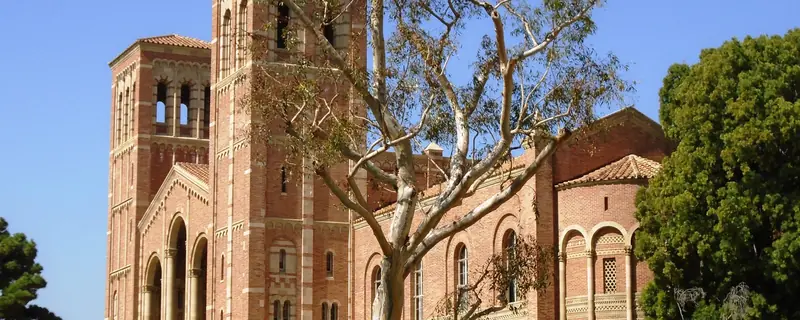
  1. 12019 UCLA Royce Hall 1University of California-Los AngelesComputer Engineering · Los Angeles · 45 mi · $228,705 annual earnings 4 years after graduation, a median across 28 graduatesadmits 9%$2.44M
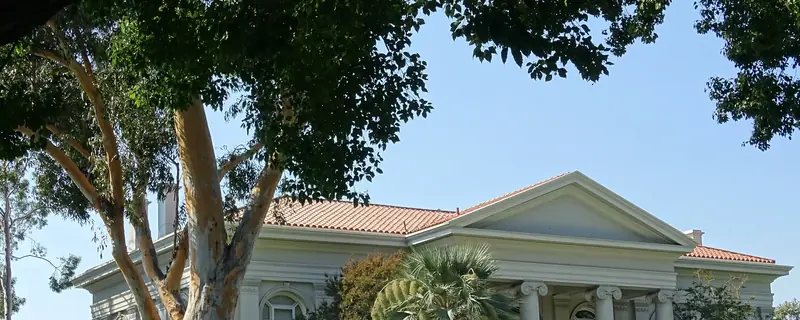
  2. 2Carnegie Hall at Pomona College in November 2021Pomona CollegeComputer Science · Claremont · 32 mi · $217,051 annual earnings 4 years after graduation, a median across 21 graduatesadmits 7%$2.34M
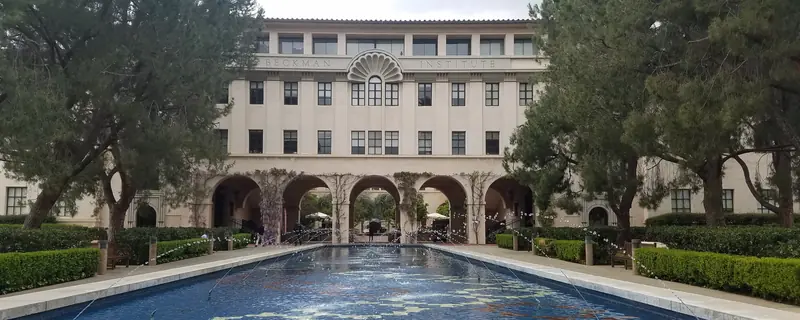
  3. 3Beckman Institute at CaltechCalifornia Institute of TechnologyComputer Science · Pasadena · 38 mi · $200,511 annual earnings 4 years after graduation, a median across 25 graduatesadmits 3%$2.11M
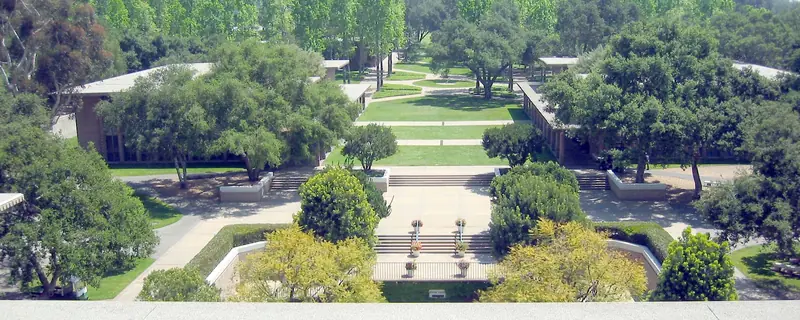
  4. 4HMC library viewHarvey Mudd CollegeComputer Science · Claremont · 33 mi · $198,257 annual earnings 4 years after graduation, a median across 33 graduatesadmits 13%$1.98M
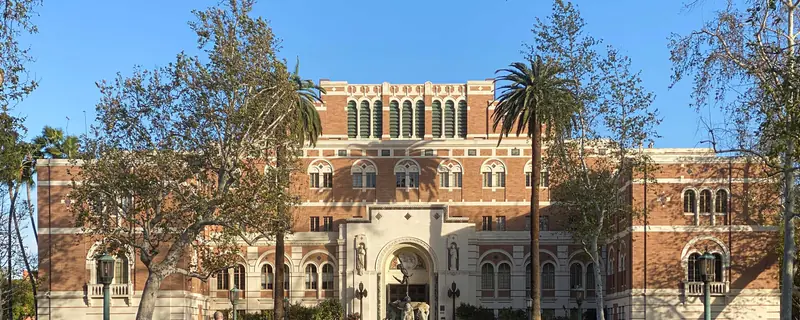
  5. 5Doheny Memorial Library of USCUniversity of Southern CaliforniaComputer Science · Los Angeles · 36 mi · $192,897 annual earnings 4 years after graduation, a median across 142 graduatesadmits 10%$1.89M
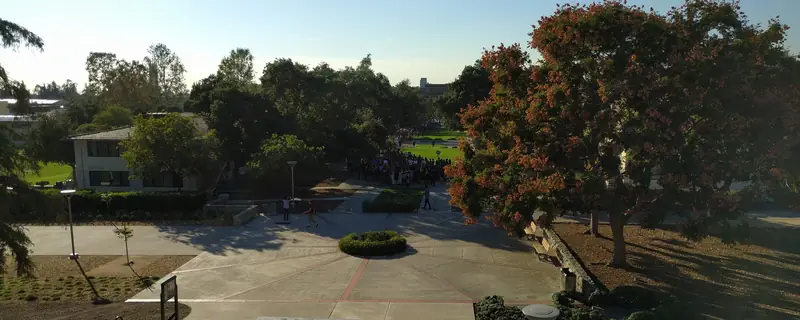
  6. 6Claremont Mckenna College campusClaremont McKenna CollegeEconomics · Claremont · 32 mi · $146,524 annual earnings 4 years after graduation, a median across 37 graduatesadmits 10%$1.18M

Campus photographs: University of California-Los Angeles by Beyond My Ken (CC BY-SA 4.0); Pomona College by Adam Jones (CC BY 2.0); California Institute of Technology by GtDX8NNO3Efn2oF6q0s3 (CC BY-SA 4.0); Harvey Mudd College by Bovineone at English Wikipedia (CC BY-SA 3.0); University of Southern California by EEJCC (CC BY-SA 4.0); Claremont McKenna College by Sdkb (CC BY-SA 4.0)

The same programs elsewhere

Holding the subject fixed and changing the college, for this college’s three strongest programs. The list above compares whole colleges at their best; this one answers the narrower question a student who already knows their subject is actually asking.

Computer Engineering20 colleges pay more
  1. 12019 UCLA Royce Hall 1University of California-Los AngelesLos Angeles · 45 mi · $228,705 annual earnings 4 years after graduation, a median across 28 graduates$2.44M
  2. 2Doheny Memorial Library of USCUniversity of Southern CaliforniaLos Angeles · 36 mi · $166,369 annual earnings 4 years after graduation, a median across 24 graduates$1.52M

Campus photographs: University of California-Los Angeles by Beyond My Ken (CC BY-SA 4.0); University of Southern California by EEJCC (CC BY-SA 4.0)

Computer Science50 colleges pay more
  1. 1Carnegie Hall at Pomona College in November 2021Pomona CollegeClaremont · 32 mi · $217,051 annual earnings 4 years after graduation, a median across 21 graduates$2.34M
  2. 2Beckman Institute at CaltechCalifornia Institute of TechnologyPasadena · 38 mi · $200,511 annual earnings 4 years after graduation, a median across 25 graduates$2.11M
  3. 3HMC library viewHarvey Mudd CollegeClaremont · 33 mi · $198,257 annual earnings 4 years after graduation, a median across 33 graduates$1.98M

Campus photographs: Pomona College by Adam Jones (CC BY 2.0); California Institute of Technology by GtDX8NNO3Efn2oF6q0s3 (CC BY-SA 4.0); Harvey Mudd College by Bovineone at English Wikipedia (CC BY-SA 3.0)

Registered Nursing Nursing Administration Nursing Research and Clinical Nursing2 colleges pay more
  1. 12019 UCLA Royce Hall 1University of California-Los AngelesLos Angeles · 45 mi · $118,566 annual earnings 4 years after graduation, a median across 52 graduates$927k

Campus photograph: University of California-Los Angeles by Beyond My Ken (CC BY-SA 4.0)

What this college is like

Measured from federal filings, not from a survey. Each figure is compared against four-year colleges, because medians differ too much between sectors for a national comparison to describe anything but the sector.

Teaching
Students per instructor?
19:1
▼more students per instructor than 87% of four-year colleges
Staying and finishing
Come back after year one?
94%
▲higher than 94% of four-year colleges
Finish their credential?
73.3%
▲higher than 92% of four-year colleges
Cost and aid
Yearly cost, family under $30,000?
$5,924
▲cheaper than 91% of four-year colleges
Get a grant from the college?
45%
▼a lower share than 87% of four-year colleges
Receive a Pell Grant?
31%
a lower share than 67% of four-year colleges
The campus
Undergraduates?
32,134
larger than 97% of four-year colleges
Beds per 100 undergraduates?
48
fewer than 58% of four-year colleges
Study fully online?
1.3%
fewer than 66% of four-year colleges
Graduate students, share of enrollment?
16.2%
about typical for four-year colleges
Play a varsity sport?
1.2%
fewer than 99% of four-year colleges
Who else is there
Mix of student backgrounds?
75 of 100
more varied than 89% of four-year colleges
Choice of subject
Broad subject areas awarded?
22
▲more than 79% of four-year colleges
Also on record
Women and men
56% / 44%
reported, not ranked
Setting
City
reported, not ranked
On-campus housing
Yes
residential
Athletic division
NCAA Division I without football
reported, not ranked

Compare every college in this metro

What students are saying

Students and recent alumni of University of California-Irvine, in their own words, on Reddit. Every quotation links to the thread it came from.

What came up most

many threads · August to October 2026
NegativeFinancial-aid awards, grants, and disbursement delays were a mostly negative discussion topic.
I just wished you communicated if disbursements were coming late… if your website says it’ll come Sept 17th but no one has received anything…just release an email
r/UCI
MixedMaking friends and feeling socially isolated at UCI was a mixed discussion topic.
I know there’s quite a few of these posts but man it’s dry as hell for me in the friend department.
r/UCI
NegativeHousing assignments and roommate selection were discussed mostly negatively.
did anyone actually get the dorm assignment they applied for? i applied for a quad in mesa court and got a triple in middle earth...
r/UCI
MixedFall course enrollment, schedule changes, and class-start logistics were a mixed discussion topic.
I realized a month ago I accidentally selected an online Chem class and ive been trying to change it but im struggling.
r/UCI

What students criticized

several threads · November to October 2026
NegativeStudents complained that financial-aid offers could leave them facing unaffordable costs and threaten their ability to remain enrolled.
This aid offer is a huge shock because, luckily, for these past two years, school has been the one thing I haven't had to worry about.
r/UCI
NegativeStudents criticized UCI financial aid for changing award and payment amounts without clear resolution.
The amount of money I needed to pay and that I got from the aid kept changing last year and so we kept coming to the office trying to figure out how much money did we really get and how much we owed them. It was a mess.
r/UCI
NegativeStudents complained about financial aid not being disbursed by the time fees were due, potentially forcing out-of-pocket payment.
I have been checking my Zot Account regularly, and my financial aid has not been disbursed yet. At this point, do I just pay out of pocket and wait for reimbursement??
r/UCI
NegativeA student complained that unreliable Wi-Fi in campus academic spaces interfered with taking lecture notes.
Missed notes on like 75% of lecture actually infuriating
r/UCI
NegativeA transfer student criticized other UCI students as rude and unwelcoming toward transfers and people asking questions.
there have so many times where people where rude to me for enjoying my time here, rude to me for being a transfer, rude for asking a question.
r/UCI
NegativeA student criticized very large classes and instructors perceived as reading from slides rather than teaching.
Education was mid due to having 400+ students and professors that don't want to teach other than reading off the screen.
r/UCI
NegativeA student criticized UCI's social environment as too inactive and said it made it difficult to form lasting friendships.
The social life is basically dead, which affected me a lot since my high school had amazing vibrant people.
r/UCI

Changes and news students discussed

several threads · August to October 2026
NegativeUsers discussed the death of a UC Irvine student at Mesa Court and shared the university's statement that the death was not heat-related.
“Information circulating that the student’s death was heat-related is incorrect, and there are no indications of any suspicious activity related to the student’s passing.”
r/UCI
NegativeStudents discussed organizing advocacy for air conditioning or permission for portable units in campus dorms during a heatwave.
Request installation of A/C units or permission for portable ones.
r/UCI
NeutralA commenter reported a new residence-hall policy allowing students to live in the dorms for a second year.
New rule; they allowed 2nd years to live in the residence halls starting this year
r/UCI
NegativeStudents also discussed Fall 2026 financial-aid account adjustments and uncertainty over whether fee balances could cause enrollment problems.
My ZotAccount currently shows a $13,454 account balance, but my Fall 2026 quarter registration fees ($17,783.67) show as paid/applied with $0 unpaid.
r/UCI

Compare University of California-Irvine with another college · up to four side by side, on return and on what each place is like.

16,780Average annual costAfter grants · In-state · Family income $75k–$110k
87%Finish within six years
32,134Undergraduates
29%Applicants admitted

Where students come from

  • Californiain state74%
  • Washington1%
  • Hawaii1%
  • Texas1%
  • Outside the US19%

Share of the 6,736 students who entered as first-year undergraduates in 2024. The states shown are the three largest outside California, so these do not add to 100%.

At a glance
SettingCity
Undergraduates?32,134
Graduate students6,226
Accepts29%
U.S. News national?#34
Admitted students who enroll?19%
WebsiteVisit uci.edu
AdmissionsAY2024
Applicants122,699
Admitted35,054
Enrolled6,736
Test scores?neither required nor recommended
CostAY2022
Published price, out of state?$45,014
Published price, in state?$14,237
Room and board$18,423
Full year’s cost after grants, by income, in state
Under $30k$5,924
$30k-$48k$7,006
$48k-$75k$10,078
$75k-$110k$16,780
Over $110k$25,567

These are in-state figures. A public college charges more to students from other states, and no out-of-state net price is published, so if you would not be a resident here, read the published prices above for the size of the difference.

Aid · AY2023
Average grant?$10,594 to 45%
Pell students?31%
Federal loan debt · October 2026
Students who borrow?21%
Owed at graduation?$12,821
Monthly, over 10 years?$146/mo
Owed if they leave early?$6,686
Outcomes2018 cohort
Graduate in 4 years73%
Graduate in 6 years87%
Return after year 1?94%
Students per faculty19:1
Most-awarded programs, bachelor'sAY2025
Biology General841 degrees
Research and Experimental Psychology713 degrees
Computer Science665 degrees
Business Administration Management and Operations530 degrees
Business/Managerial Economics361 degrees
AthleticsAY2024
DivisionNCAA Division I without football
Athletes358
Share of undergraduates?1%
Athletic aid$6,028,469
StudentsAY2024
Women / men56% / 44%
Asian37%
Hispanic27%
White13%
International12%
Two or more6%
Black2%

Notes and sources

Total gain after 20 years is what a graduate is ahead at that point: what the degree pays above a high-school graduate in the same state, less four years of net price and the wages given up while studying, weighted by the share of students who finish. At this college that share is 87%, and it is the same for every program on this page because the federal data reports completion for the institution rather than for individual programs. Four-year and open-admission colleges are ranked separately and never pooled.

Annual earnings 4 years after graduation is the median earnings of that program’s graduates at that point, for students who received federal aid, and is published by program. There is no program-level cost anywhere in the federal data, so net price is the college’s figure applied to each program alike. That is sound for ordering programs against one another and should not be read as a precise figure for any one of them.

Cost on this page is always net price, never the published sticker price. Net price is the college’s full cost of attendance for a year, meaning tuition, required fees, books and supplies, and housing and food, with grant and scholarship aid from federal, state and institutional sources subtracted. Loans are not subtracted, because a loan is not a discount. It is an average for first-time full-time undergraduates receiving federal aid, reported by the college in the income bands shown, so it describes a typical family in that band rather than any particular one. A student living at home, paying out-of-state rates or holding an outside scholarship will not see this figure.

Federal loan debt comes from the College Scorecard and is a median among students who borrowed, not an average across everyone. A college where few students take loans can show a high figure and a small bill for most families, so the share who borrow is printed above it and neither should be read without the other. It counts federal student loans only: private loans and Parent PLUS borrowing are not in it and are not published anywhere comparable, which makes this a floor on what a family owes rather than a total. The figure for students who leave without finishing is the same loans without the degree they were taken for. Default rates are deliberately absent: federal repayment was suspended, so the published three-year rate is zero at almost every college in the country and says nothing about any of them.

Most-awarded programs are degrees conferred in AY2025, first majors only, so a double major counts once. Where two programs are within a few degrees of each other the order between them is not meaningful.

Quotations from students were found by a language model searching Reddit, and selected from threads discussing this college in the window shown beside them. Reddit only, so this is not a survey and not a representative sample: who posts and how much varies enormously by the size and type of a college, and for that reason nothing there is scored, totalled or compared between colleges. Post dates are the model’s own reckoning rather than a retrieved field, so treat them as inside the window and not as exact. Each quotation links to its thread.

What this college is like compares each measure against four-year colleges, because medians differ too much between sectors for a national comparison to describe anything but the sector. A position of “higher than 90%” means the college matches or beats nine in ten of them on that measure, which is why the measured figure is printed beside it. Six of those measures have a better end and carry a mark; the rest are positions with no better end and carry none. There is no overall score, because combining them would need weights and the weights would be our opinion rather than a measurement.

Sources. IPEDS, the Department of Education’s annual survey, except where stated. Each block in the column beside shows its own year, because the underlying files are released on different schedules and a single date across all of them would be false. Published tuition is a sticker price and is never used as a cost; net price is. Test scores are the middle 50% of enrolled students who submitted a score, not of admitted applicants, which is why they differ from the figures other guides print. Where a US News rank is shown it is the current edition, published as a fact about the college rather than an endorsement of the ranking.

The photograph at the top of this page was taken by a member of the public and published under a license that permits reuse with credit. It is not supplied by the college, is not endorsed by it, and shows one building on one day rather than the campus as a whole. We do not generate campus images or buy stock photographs of real places, because a picture of a campus that is not that campus is a lie about somewhere real. Full credit: "CrawfordHallFlowers.jpg" by CeruleanFilms, via Wikimedia Commons, Public domain. Source: https://commons.wikimedia.org/wiki/File:CrawfordHallFlowers.jpg. License/status: https://commons.wikimedia.org/wiki/Commons:Licensing.

Full methodology