
Loading
Evanston, IL
Selective · 26 of 30 programs pay back
9,561 undergraduates, 6 students for every faculty member · Division I-FBS athletics · Graduate students are 55% of total enrollment
Estimated over 20 years
$1.51M
Information Science/Studies
Estimated over 20 years
-$111k
Drama/Theatre Arts and Stagecraft
This college's programs pay very differently from one another, so any single figure for the college as a whole would hide more than it shows.
Every college here returns more than this one’s best program, within 250 miles. Only 19% of students here come from IL, so the search is wider than the usual 50 miles: for a college people travel to, the colleges down the road are not the real alternatives.
Some of these admit a different share of applicants, marked on each row. A more selective college is a different application, not a free upgrade, and part of why its graduates earn more is who it admitted in the first place.
 University of ChicagoComputer Science · Chicago · 19 mi · $178,068 annual earnings 4 years after graduation, a median across 32 graduates$1.74M
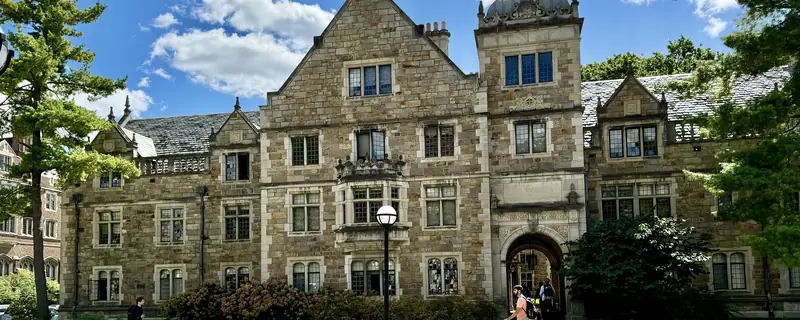 University of Michigan-Ann ArborComputer and Information Sciences General · Ann Arbor · 202 mi · $172,904 annual earnings 4 years after graduation, a median across 665 graduates$1.70M
 University of Illinois Urbana-ChampaignComputer Science · Champaign · 137 mi · $181,981 annual earnings 4 years after graduation, a median across 193 graduatesadmits 40-70%$1.61M
Campus photographs: University of Chicago by Ndshankar (CC BY-SA 4.0); University of Michigan-Ann Arbor by w_lemay (CC BY-SA 2.0); University of Illinois Urbana-Champaign by Beyond My Ken (CC BY-SA 4.0)
Holding the subject fixed and changing the college, for this college’s three strongest programs. The list above compares whole colleges at their best; this one answers the narrower question a student who already knows their subject is actually asking.
University of ChicagoChicago · 19 mi · $178,068 annual earnings 4 years after graduation, a median across 32 graduates$1.74MUniversity of Illinois Urbana-ChampaignChampaign · 137 mi · $181,981 annual earnings 4 years after graduation, a median across 193 graduatesadmits 40-70%$1.61MCampus photographs: University of Chicago by Ndshankar (CC BY-SA 4.0); University of Illinois Urbana-Champaign by Beyond My Ken (CC BY-SA 4.0)
 Harvard UniversityCambridge · 847 mi · $170,689 annual earnings 4 years after graduation, a median across 21 graduates$1.64M
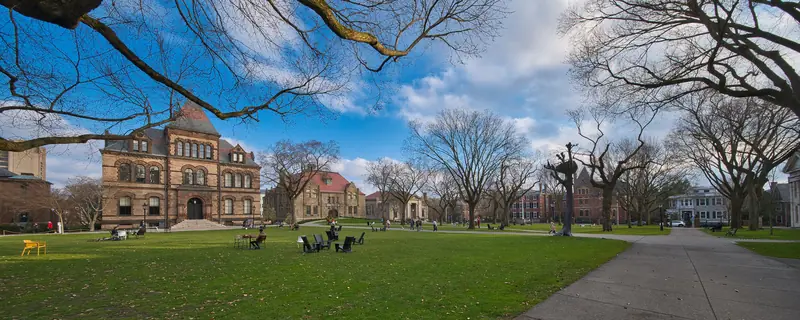 Brown UniversityProvidence · 835 mi · $157,822 annual earnings 4 years after graduation, a median across 50 graduates$1.44M
Campus photographs: Harvard University by Ryan Pflaum (CC BY-SA 4.0); Brown University by Chris Rycroft (CC BY 2.0)
Measured from federal filings, not from a survey. Each figure is compared against four-year colleges, because medians differ too much between sectors for a national comparison to describe anything but the sector.
Students and recent alumni of Northwestern University, in their own words, on Reddit. Every quotation links to the thread it came from.
I do know that their research departments need to treat their employees better.r/Northwestern
this school is NOT CC transfer friendly: 8 out of 270 were community colleger/Northwestern
I graduated in 2023 and would choose to go to NU for undergrad again for sure. There’s something to complain about at every university and the education, campus, and extracurriculars are great!r/Northwestern
I did make some of my best friends here and the school pushed me to learn and grow so, so much.r/Northwestern
Campus culture is great and it’s definitely a quite a socially active university especially in the Northern part of campus which is awesome.r/Northwestern
Neither of us had ever fenced before, but once the club members saw us they were really welcoming, and literally went straight to teaching us how to fence.r/Northwestern
Plus social events and free (often homemade) food multiple times a week. The people there are awesome, I legitimately met half my best friends there.r/Northwestern
Graduated in December, objectively I am quite critical of Northwestern in terms of the student culture (relationships can be quite transactional) and academics can be hard, and personally I didn't care much for Evanston...r/Northwestern
Clubs are super competitive especially for business which sucks, and it feels like NU doesn’t really live up to its name in the business field when it comes to company pull or even helping you try to find opportunities. I struggled to find a rhythm this entire first year and debated a transfer the entire time but ended up sticking it out.r/Northwestern
I’ve been here for about 2 weeks now, and I still haven’t made a friend. I’ve introduced myself to people in my classes, talked to people at events, went to Hillel/Chabad, etc., but haven’t met any potential friends.r/Northwestern
Compare Northwestern University with another college · up to four side by side, on return and on what each place is like.
Share of the 2,105 students who entered as first-year undergraduates in 2024. The states shown are the three largest outside Illinois, so these do not add to 100%.
Total gain after 20 years is what a graduate is ahead at that point: what the degree pays above a high-school graduate in the same state, less four years of net price and the wages given up while studying, weighted by the share of students who finish. At this college that share is 95%, and it is the same for every program on this page because the federal data reports completion for the institution rather than for individual programs. Four-year and open-admission colleges are ranked separately and never pooled.
Annual earnings 4 years after graduation is the median earnings of that program’s graduates at that point, for students who received federal aid, and is published by program. There is no program-level cost anywhere in the federal data, so net price is the college’s figure applied to each program alike. That is sound for ordering programs against one another and should not be read as a precise figure for any one of them.
Cost on this page is always net price, never the published sticker price. Net price is the college’s full cost of attendance for a year, meaning tuition, required fees, books and supplies, and housing and food, with grant and scholarship aid from federal, state and institutional sources subtracted. Loans are not subtracted, because a loan is not a discount. It is an average for first-time full-time undergraduates receiving federal aid, reported by the college in the income bands shown, so it describes a typical family in that band rather than any particular one. A student living at home, paying out-of-state rates or holding an outside scholarship will not see this figure.
Federal loan debt comes from the College Scorecard and is a median among students who borrowed, not an average across everyone. A college where few students take loans can show a high figure and a small bill for most families, so the share who borrow is printed above it and neither should be read without the other. It counts federal student loans only: private loans and Parent PLUS borrowing are not in it and are not published anywhere comparable, which makes this a floor on what a family owes rather than a total. The figure for students who leave without finishing is the same loans without the degree they were taken for. Default rates are deliberately absent: federal repayment was suspended, so the published three-year rate is zero at almost every college in the country and says nothing about any of them.
Most-awarded programs are degrees conferred in AY2025, first majors only, so a double major counts once. Where two programs are within a few degrees of each other the order between them is not meaningful.
Quotations from students were found by a language model searching Reddit, and selected from threads discussing this college in the window shown beside them. Reddit only, so this is not a survey and not a representative sample: who posts and how much varies enormously by the size and type of a college, and for that reason nothing there is scored, totalled or compared between colleges. Post dates are the model’s own reckoning rather than a retrieved field, so treat them as inside the window and not as exact. Each quotation links to its thread.
What this college is like compares each measure against four-year colleges, because medians differ too much between sectors for a national comparison to describe anything but the sector. A position of “higher than 90%” means the college matches or beats nine in ten of them on that measure, which is why the measured figure is printed beside it. Six of those measures have a better end and carry a mark; the rest are positions with no better end and carry none. There is no overall score, because combining them would need weights and the weights would be our opinion rather than a measurement.
Sources. IPEDS, the Department of Education’s annual survey, except where stated. Each block in the column beside shows its own year, because the underlying files are released on different schedules and a single date across all of them would be false. Published tuition is a sticker price and is never used as a cost; net price is. Test scores are the middle 50% of enrolled students who submitted a score, not of admitted applicants, which is why they differ from the figures other guides print. Where a US News rank is shown it is the current edition, published as a fact about the college rather than an endorsement of the ranking.
The photograph at the top of this page was taken by a member of the public and published under a license that permits reuse with credit. It is not supplied by the college, is not endorsed by it, and shows one building on one day rather than the campus as a whole. We do not generate campus images or buy stock photographs of real places, because a picture of a campus that is not that campus is a lie about somewhere real. Full credit: “Deering Library Northwestern.jpg”, Madcoverboy, via Wikimedia Commons. CC BY-SA 3.0. Source: https://commons.wikimedia.org/wiki/File:Deering_Library_Northwestern.jpg. License/status: https://creativecommons.org/licenses/by-sa/3.0/.