Loading
Baltimore, MD
Selective · 14 of 15 programs pay back
6,920 undergraduates, 6 students for every faculty member · Other athletics · Graduate students are 76% of total enrollment
Estimated over 20 years
$2.12M
Computer and Information Sciences General
Estimated over 20 years
-$200k
Music
This college's programs pay very differently from one another, so any single figure for the college as a whole would hide more than it shows.
Every college here returns more than this one’s best program, within 250 miles. Only 13% of students here come from MD, so the search is wider than the usual 50 miles: for a college people travel to, the colleges down the road are not the real alternatives.
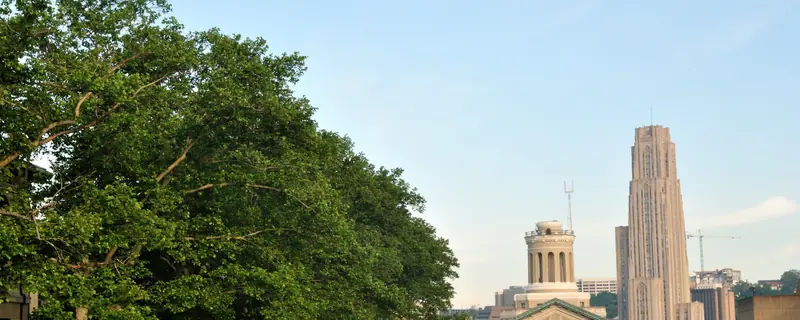 Carnegie Mellon UniversityComputer Science · Pittsburgh · 192 mi · $268,121 annual earnings 4 years after graduation, a median across 121 graduates$3.07M
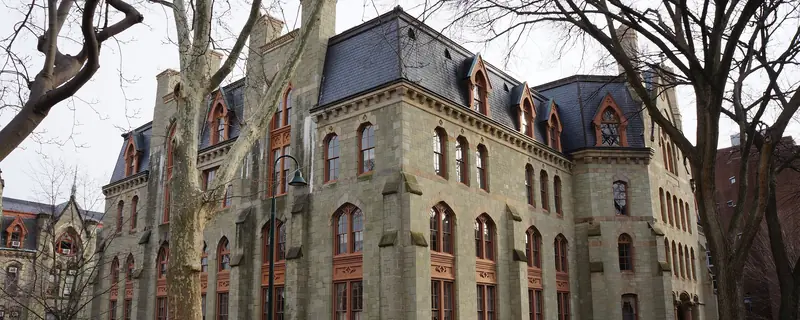 University of PennsylvaniaComputer and Information Sciences General · Philadelphia · 87 mi · $241,380 annual earnings 4 years after graduation, a median across 40 graduates$2.85M
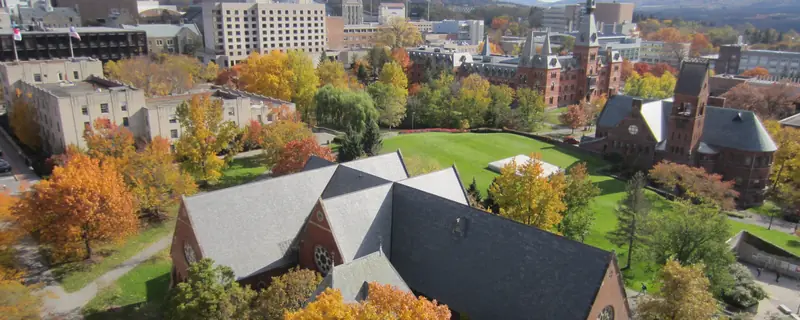 Cornell UniversityComputer Science · Ithaca · 216 mi · $223,309 annual earnings 4 years after graduation, a median across 296 graduates2 campuses$2.53M
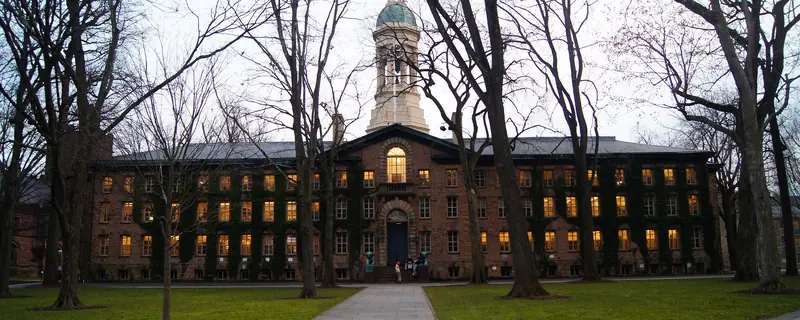 Princeton UniversityComputer Science · Princeton · 126 mi · $217,973 annual earnings 4 years after graduation, a median across 30 graduates$2.50M
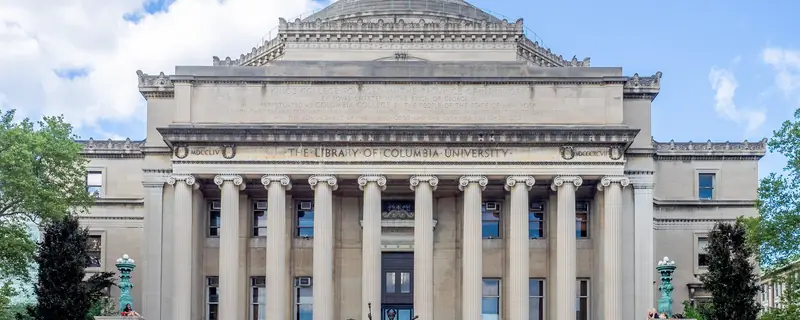 Columbia University in the City of New YorkComputer Engineering · New York · 174 mi · $194,365 annual earnings 4 years after graduation, a median across 18 graduates$2.16M
Campus photographs: Carnegie Mellon University by Asamudra (CC BY 3.0); University of Pennsylvania by Michel Alexandre Salim (CC BY-SA 2.0); Cornell University by Maeshima hiroki (CC BY-SA 3.0); Princeton University by Rohit Hirway (CC BY-SA 3.0); Columbia University in the City of New York by Ajay Suresh (CC BY 2.0)
Holding the subject fixed and changing the college, for this college’s three strongest programs. The list above compares whole colleges at their best; this one answers the narrower question a student who already knows their subject is actually asking.
University of PennsylvaniaPhiladelphia · 87 mi · $241,380 annual earnings 4 years after graduation, a median across 40 graduates$2.85MCampus photograph: University of Pennsylvania by Michel Alexandre Salim (CC BY-SA 2.0)
Cornell UniversityIthaca · 216 mi · $134,455 annual earnings 4 years after graduation, a median across 31 graduates2 campuses$1.27MCampus photograph: Cornell University by Maeshima hiroki (CC BY-SA 3.0)
Princeton UniversityPrinceton · 126 mi · $160,763 annual earnings 4 years after graduation, a median across 48 graduates$1.67M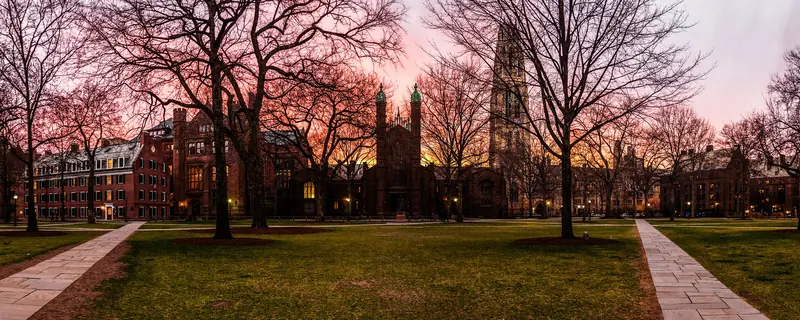 Yale UniversityNew Haven · 238 mi · $142,936 annual earnings 4 years after graduation, a median across 72 graduates$1.39MColumbia University in the City of New YorkNew York · 174 mi · $137,710 annual earnings 4 years after graduation, a median across 150 graduates$1.35M
Campus photographs: Princeton University by Rohit Hirway (CC BY-SA 3.0); Yale University by Namkota (CC BY-SA 4.0); Columbia University in the City of New York by Ajay Suresh (CC BY 2.0)
Measured from federal filings, not from a survey. Each figure is compared against four-year colleges, because medians differ too much between sectors for a national comparison to describe anything but the sector.
Students and recent alumni of Johns Hopkins University, in their own words, on Reddit. Every quotation links to the thread it came from.
My daughter and I will be in Baltimore this Monday, and she’s very interested in seeing Johns Hopkins.r/jhu
I personally would say i really enjoyed my time because of my culture - one year out of grad, I still think of the hopkins community as one of the chillest and most intellectually curious places. While people are sweats, they are also wholesome and for the most part welcomingr/jhu
What really helped me was meeting people in my classes and joining clubs (good ones are hcms and orchestra, taekwondo, outdoors club, but really whatever you are most interested in)!r/jhu
a lot of this stuff you hear about JHU being a super depressing campus or having a horrible social life is severely overinflated and exaggerated. your social life here will just be what you make of it. def worth exploring clubs, interest groups, greek life, etcr/jhu
Engineering wise there are a ton of student activities, in addition to incredible research opps. If you want to do research as an undergrad, Hopkins is the best place hands down - we have way, way more funding than other universities and the school really encourages students to pursue research.r/jhu
i took a lot of cool classes tho, like a photography course, an edm production course (shoutout wendel), a planetary course, and some other cool classes bc they were interesting.r/jhu
Hella activities and clubs imo, and they are p supportive (in my experience) with making new clubs if they don’t have something you want. School culture is good, can be tense (esp with the pre meds) but also supportive.r/jhu
As an alum, i loved it. I moved across the country to come here, and i really enjoyed everything it had to offer. granted i had ups and downs, but at the end of the day it was so worth. really got an amazing education and a lot of unique experiences from hopkins and baltimore as a whole, both medical and non-medical!r/jhu
Compare Johns Hopkins University with another college · up to four side by side, on return and on what each place is like.
Share of the 1,389 students who entered as first-year undergraduates in 2024. The states shown are the three largest outside Maryland, so these do not add to 100%.
Total gain after 20 years is what a graduate is ahead at that point: what the degree pays above a high-school graduate in the same state, less four years of net price and the wages given up while studying, weighted by the share of students who finish. At this college that share is 94%, and it is the same for every program on this page because the federal data reports completion for the institution rather than for individual programs. Four-year and open-admission colleges are ranked separately and never pooled.
Annual earnings 4 years after graduation is the median earnings of that program’s graduates at that point, for students who received federal aid, and is published by program. There is no program-level cost anywhere in the federal data, so net price is the college’s figure applied to each program alike. That is sound for ordering programs against one another and should not be read as a precise figure for any one of them.
Cost on this page is always net price, never the published sticker price. Net price is the college’s full cost of attendance for a year, meaning tuition, required fees, books and supplies, and housing and food, with grant and scholarship aid from federal, state and institutional sources subtracted. Loans are not subtracted, because a loan is not a discount. It is an average for first-time full-time undergraduates receiving federal aid, reported by the college in the income bands shown, so it describes a typical family in that band rather than any particular one. A student living at home, paying out-of-state rates or holding an outside scholarship will not see this figure.
Federal loan debt comes from the College Scorecard and is a median among students who borrowed, not an average across everyone. A college where few students take loans can show a high figure and a small bill for most families, so the share who borrow is printed above it and neither should be read without the other. It counts federal student loans only: private loans and Parent PLUS borrowing are not in it and are not published anywhere comparable, which makes this a floor on what a family owes rather than a total. The figure for students who leave without finishing is the same loans without the degree they were taken for. Default rates are deliberately absent: federal repayment was suspended, so the published three-year rate is zero at almost every college in the country and says nothing about any of them.
Most-awarded programs are degrees conferred in AY2025, first majors only, so a double major counts once. Where two programs are within a few degrees of each other the order between them is not meaningful.
Quotations from students were found by a language model searching Reddit, and selected from threads discussing this college in the window shown beside them. Reddit only, so this is not a survey and not a representative sample: who posts and how much varies enormously by the size and type of a college, and for that reason nothing there is scored, totalled or compared between colleges. Post dates are the model’s own reckoning rather than a retrieved field, so treat them as inside the window and not as exact. Each quotation links to its thread.
What this college is like compares each measure against four-year colleges, because medians differ too much between sectors for a national comparison to describe anything but the sector. A position of “higher than 90%” means the college matches or beats nine in ten of them on that measure, which is why the measured figure is printed beside it. Six of those measures have a better end and carry a mark; the rest are positions with no better end and carry none. There is no overall score, because combining them would need weights and the weights would be our opinion rather than a measurement.
Sources. IPEDS, the Department of Education’s annual survey, except where stated. Each block in the column beside shows its own year, because the underlying files are released on different schedules and a single date across all of them would be false. Published tuition is a sticker price and is never used as a cost; net price is. Test scores are the middle 50% of enrolled students who submitted a score, not of admitted applicants, which is why they differ from the figures other guides print. Where a US News rank is shown it is the current edition, published as a fact about the college rather than an endorsement of the ranking.
The photograph at the top of this page was taken by a member of the public and published under a license that permits reuse with credit. It is not supplied by the college, is not endorsed by it, and shows one building on one day rather than the campus as a whole. We do not generate campus images or buy stock photographs of real places, because a picture of a campus that is not that campus is a lie about somewhere real. Full credit: “Gilman Hall, Johns Hopkins University, Baltimore, MD.jpg”, Daderot, via Wikimedia Commons. Public domain. Source: https://commons.wikimedia.org/wiki/File:Gilman_Hall,_Johns_Hopkins_University,_Baltimore,_MD.jpg. License/status: https://commons.wikimedia.org/wiki/File:Gilman_Hall,_Johns_Hopkins_University,_Baltimore,_MD.jpg#Licensing.