College Sonar
Compare collegesHow it worksFor colleges

Loading

Explore

Look up a collegeDegrees near youCompare collegesTop degrees by stateWhat colleges are like

Understand

How it worksHow badges are awarded

About

For collegesContact us

College Sonar by Optivara © 2026

University of Maryland-College Park

College Park, MD

Best return on a degreeCompetitive colleges near Washington-Arlington-Alexandria, DC-VA-MD-WV · family income $48k–$75k · 2027Lowest cost for a low-income familyCompetitive colleges near Washington-Arlington-Alexandria, DC-VA-MD-WV · family income under $30k · 2027Most students return after year oneCompetitive colleges near Washington-Arlington-Alexandria, DC-VA-MD-WV · 2027
Photo: Blacktupelo · CC BY-SA 4.0

Competitive · 51 of 54 programs pay back

30,373 undergraduates, 17 students for every faculty member · Division I-FBS athletics

What this college is like

Best Financial Gain

Estimated over 20 years

$1.31M

Computer Engineering

Worst Financial Gain

Estimated over 20 years

-$146k

Drama/Theatre Arts and Stagecraft

Customize by family incomeUnder $30k$30k to $48k$48k to $75k$75k to $110kOver $110k
Program20 yr Financial Gain
  1. 1Computer Engineering$152,422 annual earnings 4 years after graduation, a median across 72 graduates$1.31M
  2. 2Computer and Information Sciences General$144,501 annual earnings 4 years after graduation, a median across 188 graduates$1.21M
  3. 3Computer Science$137,931 annual earnings 4 years after graduation, a median across 228 graduates$1.12M
  4. 4Management Sciences and Quantitative Methods$111,649 annual earnings 4 years after graduation, a median across 51 graduates$776k
  5. 5Finance and Financial Management Services$110,648 annual earnings 4 years after graduation, a median across 208 graduates$762k
  6. 6Information Science/Studies$109,092 annual earnings 4 years after graduation, a median across 284 graduates$742k
  7. 7Electrical Electronics and Communications Engineering$107,834 annual earnings 4 years after graduation, a median across 103 graduates$725k
  8. 8Chemical Engineering$102,149 annual earnings 4 years after graduation, a median across 74 graduates$650k
  9. 9Mechanical Engineering$100,003 annual earnings 4 years after graduation, a median across 245 graduates$622k
  10. 10Mathematics$99,689 annual earnings 4 years after graduation, a median across 86 graduates$618k
View all 54 programs →
  1. 11Aerospace Aeronautical and Astronautical/Space Engineering$98,044 annual earnings 4 years after graduation, a median across 58 graduates$596k
  2. 12Materials Engineering$97,714 annual earnings 4 years after graduation, a median across 18 graduates$592k
  3. 13Accounting and Related Services$97,314 annual earnings 4 years after graduation, a median across 187 graduates$587k
  4. 14Marketing$93,782 annual earnings 4 years after graduation, a median across 159 graduates$540k
  5. 15Agricultural Engineering$93,440 annual earnings 4 years after graduation, a median across 44 graduates$536k
  6. 16Civil Engineering$93,280 annual earnings 4 years after graduation, a median across 115 graduates$533k
  7. 17Engineering Other$92,653 annual earnings 4 years after graduation, a median across 32 graduates$525k
  8. 18Physics$90,900 annual earnings 4 years after graduation, a median across 22 graduates$502k
  9. 19International Business$90,333 annual earnings 4 years after graduation, a median across 46 graduates$495k
  10. 20Business Administration Management and Operations$86,590 annual earnings 4 years after graduation, a median across 164 graduates$445k
  11. 21Economics$83,880 annual earnings 4 years after graduation, a median across 383 graduates$410k
  12. 22Biochemistry Biophysics and Molecular Biology$80,470 annual earnings 4 years after graduation, a median across 18 graduates$365k
  13. 23Chemistry$79,869 annual earnings 4 years after graduation, a median across 17 graduates$357k
  14. 24Agricultural Business and Management$78,577 annual earnings 4 years after graduation, a median across 26 graduates$340k
  15. 25Political Science and Government$74,437 annual earnings 4 years after graduation, a median across 204 graduates$285k
  16. 26Communication and Media Studies$74,402 annual earnings 4 years after graduation, a median across 265 graduates$285k
  17. 27Food Science and Technology$73,677 annual earnings 4 years after graduation, a median across 36 graduates$275k
  18. 28Public Health$72,328 annual earnings 4 years after graduation, a median across 222 graduates$257k
  19. 29Communication Disorders Sciences and Services$69,033 annual earnings 4 years after graduation, a median across 48 graduates$214k
  20. 30Architecture$68,527 annual earnings 4 years after graduation, a median across 76 graduates$207k
  21. 31Journalism$68,128 annual earnings 4 years after graduation, a median across 120 graduates$202k
  22. 32Criminology$67,258 annual earnings 4 years after graduation, a median across 305 graduates$190k
  23. 33Sociology$65,974 annual earnings 4 years after graduation, a median across 63 graduates$174k
  24. 34Ecology Evolution Systematics and Population Biology$65,639 annual earnings 4 years after graduation, a median across 59 graduates$169k
  25. 35Human Development Family Studies and Related Services$65,136 annual earnings 4 years after graduation, a median across 129 graduates$162k
  26. 36Biology General$64,867 annual earnings 4 years after graduation, a median across 177 graduates$159k
  27. 37Philosophy$64,846 annual earnings 4 years after graduation, a median across 22 graduates$159k
  28. 38Geography and Cartography$63,835 annual earnings 4 years after graduation, a median across 68 graduates$145k
  29. 39Sports Kinesiology and Physical Education/Fitness$62,362 annual earnings 4 years after graduation, a median across 186 graduates$126k
  30. 40History$60,089 annual earnings 4 years after graduation, a median across 58 graduates$96k
  31. 41Area Studies$59,469 annual earnings 4 years after graduation, a median across 31 graduates$88k
  32. 42Ethnic Cultural Minority Gender and Group Studies$59,461 annual earnings 4 years after graduation, a median across 23 graduates$88k
  33. 43Natural Resources Conservation and Research$59,329 annual earnings 4 years after graduation, a median across 49 graduates$86k
  34. 44English Language and Literature General$59,288 annual earnings 4 years after graduation, a median across 117 graduates$85k
  35. 45Romance Languages Literatures and Linguistics$59,193 annual earnings 4 years after graduation, a median across 27 graduates$84k
  36. 46Teacher Education and Professional Development Specific Levels and Methods$58,086 annual earnings 4 years after graduation, a median across 73 graduates$70k
  37. 47East Asian Languages Literatures and Linguistics$58,063 annual earnings 4 years after graduation, a median across 16 graduates$69k
  38. 48Psychology General$57,575 annual earnings 4 years after graduation, a median across 161 graduates$63k
  39. 49Animal Sciences$56,248 annual earnings 4 years after graduation, a median across 33 graduates$45k
  40. 50Fine and Studio Arts$55,713 annual earnings 4 years after graduation, a median across 62 graduates$38k
  41. 51Anthropology$53,038 annual earnings 4 years after graduation, a median across 16 graduates$3,011
  42. 52Film/Video and Photographic Arts$50,713 annual earnings 4 years after graduation, a median across 17 graduates-$28k
  43. 53Music$47,654 annual earnings 4 years after graduation, a median across 17 graduates-$68k
  44. 54Drama/Theatre Arts and Stagecraft$41,742 annual earnings 4 years after graduation, a median across 24 graduates-$146k

This college's programs pay very differently from one another, so any single figure for the college as a whole would hide more than it shows.

Other colleges to consider

Every college here returns more than this one’s best program, within 250 miles. Only 2 colleges within 50 miles return more, so the search was widened to 250 miles rather than showing you almost nothing.

Colleges of comparable difficulty come first here. Any that admit far fewer applicants than this one sit below them and are marked with what they admit. A more selective college is a different application, not a free upgrade, and part of why its graduates earn more is who it admitted in the first place.
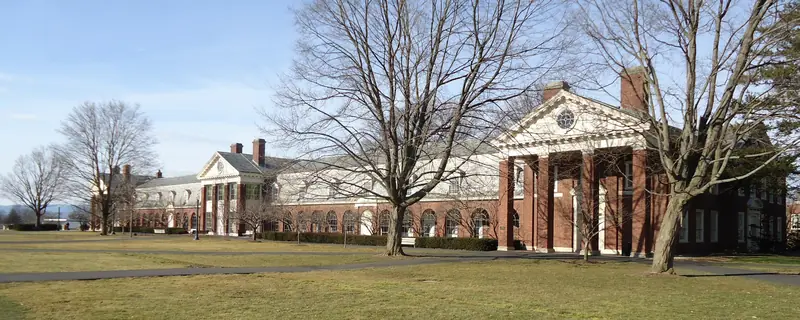
  1. 1Bucknell University 2012 20Bucknell UniversityComputer Engineering · Lewisburg · 136 mi · $156,885 annual earnings 4 years after graduation, a median across 31 graduatesadmits under 40%$1.33M

Campus photograph: Bucknell University by Tomwsulcer (CC0)

Harder to get into than this college, by the same measure
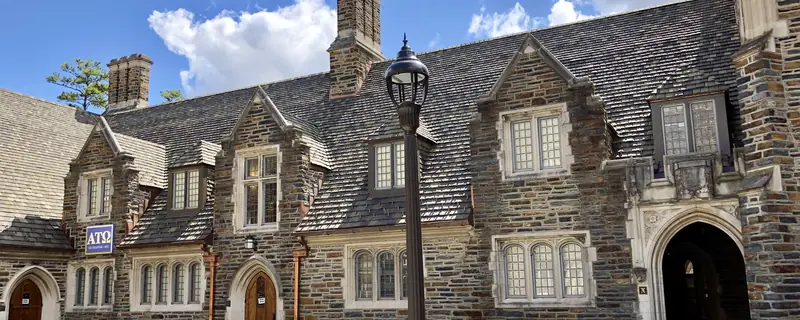
  1. 2Craven Quad, West Campus, Duke University, Durham, NCDuke UniversityMathematics · Durham · 234 mi · $297,029 annual earnings 4 years after graduation, a median across 17 graduatesadmits 6%$3.60M
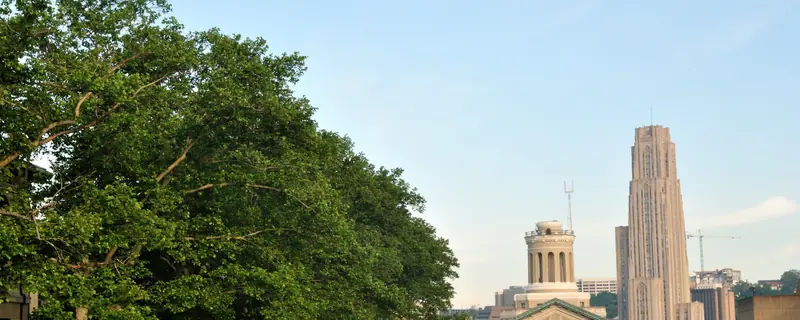
  2. 3The Mall Carnegie MellonCarnegie Mellon UniversityComputer Science · Pittsburgh · 188 mi · $268,121 annual earnings 4 years after graduation, a median across 121 graduatesadmits 12%$3.04M
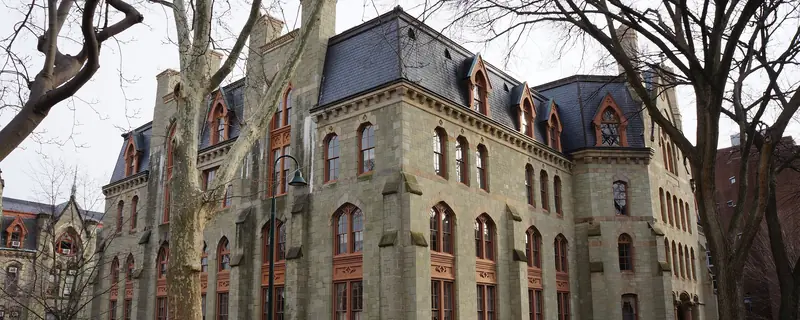
  3. 4College Hall, University of PennsylvaniaUniversity of PennsylvaniaComputer and Information Sciences General · Philadelphia · 115 mi · $241,380 annual earnings 4 years after graduation, a median across 40 graduatesadmits 5%$2.81M
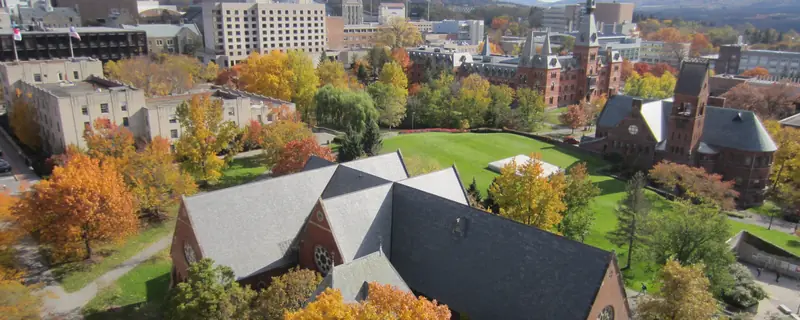
  4. 5Cornell University from McGraw TowerCornell UniversityComputer Science · Ithaca · 240 mi · $223,309 annual earnings 4 years after graduation, a median across 296 graduates2 campusesadmits 9%$2.52M
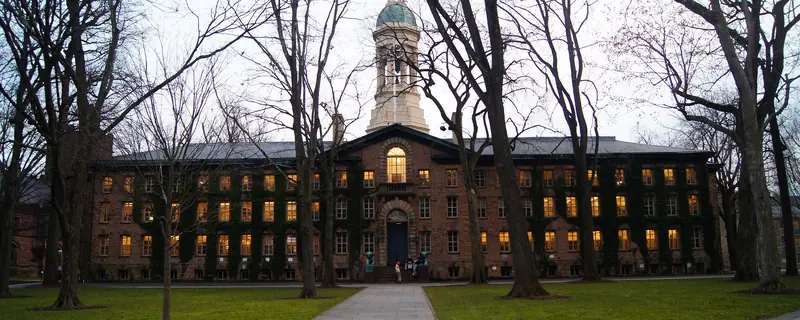
  5. 6Nassau Hall Princeton UniPrinceton UniversityComputer Science · Princeton · 154 mi · $217,973 annual earnings 4 years after graduation, a median across 30 graduatesadmits 5%$2.49M

Campus photographs: Duke University by Warren LeMay (CC0); Carnegie Mellon University by Asamudra (CC BY 3.0); University of Pennsylvania by Michel Alexandre Salim (CC BY-SA 2.0); Cornell University by Maeshima hiroki (CC BY-SA 3.0); Princeton University by Rohit Hirway (CC BY-SA 3.0)

The same programs elsewhere

Holding the subject fixed and changing the college, for this college’s three strongest programs. The list above compares whole colleges at their best; this one answers the narrower question a student who already knows their subject is actually asking.
Computer Engineering10 colleges pay more
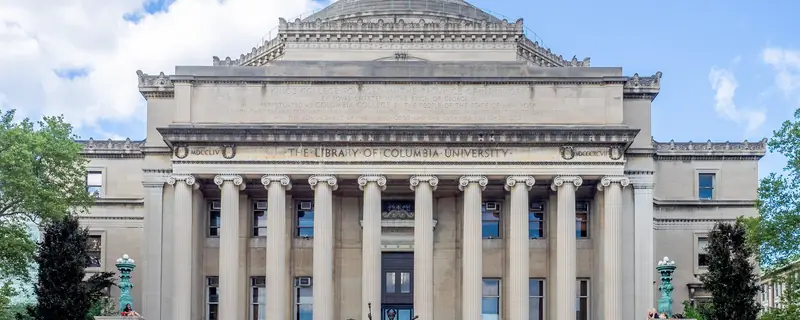
  1. 1Columbia University - Low Memorial LibraryColumbia University in the City of New YorkNew York · 202 mi · $194,365 annual earnings 4 years after graduation, a median across 18 graduatesadmits under 40%$2.16M
  2. 2Craven Quad, West Campus, Duke University, Durham, NCDuke UniversityDurham · 234 mi · $174,522 annual earnings 4 years after graduation, a median across 73 graduatesadmits under 40%$1.83M
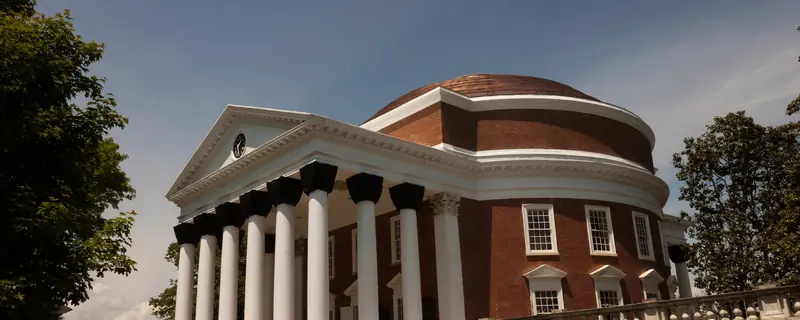
  3. 3Rotunda - University of VirginiaUniversity of Virginia-Main CampusCharlottesville · 107 mi · $148,175 annual earnings 4 years after graduation, a median across 30 graduatesadmits under 40%$1.39M

Campus photographs: Columbia University in the City of New York by Ajay Suresh (CC BY 2.0); Duke University by Warren LeMay (CC0); University of Virginia-Main Campus by Robert Emerson (CC BY-SA 3.0)

Computer and Information Sciences General16 colleges pay more
  1. 1College Hall, University of PennsylvaniaUniversity of PennsylvaniaPhiladelphia · 115 mi · $241,380 annual earnings 4 years after graduation, a median across 40 graduatesadmits under 40%$2.81M
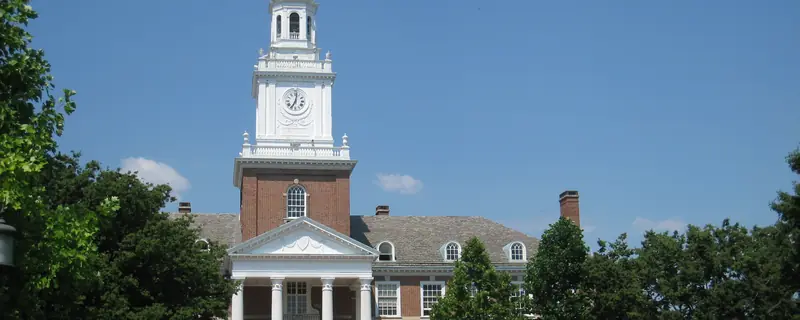
  2. 2Gilman Hall, Johns Hopkins University, Baltimore, MDJohns Hopkins UniversityBaltimore · 29 mi · $196,467 annual earnings 4 years after graduation, a median across 58 graduatesadmits under 40%$2.10M
  3. 3The Mall Carnegie MellonCarnegie Mellon UniversityPittsburgh · 188 mi · $187,437 annual earnings 4 years after graduation, a median across 43 graduatesadmits under 40%$1.91M

Campus photographs: University of Pennsylvania by Michel Alexandre Salim (CC BY-SA 2.0); Johns Hopkins University by Daderot (Public domain); Carnegie Mellon University by Asamudra (CC BY 3.0)

Computer Science42 colleges pay more
  1. 1The Mall Carnegie MellonCarnegie Mellon UniversityPittsburgh · 188 mi · $268,121 annual earnings 4 years after graduation, a median across 121 graduatesadmits under 40%$3.04M
  2. 2Cornell University from McGraw TowerCornell UniversityIthaca · 240 mi · $223,309 annual earnings 4 years after graduation, a median across 296 graduates2 campusesadmits under 40%$2.52M
  3. 3Nassau Hall Princeton UniPrinceton UniversityPrinceton · 154 mi · $217,973 annual earnings 4 years after graduation, a median across 30 graduatesadmits under 40%$2.49M

Campus photographs: Carnegie Mellon University by Asamudra (CC BY 3.0); Cornell University by Maeshima hiroki (CC BY-SA 3.0); Princeton University by Rohit Hirway (CC BY-SA 3.0)

What this college is like

Measured from federal filings, not from a survey. Each figure is compared against four-year colleges, because medians differ too much between sectors for a national comparison to describe anything but the sector.

Teaching
Students per instructor?
17:1
▼more students per instructor than 76% of four-year colleges
Staying and finishing
Come back after year one?
96%
▲higher than 96% of four-year colleges
Finish their credential?
75.4%
▲higher than 93% of four-year colleges
Cost and aid
Yearly cost, family under $30,000?
$6,739
▲cheaper than 89% of four-year colleges
Get a grant from the college?
48%
▼a lower share than 85% of four-year colleges
Receive a Pell Grant?
16%
a lower share than 93% of four-year colleges
The campus
Undergraduates?
30,373
larger than 97% of four-year colleges
Beds per 100 undergraduates?
41
fewer than 68% of four-year colleges
Study fully online?
0.8%
fewer than 70% of four-year colleges
Graduate students, share of enrollment?
18.2%
more than 60% of four-year colleges
Play a varsity sport?
1.9%
fewer than 96% of four-year colleges
Who else is there
Mix of student backgrounds?
76 of 100
more varied than 91% of four-year colleges
Choice of subject
Broad subject areas awarded?
26
▲more than 95% of four-year colleges
Also on record
Women and men
49% / 51%
reported, not ranked
Setting
Suburb
reported, not ranked
On-campus housing
Yes
residential
Athletic division
NCAA Division I-FBS
reported, not ranked

Compare every college in this metro

What students are saying

Students and recent alumni of University of Maryland-College Park, in their own words, on Reddit. Every quotation links to the thread it came from.

What came up most

several threads · August to October 2026
NegativeHousing availability and high off-campus rent were a recurring negative topic.
i love how umd just doesnt care about the residential buildings that affiliate itself with the university. yeah, upperclassmen are welcome to attain off campus housing, but make sure you have three arms so that the one you chop off for half a month’s rent leaves you with two functioning ones for the college experience you sold your kidneys for.
r/UMD
NegativeCommuter parking shortages and permit value were discussed mostly negatively.
Tell me why I pay over $300 to park on campus and yet I can’t find a single open spot in the entire lot?
r/UMD
PositiveStudents frequently discussed choosing manageable or easy courses, generally positively.
WGSS275 with prof abhinav bhardwaj is goated hes super funny, most of the class is just discussion about literature. he makes the readings really fun.
r/UMD
MixedGeneral campus experience drew mixed discussion, balancing friendly social life and faculty praise against construction, parking, and services concerns.
1. Construction/parking is a headache. You likely will pay hundreds of dollars for a permit that’s no where near your classes 2. Faculty is great for the most part 3. The health center is very poor in the behavioral department referrals were a disaster 4. Dining halls were decent 5. People are generally nice and chill.
r/UMD

What students said they valued

several threads · November to October 2026
PositiveStudents valued the range of social communities and the friendliness they found in their academic department.
There are frats and parties, there are quiet friend and study groups, there are tons of clubs and social organizations, etc. If there is a type of social group you want to be a part of you can most likely find it here on campus. I have found people to be super nice here, especially in my department (physics), and some of my best friends ever are people I have met in classes and department events.
r/UMD
PositiveStudents valued the amount of research, student organizations, and access to Washington, DC.
We have SO MUCH research going on if that’s your thing, as well as a student group for basically anything you can imagine. We are also conveniently located right near DC, and there is decent public transit into the city.
r/UMD
PositiveA freshman valued the diverse student body, academics, club sports, and proximity to DC.
Really diverse group of people ... Close to DC, but not too close ... Great academics all around, oh also so many club sports and sooooo much to do.
r/UMD
PositiveA freshman liked the campus atmosphere, appearance, and how welcoming people had been.
Really beautiful campus everyone’s been very nice so far. Love how close it is to DC and it’s a rlly neat atmosphere.
r/UMD
PositiveA journalism student valued the classes, friendly people, activities, and living near DC.
I really like it. It was my dream school. Everyone’s pretty nice and there’s a lot to do. I’m out of state so it’s awesome living by dc. I go there all the time with friends or alone. The classes I’ve taken so far have been great. I’m a journalism major and I’ve really enjoyed it so far.
r/UMD
PositiveA graduating senior valued the university resources, while regretting not using them sooner.
It’s a very good school and there’s a lot of resources that the university offers as well, as a graduating senior i’m so upset that I didn’t take advantage of those earlier.
r/UMD
PositiveA senior engineering student valued that the large student body supported varied ways to socialize and have fun.
Social life is diverse but there’s tons of ways to meet people and have fun.
r/UMD
PositiveA current senior valued the school's breadth of resources, while emphasizing that students need to seek them out.
We are an extremely large school with a wide range of resources that won’t be put into your lap.
r/UMD
PositiveA recent student who moved to another university valued UMD's relative affordability, late-running buses, and student software access.
I think in hindsight, UMD is fairly reasonable financially for most things, especially in-state. ... The buses are free (albeit occasionally inconsistent) and run fairly late. A ton of software is free for all students which I'm finding out is very much not the case at a number of other universities.
r/UMD
PositiveAn alumnus valued the education, opportunities, and networking associated with graduating from UMD.
As an alumni I love telling people I graduated from there because of the great education, opportunities, and networking etc etc.
r/UMD

What students criticized

several threads · November to October 2026
NegativeStudents criticized the shortage of available on-campus housing for continuing students.
Is it normal for UMD to just run out of housing????
r/UMD
NegativeStudents complained that off-campus housing near campus was becoming unaffordable and inaccessible.
i love how umd just doesnt care about the residential buildings that affiliate itself with the university.
r/UMD
NegativeStudents criticized high dorm prices and poor conditions in some residence halls.
the dorms are terrible.
r/UMD
NegativeStudents complained about paying full price for parking while much of their assigned lot was closed.
Why did I pay full price for a lot 1 parking permit if half of it is closed and I'm just gonna have to go and park at lot 4?
r/UMD
NegativeA student criticized the university's academic-integrity process after being found responsible despite submitting evidence in an appeal.
I still don’t find this fair at all, being punished for something I haven’t committed..
r/UMD
NegativeStudents complained that making friends at UMD felt difficult because other students seemed closed off.
i feel like so many people are reserved and don't like to talk to people here - i don't know if it's just me or the vibe of the whole university
r/UMD
NegativeStudents complained about recurring scam emails sent from university email accounts.
Man why are there so many scam emails coming from umd emails, crazy, hope no one clicks on them
r/UMD

Compare University of Maryland-College Park with another college · up to four side by side, on return and on what each place is like.

17,280Average annual costAfter grants · In-state · Family income $48k–$75k
89%Finish within six years
30,373Undergraduates
45%Applicants admitted

Where students come from

  • Marylandin state70%
  • New Jersey6%
  • New York4%
  • Pennsylvania3%
  • Outside the US2%

Share of the 5,818 students who entered as first-year undergraduates in 2024. The states shown are the three largest outside Maryland, so these do not add to 100%.

At a glance
SettingSuburb
Undergraduates?30,373
Graduate students6,737
Accepts45%
U.S. News national?#49
Admitted students who enroll?22%
WebsiteVisit umd.edu
AdmissionsAY2024
Applicants60,056
Admitted26,902
Enrolled5,818
SAT middle 50%?1400-1530
ACT middle 50%32-35
Test scores?considered but not required
CostAY2022
Published price, out of state?$40,306
Published price, in state?$11,505
Room and board$15,416
Full year’s cost after grants, by income, in state
Under $30k$6,739
$30k-$48k$10,357
$48k-$75k$17,280
$75k-$110k$22,100
Over $110k$25,664

These are in-state figures. A public college charges more to students from other states, and no out-of-state net price is published, so if you would not be a resident here, read the published prices above for the size of the difference.

Aid · AY2023
Average grant?$9,909 to 48%
Pell students?16%
Federal loan debt · October 2026
Students who borrow?22%
Owed at graduation?$16,000
Monthly, over 10 years?$182/mo
Owed if they leave early?$7,500
Outcomes2018 cohort
Graduate in 4 years75%
Graduate in 6 years89%
Return after year 1?96%
Students per faculty17:1
Most-awarded programs, bachelor'sAY2025
Computer Science1,178 degrees
Information Science/Studies924 degrees
Biology General448 degrees
Public Health402 degrees
Finance and Financial Management Services376 degrees
AthleticsAY2024
DivisionNCAA Division I-FBS
Athletes546
Share of undergraduates?2%
Athletic aid$18,516,362
StudentsAY2024
Women / men49% / 51%
White38%
Asian24%
Black13%
Hispanic11%
Two or more5%
International4%

Notes and sources

Total gain after 20 years is what a graduate is ahead at that point: what the degree pays above a high-school graduate in the same state, less four years of net price and the wages given up while studying, weighted by the share of students who finish. At this college that share is 89%, and it is the same for every program on this page because the federal data reports completion for the institution rather than for individual programs. Four-year and open-admission colleges are ranked separately and never pooled.

Annual earnings 4 years after graduation is the median earnings of that program’s graduates at that point, for students who received federal aid, and is published by program. There is no program-level cost anywhere in the federal data, so net price is the college’s figure applied to each program alike. That is sound for ordering programs against one another and should not be read as a precise figure for any one of them.

Cost on this page is always net price, never the published sticker price. Net price is the college’s full cost of attendance for a year, meaning tuition, required fees, books and supplies, and housing and food, with grant and scholarship aid from federal, state and institutional sources subtracted. Loans are not subtracted, because a loan is not a discount. It is an average for first-time full-time undergraduates receiving federal aid, reported by the college in the income bands shown, so it describes a typical family in that band rather than any particular one. A student living at home, paying out-of-state rates or holding an outside scholarship will not see this figure.

Federal loan debt comes from the College Scorecard and is a median among students who borrowed, not an average across everyone. A college where few students take loans can show a high figure and a small bill for most families, so the share who borrow is printed above it and neither should be read without the other. It counts federal student loans only: private loans and Parent PLUS borrowing are not in it and are not published anywhere comparable, which makes this a floor on what a family owes rather than a total. The figure for students who leave without finishing is the same loans without the degree they were taken for. Default rates are deliberately absent: federal repayment was suspended, so the published three-year rate is zero at almost every college in the country and says nothing about any of them.

Most-awarded programs are degrees conferred in AY2025, first majors only, so a double major counts once. Where two programs are within a few degrees of each other the order between them is not meaningful.

Quotations from students were found by a language model searching Reddit, and selected from threads discussing this college in the window shown beside them. Reddit only, so this is not a survey and not a representative sample: who posts and how much varies enormously by the size and type of a college, and for that reason nothing there is scored, totalled or compared between colleges. Post dates are the model’s own reckoning rather than a retrieved field, so treat them as inside the window and not as exact. Each quotation links to its thread.

What this college is like compares each measure against four-year colleges, because medians differ too much between sectors for a national comparison to describe anything but the sector. A position of “higher than 90%” means the college matches or beats nine in ten of them on that measure, which is why the measured figure is printed beside it. Six of those measures have a better end and carry a mark; the rest are positions with no better end and carry none. There is no overall score, because combining them would need weights and the weights would be our opinion rather than a measurement.

Sources. IPEDS, the Department of Education’s annual survey, except where stated. Each block in the column beside shows its own year, because the underlying files are released on different schedules and a single date across all of them would be false. Published tuition is a sticker price and is never used as a cost; net price is. Test scores are the middle 50% of enrolled students who submitted a score, not of admitted applicants, which is why they differ from the figures other guides print. Where a US News rank is shown it is the current edition, published as a fact about the college rather than an endorsement of the ranking.

The photograph at the top of this page was taken by a member of the public and published under a license that permits reuse with credit. It is not supplied by the college, is not endorsed by it, and shows one building on one day rather than the campus as a whole. We do not generate campus images or buy stock photographs of real places, because a picture of a campus that is not that campus is a lie about somewhere real. Full credit: “McKeldin Mall sunset University Maryland College Park.jpg”, Blacktupelo, via Wikimedia Commons. CC BY-SA 4.0. Source: https://commons.wikimedia.org/wiki/File:McKeldin_Mall_sunset_University_Maryland_College_Park.jpg. License/status: https://creativecommons.org/licenses/by-sa/4.0/.

Full methodology