College Sonar
Compare collegesHow it worksFor colleges

Loading

Explore

Look up a collegeDegrees near youCompare collegesTop degrees by stateWhat colleges are like

Understand

How it worksHow badges are awarded

About

For collegesContact us

College Sonar by Optivara © 2026

Essex County College

Newark, NJ

Open admission · 2 of 13 programs pay back

5,237 undergraduates, 26 students for every faculty member · No on-campus housing, so students live locally and commute

What this college is like

Best Financial Gain

Estimated over 20 years

$118k

Registered Nursing Nursing Administration Nursing Research and Clinical Nursing

Worst Financial Gain

Estimated over 20 years

-$91k

Biology General

Customize by family incomeUnder $30k$30k to $48k$48k to $75k$75k to $110kOver $110k
Program20 yr Financial Gain
  1. 1Registered Nursing Nursing Administration Nursing Research and Clinical Nursing$105,634 annual earnings 4 years after graduation, a median across 55 graduates$118k
  2. 2Ophthalmic and Optometric Support Services and Allied Professions$68,134 annual earnings 4 years after graduation, a median across 23 graduates$7,315
  3. 3Allied Health and Medical Assisting Services$61,635 annual earnings 4 years after graduation, a median across 29 graduates-$12k
  4. 4Accounting and Related Services$56,282 annual earnings 4 years after graduation, a median across 55 graduates-$28k
  5. 5Business Administration Management and Operations$48,863 annual earnings 4 years after graduation, a median across 131 graduates-$50k
  6. 6Computer Programming$48,758 annual earnings 4 years after graduation, a median across 24 graduates-$50k
  7. 7Health/Medical Preparatory Programs$46,812 annual earnings 4 years after graduation, a median across 132 graduates-$56k
  8. 8Criminal Justice and Corrections$44,621 annual earnings 4 years after graduation, a median across 73 graduates-$62k
  9. 9Social Sciences General$44,106 annual earnings 4 years after graduation, a median across 129 graduates-$64k
  10. 10Social Work$40,064 annual earnings 4 years after graduation, a median across 18 graduates-$76k
View all 13 programs →
  1. 11Teacher Education and Professional Development Specific Levels and Methods$37,715 annual earnings 4 years after graduation, a median across 66 graduates-$83k
  2. 12Liberal Arts and Sciences General Studies and Humanities$37,177 annual earnings 4 years after graduation, a median across 91 graduates-$84k
  3. 13Biology Generalfails federal testIts graduates do not out-earn a typical worker aged 25 to 34 in the same state who has only a high school diploma. That is the U.S. Department of Education's earnings test, and a program that fails it did not beat not going.$34,961 annual earnings 4 years after graduation, a median across 25 graduates-$91k
Other colleges to consider

Every college here returns more than this one’s best program, within 50 miles.

Some of these admit a different share of applicants, marked on each row. A more selective college is a different application, not a free upgrade, and part of why its graduates earn more is who it admitted in the first place.
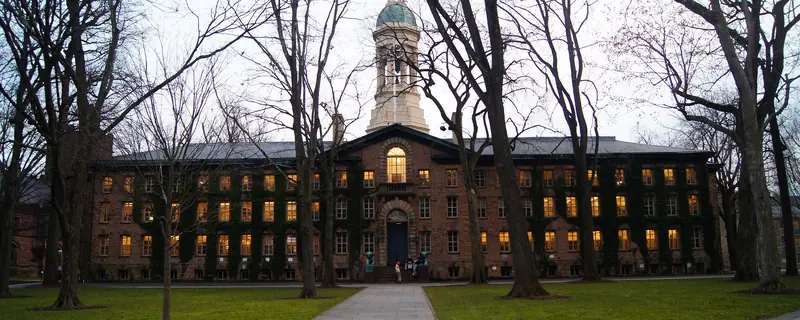
  1. 1Nassau Hall Princeton UniPrinceton UniversityComputer Science · Princeton · 37 mi · $217,973 annual earnings 4 years after graduation, a median across 30 graduatesadmits under 40%$2.49M
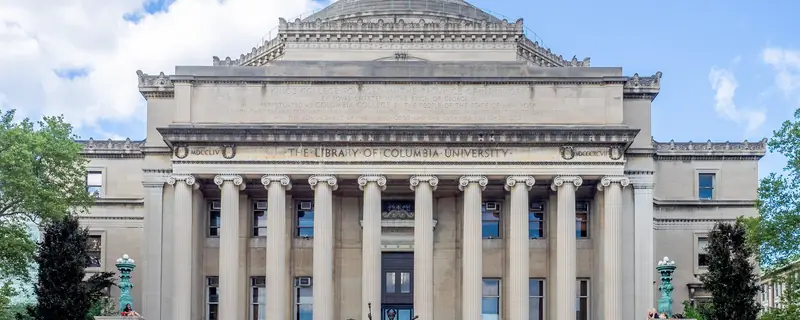
  2. 2Columbia University - Low Memorial LibraryColumbia University in the City of New YorkComputer Engineering · New York · 12 mi · $194,365 annual earnings 4 years after graduation, a median across 18 graduatesadmits under 40%$2.16M
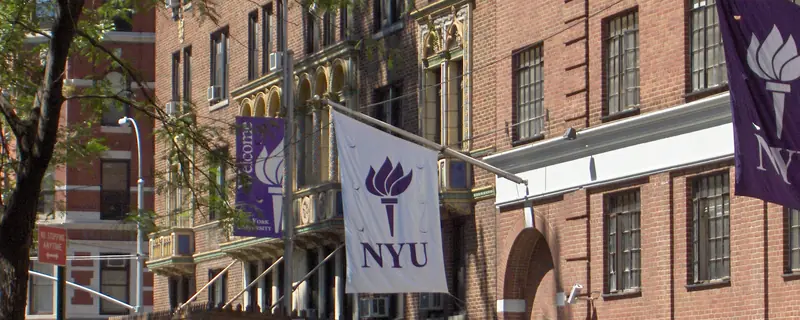
  3. 3NYU07New York UniversityManagement Sciences and Quantitative Methods · New York · 10 mi · $158,559 annual earnings 4 years after graduation, a median across 98 graduatesadmits under 40%$1.35M

  4. 4Stevens Institute of Technology campusStevens Institute of TechnologyApplied Mathematics · Hoboken · 8 mi · $156,419 annual earnings 4 years after graduation, a median across 39 graduatesadmits 40-70%$1.28M
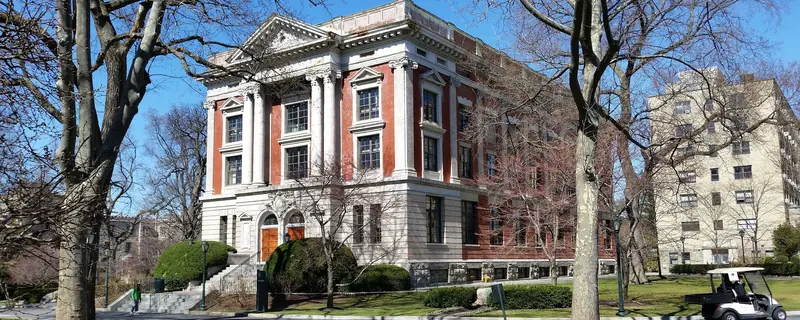
  5. 5The Cooper Union for the Advancement of Science and ArtElectrical Electronics and Communications Engineering · New York · 10 mi · $139,068 annual earnings 4 years after graduation, a median across 22 graduatesadmits under 40%$1.11M
  6. 6Collins Hall Rose Hill, FordhamFordham UniversityFinance and Financial Management Services · Bronx · 18 mi · $141,860 annual earnings 4 years after graduation, a median across 179 graduatesadmits 40-70%$1.05M

Campus photographs: Princeton University by Rohit Hirway (CC BY-SA 3.0); Columbia University in the City of New York by Ajay Suresh (CC BY 2.0); New York University by Jonathan71 (CC BY-SA 2.5); Stevens Institute of Technology by Sharkface217 (Public domain); Fordham University by Indefatigable2 at English Wikipedia (CC BY-SA 4.0)

The same programs elsewhere

Holding the subject fixed and changing the college, for this college’s three strongest programs. The list above compares whole colleges at their best; this one answers the narrower question a student who already knows their subject is actually asking.

Registered Nursing Nursing Administration Nursing Research and Clinical Nursing548 colleges pay more
  1. 1College of Staten Island CUNYStaten Island · 10 mi · $115,848 annual earnings 4 years after graduation, a median across 110 graduatesadmits 70%+$325k
  2. 2UCNJ Union College of Union County, New JerseyCranford · 9 mi · $103,289 annual earnings 4 years after graduation, a median across 87 graduates$255k
  3. 3Rockland Community CollegeSuffern · 28 mi · $103,785 annual earnings 4 years after graduation, a median across 64 graduates$207k
Ophthalmic and Optometric Support Services and Allied Professions5 colleges pay more, none within 50 miles

The nearest college that teaches this and returns more is 80 miles away, so in reach, this is the best there is.
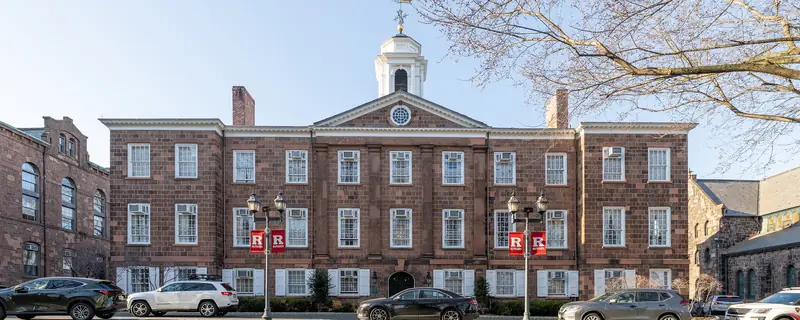
Allied Health and Medical Assisting Services120 colleges pay more
  1. 1Old Queens - Rutgers UniversityRutgers University-New BrunswickNew Brunswick · 22 mi · $50,738 annual earnings 4 years after graduation, a median across 35 graduates3 campusesadmits 40-70%$80k
  2. 2Nassau Community CollegeGarden City · 31 mi · $68,998 annual earnings 4 years after graduation, a median across 29 graduates$36k
  3. 3UCNJ Union College of Union County, New JerseyCranford · 9 mi · $59,825 annual earnings 4 years after graduation, a median across 29 graduates$26k

Campus photograph: Rutgers University-New Brunswick by Ajay Suresh (CC BY 4.0)

What this college is like

Measured from federal filings, not from a survey. Each figure is compared against open-admission colleges, because medians differ too much between sectors for a national comparison to describe anything but the sector.

Teaching
Students per instructor?
26:1
▼more students per instructor than 88% of open-admission colleges
Staying and finishing
Come back after year one?
56%
▼lower than 78% of open-admission colleges
Finish their credential?
12.5%
▼lower than 74% of open-admission colleges
Cost and aid
Yearly cost, family under $30,000?
$5,948
about typical for open-admission colleges
Get a grant from the college?
3%
▼a lower share than 84% of open-admission colleges
Receive a Pell Grant?
66%
a higher share than 83% of open-admission colleges
The campus
Undergraduates?
5,237
larger than 76% of open-admission colleges
Study fully online?
13.3%
fewer than 84% of open-admission colleges
Who else is there
Mix of student backgrounds?
69 of 100
more varied than 78% of open-admission colleges
Choice of subject
Broad subject areas awarded?
17
▲more than 67% of open-admission colleges
Also on record
Women and men
60% / 40%
reported, not ranked
Setting
City
reported, not ranked
On-campus housing
No
students commute

Compare every college in this metro

Compare Essex County College with another college · up to four side by side, on return and on what each place is like.

7,717Average annual costAfter grants · In-state · Family income $48k–$75k
5,237Undergraduates

Where students come from

  • New Jerseyin state85%
  • Alabama0%
  • New York0%
  • South Carolina0%
  • Outside the US14%

Share of the 1,405 students who entered as first-year undergraduates in 2024. The states shown are the three largest outside New Jersey, so these do not add to 100%.

At a glance
SettingCity
Undergraduates?5,237
WebsiteVisit essex.edu
Admissions
CostAY2022
Published price?$9,318
Full year’s cost after grants, by income, in state
Under $30k$5,948
$30k-$48k$6,655
$48k-$75k$7,717
$75k-$110k$9,897

These are in-state figures. A public college charges more to students from other states, and no out-of-state net price is published, so if you would not be a resident here, read the published prices above for the size of the difference.

Aid · AY2023
Average grant?$3,302 to 3%
Pell students?66%
Outcomes
Return after year 1?56%
Students per faculty26:1
Most-awarded programs, associateAY2025
Liberal Arts and Sciences General Studies and Humanities195 degrees
Business Administration Management and Operations144 degrees
Health/Medical Preparatory Programs123 degrees
Social Sciences General81 degrees
Registered Nursing Nursing Administration Nursing Research and Clinical Nursing54 degrees
StudentsAY2024
Women / men60% / 40%
Black45%
Hispanic29%
International11%
White6%
Asian2%
Two or more1%

Notes and sources

Total gain after 20 years is what a graduate is ahead at that point: what the degree pays above a high-school graduate in the same state, less four years of net price and the wages given up while studying, weighted by the share of students who finish. At this college that share is 20%, and it is the same for every program on this page because the federal data reports completion for the institution rather than for individual programs. Four-year and open-admission colleges are ranked separately and never pooled.

Annual earnings 4 years after graduation is the median earnings of that program’s graduates at that point, for students who received federal aid, and is published by program. There is no program-level cost anywhere in the federal data, so net price is the college’s figure applied to each program alike. That is sound for ordering programs against one another and should not be read as a precise figure for any one of them.

Cost on this page is always net price, never the published sticker price. Net price is the college’s full cost of attendance for a year, meaning tuition, required fees, books and supplies, and housing and food, with grant and scholarship aid from federal, state and institutional sources subtracted. Loans are not subtracted, because a loan is not a discount. It is an average for first-time full-time undergraduates receiving federal aid, reported by the college in the income bands shown, so it describes a typical family in that band rather than any particular one. A student living at home, paying out-of-state rates or holding an outside scholarship will not see this figure.

Most-awarded programs are degrees conferred in AY2025, first majors only, so a double major counts once. Where two programs are within a few degrees of each other the order between them is not meaningful.

What this college is like compares each measure against open-admission colleges, because medians differ too much between sectors for a national comparison to describe anything but the sector. A position of “higher than 90%” means the college matches or beats nine in ten of them on that measure, which is why the measured figure is printed beside it. Six of those measures have a better end and carry a mark; the rest are positions with no better end and carry none. There is no overall score, because combining them would need weights and the weights would be our opinion rather than a measurement.

Sources. IPEDS, the Department of Education’s annual survey, except where stated. Each block in the column beside shows its own year, because the underlying files are released on different schedules and a single date across all of them would be false. Published tuition is a sticker price and is never used as a cost; net price is. Test scores are the middle 50% of enrolled students who submitted a score, not of admitted applicants, which is why they differ from the figures other guides print. Where a US News rank is shown it is the current edition, published as a fact about the college rather than an endorsement of the ranking.

Full methodology