Loading
Clemson, SC
Selective · 42 of 52 programs pay back
23,777 undergraduates, 16 students for every faculty member · Division I-FBS athletics
Estimated over 20 years
$705k
Information Science/Studies
Estimated over 20 years
-$198k
Fine and Studio Arts
This college's programs pay very differently from one another, so any single figure for the college as a whole would hide more than it shows.
Every college here returns more than this one’s best program, within 250 miles. Nothing within 50 miles returns more, so the search was widened to 250 miles rather than showing you almost nothing.
Some of these admit a different share of applicants, marked on each row. A more selective college is a different application, not a free upgrade, and part of why its graduates earn more is who it admitted in the first place.
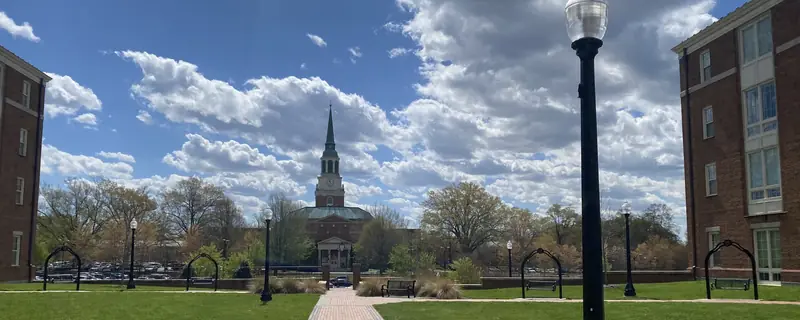 Wake Forest UniversityManagement Sciences and Quantitative Methods · Winston-Salem · 176 mi · $146,608 annual earnings 4 years after graduation, a median across 16 graduates$1.29M
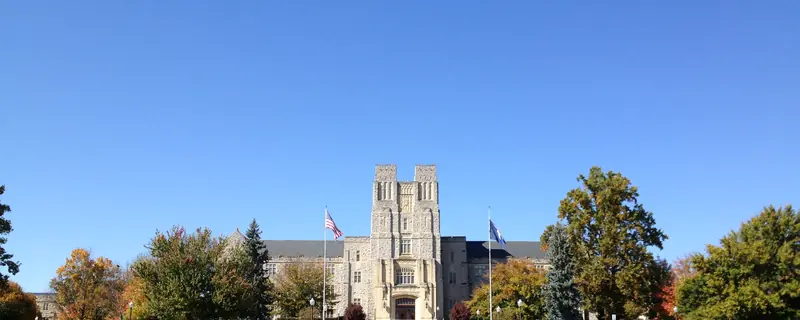 Virginia Polytechnic Institute and State UniversityComputer and Information Sciences General · Blacksburg · 222 mi · $144,103 annual earnings 4 years after graduation, a median across 253 graduatesadmits 40-70%$1.15M
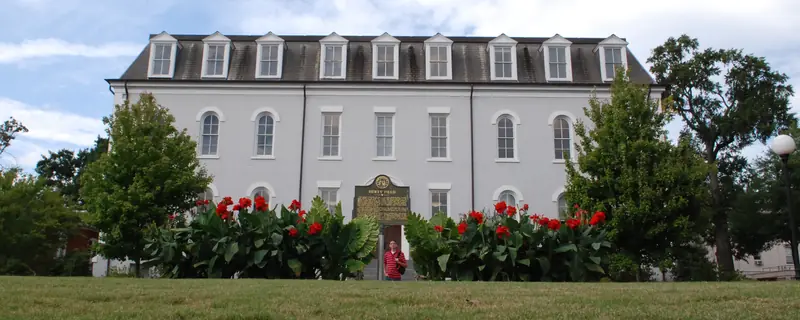 University of GeorgiaManagement Information Systems and Services · Athens · 59 mi · $113,184 annual earnings 4 years after graduation, a median across 194 graduates$880k
 North Carolina State University at RaleighComputer Science · Raleigh · 247 mi · $113,478 annual earnings 4 years after graduation, a median across 198 graduatesadmits 40-70%$817k
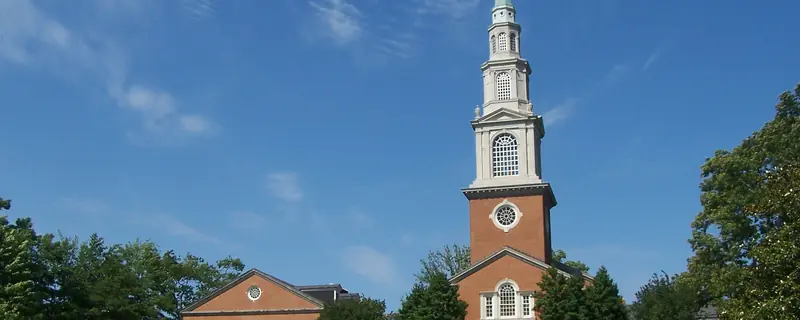 Samford UniversityPharmacy Pharmaceutical Sciences and Administration · Birmingham · 242 mi · $119,888 annual earnings 4 years after graduation, a median across 186 graduatesadmits 70%+$774k
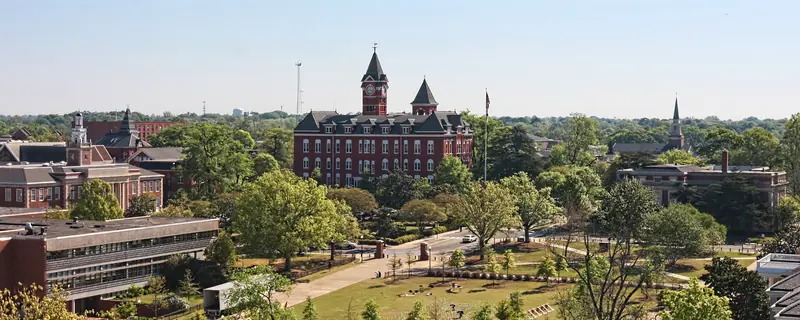 Auburn UniversityComputer Engineering · Auburn · 210 mi · $110,927 annual earnings 4 years after graduation, a median across 84 graduatesadmits 40-70%$752k
Campus photographs: Wake Forest University by Maggiehc23 (CC BY-SA 4.0); Virginia Polytechnic Institute and State University by Eric T Gunther (CC BY 3.0); University of Georgia by Josh Hallett from Winter Haven, FL, USA (CC BY-SA 2.0); North Carolina State University at Raleigh by Haruhide000 (CC BY-SA 3.0); Samford University by Brian R. Mooney / Sweetmoose6 (Public domain); Auburn University by dregsplod (CC BY 2.0)
Holding the subject fixed and changing the college, for this college’s three strongest programs. The list above compares whole colleges at their best; this one answers the narrower question a student who already knows their subject is actually asking.
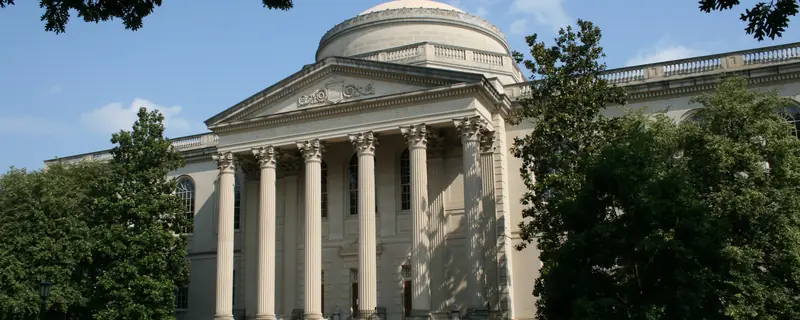 University of North Carolina at Chapel HillChapel Hill · 230 mi · $100,940 annual earnings 4 years after graduation, a median across 75 graduates$726k
Campus photograph: University of North Carolina at Chapel Hill by Ildar Sagdejev / Specious (CC BY-SA 3.0)
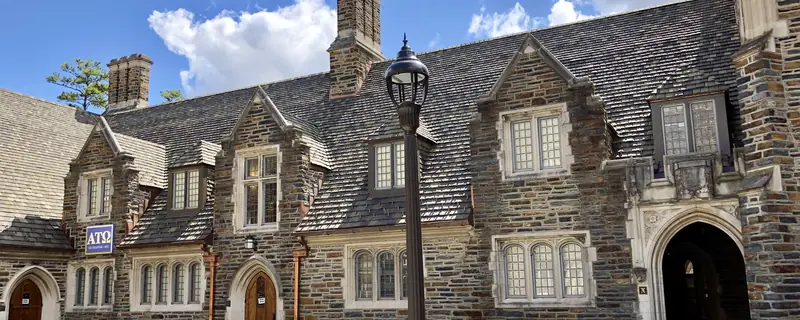 Duke UniversityDurham · 238 mi · $174,522 annual earnings 4 years after graduation, a median across 73 graduates$1.80M
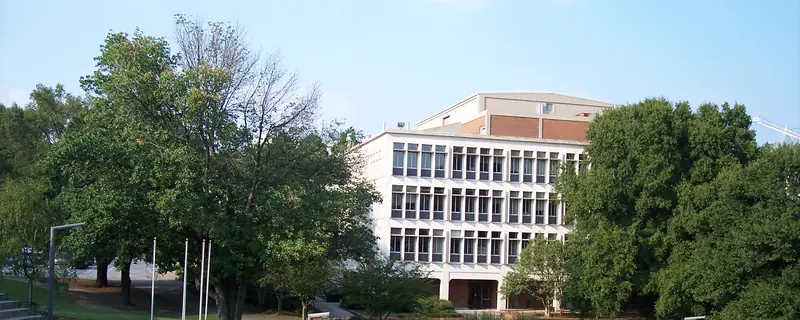 Georgia Institute of Technology-Main CampusAtlanta · 109 mi · $128,497 annual earnings 4 years after graduation, a median across 125 graduates$1.15MVirginia Polytechnic Institute and State UniversityBlacksburg · 222 mi · $122,026 annual earnings 4 years after graduation, a median across 139 graduatesadmits 40-70%$864k
Campus photographs: Duke University by Warren LeMay (CC0); Georgia Institute of Technology-Main Campus by Joseph Zollo (CC BY 2.0); Virginia Polytechnic Institute and State University by Eric T Gunther (CC BY 3.0)
Georgia Institute of Technology-Main CampusAtlanta · 109 mi · $150,628 annual earnings 4 years after graduation, a median across 451 graduates$1.46MVirginia Polytechnic Institute and State UniversityBlacksburg · 222 mi · $144,103 annual earnings 4 years after graduation, a median across 253 graduatesadmits 40-70%$1.15MCampus photographs: Georgia Institute of Technology-Main Campus by Joseph Zollo (CC BY 2.0); Virginia Polytechnic Institute and State University by Eric T Gunther (CC BY 3.0)
Measured from federal filings, not from a survey. Each figure is compared against four-year colleges, because medians differ too much between sectors for a national comparison to describe anything but the sector.
Students and recent alumni of Clemson University, in their own words, on Reddit. Every quotation links to the thread it came from.
The NIL era ended Clemson’s chances of competing. At least we got our titles when they mattered!r/Clemson
I can’t be waiting an hour for bus after my class and then it turns out to be full.r/Clemson
I lowkey love the school and the feel of everything but I just feel like I am missing out on things and am really struggling making friends and getting connected.r/Clemson
I've been a lifelong Clemson fan and have never been to a game.r/Clemson
The only thing the parking pass does for students is bend them over and milk their bank accounts.r/Clemson
Still have to drive around for 15 ish minutes to snag one, but it’s not impossible.r/Clemson
The GSG has been pushing for a stipend raise to account for inflation, but we are still waiting.r/Clemson
There’s too many avenues to get information it’s overwhelming and can, like you said, cause someone to miss something.r/Clemson
No motivational speaker, minimal celebration, just standard graduation ceremony stuff and then they rush you out.r/Clemson
when it got delivered they sent me A masters degree…. just not mine :Dr/Clemson
Compare Clemson University with another college · up to four side by side, on return and on what each place is like.
Share of the 4,880 students who entered as first-year undergraduates in 2024. The states shown are the three largest outside South Carolina, so these do not add to 100%.
Total gain after 20 years is what a graduate is ahead at that point: what the degree pays above a high-school graduate in the same state, less four years of net price and the wages given up while studying, weighted by the share of students who finish. At this college that share is 87%, and it is the same for every program on this page because the federal data reports completion for the institution rather than for individual programs. Four-year and open-admission colleges are ranked separately and never pooled.
Annual earnings 4 years after graduation is the median earnings of that program’s graduates at that point, for students who received federal aid, and is published by program. There is no program-level cost anywhere in the federal data, so net price is the college’s figure applied to each program alike. That is sound for ordering programs against one another and should not be read as a precise figure for any one of them.
Cost on this page is always net price, never the published sticker price. Net price is the college’s full cost of attendance for a year, meaning tuition, required fees, books and supplies, and housing and food, with grant and scholarship aid from federal, state and institutional sources subtracted. Loans are not subtracted, because a loan is not a discount. It is an average for first-time full-time undergraduates receiving federal aid, reported by the college in the income bands shown, so it describes a typical family in that band rather than any particular one. A student living at home, paying out-of-state rates or holding an outside scholarship will not see this figure.
Federal loan debt comes from the College Scorecard and is a median among students who borrowed, not an average across everyone. A college where few students take loans can show a high figure and a small bill for most families, so the share who borrow is printed above it and neither should be read without the other. It counts federal student loans only: private loans and Parent PLUS borrowing are not in it and are not published anywhere comparable, which makes this a floor on what a family owes rather than a total. The figure for students who leave without finishing is the same loans without the degree they were taken for. Default rates are deliberately absent: federal repayment was suspended, so the published three-year rate is zero at almost every college in the country and says nothing about any of them.
Most-awarded programs are degrees conferred in AY2025, first majors only, so a double major counts once. Where two programs are within a few degrees of each other the order between them is not meaningful.
Quotations from students were found by a language model searching Reddit, and selected from threads discussing this college in the window shown beside them. Reddit only, so this is not a survey and not a representative sample: who posts and how much varies enormously by the size and type of a college, and for that reason nothing there is scored, totalled or compared between colleges. Post dates are the model’s own reckoning rather than a retrieved field, so treat them as inside the window and not as exact. Each quotation links to its thread.
What this college is like compares each measure against four-year colleges, because medians differ too much between sectors for a national comparison to describe anything but the sector. A position of “higher than 90%” means the college matches or beats nine in ten of them on that measure, which is why the measured figure is printed beside it. Six of those measures have a better end and carry a mark; the rest are positions with no better end and carry none. There is no overall score, because combining them would need weights and the weights would be our opinion rather than a measurement.
Sources. IPEDS, the Department of Education’s annual survey, except where stated. Each block in the column beside shows its own year, because the underlying files are released on different schedules and a single date across all of them would be false. Published tuition is a sticker price and is never used as a cost; net price is. Test scores are the middle 50% of enrolled students who submitted a score, not of admitted applicants, which is why they differ from the figures other guides print. Where a US News rank is shown it is the current edition, published as a fact about the college rather than an endorsement of the ranking.
The photograph at the top of this page was taken by a member of the public and published under a license that permits reuse with credit. It is not supplied by the college, is not endorsed by it, and shows one building on one day rather than the campus as a whole. We do not generate campus images or buy stock photographs of real places, because a picture of a campus that is not that campus is a lie about somewhere real. Full credit: “Tillman Hall January 2008.jpg”, Dick Rochester / Let Ideas Compete, via Wikimedia Commons. CC BY-SA 2.0. Source: https://commons.wikimedia.org/wiki/File:Tillman_Hall_January_2008.jpg. License/status: https://creativecommons.org/licenses/by-sa/2.0/.