College Sonar
Compare collegesHow it worksFor colleges

Loading

Explore

Look up a collegeDegrees near youCompare collegesTop degrees by stateWhat colleges are like

Understand

How it worksHow badges are awarded

About

For collegesContact us

College Sonar by Optivara © 2026

Embry-Riddle Aeronautical University-Worldwide

Daytona Beach, FL

Competitive · 4 of 17 programs pay back

6,330 undergraduates, 23 students for every faculty member · No on-campus housing, so students live locally and commute · 17% of undergraduates are women and 83% are men · 92% of undergraduates study fully online

What this college is like

Best Financial Gain

Estimated over 20 years

$55k

Business Administration Management and Operations

Worst Financial Gain

Estimated over 20 years

-$91k

Homeland Security

Customize by family incomeUnder $30k$30k to $48k$48k to $75k$75k to $110kOver $110k
Program20 yr Financial Gain
  1. 1Business Administration Management and Operations$85,869 annual earnings 4 years after graduation, a median across 64 graduates3 campuses$55k
  2. 2Vehicle Maintenance and Repair Technologies/Technicians$83,749 annual earnings 4 years after graduation, a median across 47 graduates3 campuses$49k
  3. 3Air Transportation$83,343 annual earnings 4 years after graduation, a median across 208 graduates3 campuses$48k
  4. 4Computer Engineering$105,527 annual earnings 4 years after graduation, a median across 31 graduates3 campuses$15k
  5. 5Electrical Electronics and Communications Engineering$99,450 annual earnings 4 years after graduation, a median across 25 graduates3 campuses-$3,860
  6. 6Security Science and Technology$98,996 annual earnings 4 years after graduation, a median across 31 graduates3 campuses-$5,248
  7. 7Mechanical Engineering$96,331 annual earnings 4 years after graduation, a median across 100 graduates3 campuses-$13k
  8. 8Aerospace Aeronautical and Astronautical/Space Engineering$95,552 annual earnings 4 years after graduation, a median across 286 graduates3 campuses-$16k
  9. 9Engineering Physics$94,084 annual earnings 4 years after graduation, a median across 21 graduates3 campuses-$20k
  10. 10Air Transportation$90,495 annual earnings 4 years after graduation, a median across 1,152 graduates3 campuses-$31k
View all 17 programs →
  1. 11Vehicle Maintenance and Repair Technologies/Technicians$87,797 annual earnings 4 years after graduation, a median across 85 graduates3 campuses-$39k
  2. 12Business Administration Management and Operations$83,749 annual earnings 4 years after graduation, a median across 455 graduates3 campuses-$52k
  3. 13Clinical Counseling and Applied Psychology$82,023 annual earnings 4 years after graduation, a median across 39 graduates3 campuses-$57k
  4. 14Atmospheric Sciences and Meteorology$76,421 annual earnings 4 years after graduation, a median across 26 graduates3 campuses-$74k
  5. 15International Relations and National Security Studies$75,520 annual earnings 4 years after graduation, a median across 87 graduates3 campuses-$77k
  6. 16Military Systems and Maintenance Technology$72,903 annual earnings 4 years after graduation, a median across 25 graduates3 campuses-$85k
  7. 17Homeland Security$71,014 annual earnings 4 years after graduation, a median across 74 graduates3 campuses-$91k
Other colleges to consider

Every college here returns more than this one’s best program, within 250 miles. Only 13% of students here come from FL, so the search is wider than the usual 50 miles: for a college people travel to, the colleges down the road are not the real alternatives.

Some of these admit a different share of applicants, marked on each row. A more selective college is a different application, not a free upgrade, and part of why its graduates earn more is who it admitted in the first place.
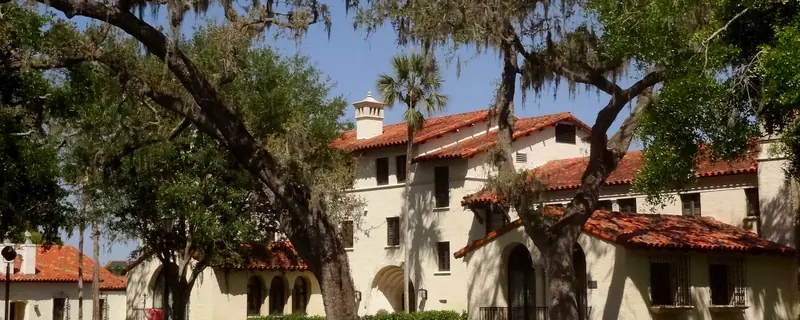
  1. 1Rollins College CampusRollins CollegeComputer and Information Sciences General · Winter Park · 45 mi · $118,277 annual earnings 4 years after graduation, a median across 24 graduates$768k

  2. 2University of South Florida College of NursingUniversity of South FloridaComputer Engineering · Tampa · 114 mi · $109,054 annual earnings 4 years after graduation, a median across 63 graduates$720k
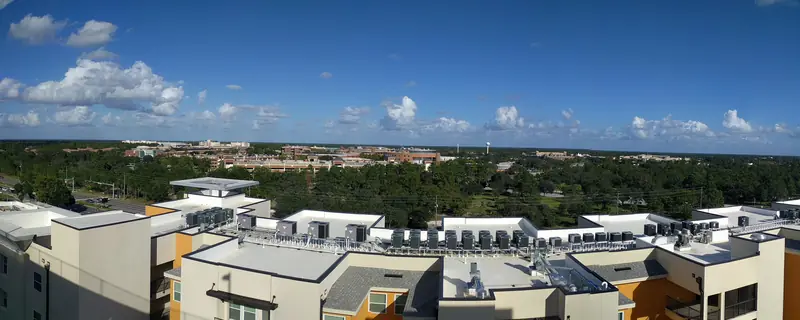
  3. 3UCF Main CampusUniversity of Central FloridaComputer Engineering · Orlando · 42 mi · $106,680 annual earnings 4 years after graduation, a median across 65 graduates$703k
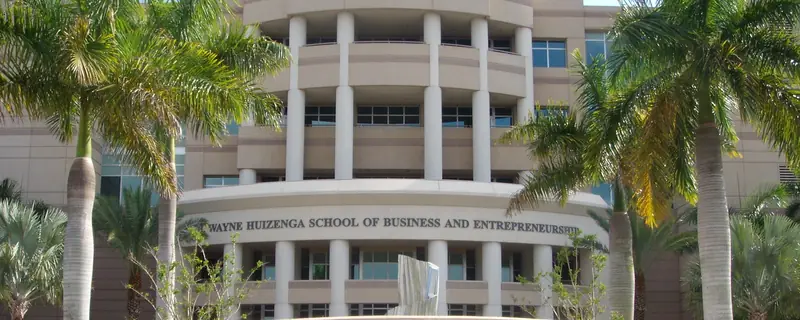
  4. 4Savannah College of Art and DesignFamily and Consumer Sciences/Human Sciences Business Services · Savannah · 199 mi · $128,600 annual earnings 4 years after graduation, a median across 20 graduatesadmits 70%+$660k
  5. 5NSU DeSantis BuildingNova Southeastern UniversityPhysiology Pathology and Related Sciences · Fort Lauderdale · 221 mi · $122,809 annual earnings 4 years after graduation, a median across 115 graduatesadmits 70%+$624k
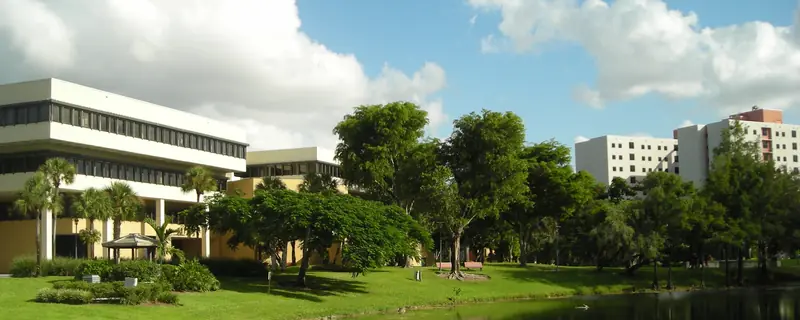
  6. 6FIU CampusFlorida International UniversityComputer Engineering · Miami · 241 mi · $101,224 annual earnings 4 years after graduation, a median across 111 graduates$614k

Campus photographs: Rollins College by Rizka (CC BY-SA 4.0); University of South Florida by José F. Donneys / University of South Florida College of Nursing (CC BY-SA 4.0); University of Central Florida by elisfkc (CC BY-SA 2.0); Nova Southeastern University by Dgreco ( talk ) (CC BY-SA 3.0); Florida International University by Comayagua99 at English Wikipedia (CC BY 3.0)

The same programs elsewhere

Holding the subject fixed and changing the college, for this college’s three strongest programs. The list above compares whole colleges at their best; this one answers the narrower question a student who already knows their subject is actually asking.
Business Administration Management and Operations52 colleges pay more
  1. 1Florida State College at JacksonvilleJacksonville · 87 mi · $62,248 annual earnings 4 years after graduation, a median across 65 graduatesopen admission$92k
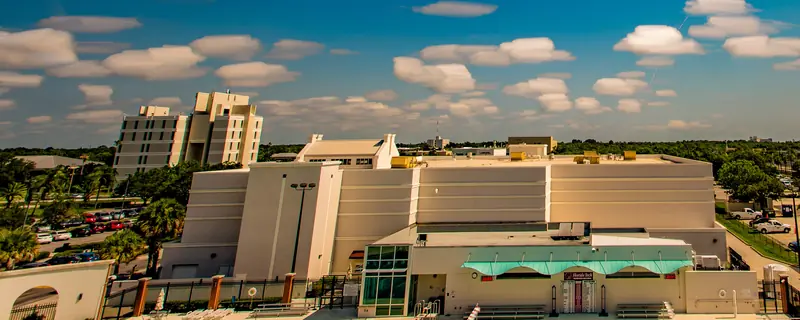
  2. 2EUTELSAT Launch by SpaceX seen from Florida TechFlorida Institute of TechnologyMelbourne · 82 mi · $56,184 annual earnings 4 years after graduation, a median across 25 graduates2 campuses$80k
  3. 3Palm Beach State CollegeLake Worth · 188 mi · $56,659 annual earnings 4 years after graduation, a median across 22 graduatesopen admission$64k

Campus photograph: Florida Institute of Technology by Michael Seeley (CC BY 2.0)

Vehicle Maintenance and Repair Technologies/Technicians74 colleges pay more
  1. 1Savannah Technical CollegeSavannah · 196 mi · $71,023 annual earnings 4 years after graduation, a median across 23 graduatesopen admission$169k
  2. 2Jones Technical InstituteJacksonville · 77 mi · $53,255 annual earnings 4 years after graduation, a median across 204 graduatesopen admission$115k
Air Transportation12 colleges pay more
  1. 1Miami Dade CollegeMiami · 242 mi · $78,726 annual earnings 4 years after graduation, a median across 23 graduatesopen admission$243k
  2. 2Polk State CollegeWinter Haven · 90 mi · $83,657 annual earnings 4 years after graduation, a median across 28 graduatesopen admission$185k
  3. 3Broward CollegeFort Lauderdale · 219 mi · $75,637 annual earnings 4 years after graduation, a median across 24 graduatesopen admission$157k

Read these with care. The federal earnings data for this college is reported under an identifier shared by 3 campuses, so each figure describes those campuses together rather than this one alone.

What this college is like

Measured from federal filings, not from a survey. Each figure is compared against four-year colleges, because medians differ too much between sectors for a national comparison to describe anything but the sector.

Teaching
Students per instructor?
23:1
▼more students per instructor than 96% of four-year colleges
Staying and finishing
Come back after year one?
60%
▼lower than 88% of four-year colleges
Finish their credential?
9.8%
▼lower than 94% of four-year colleges
Cost and aid
Yearly cost, family under $30,000?
$13,472
about typical for four-year colleges
Get a grant from the college?
24%
▼a lower share than 94% of four-year colleges
Receive a Pell Grant?
30%
a lower share than 69% of four-year colleges
The campus
Undergraduates?
6,330
larger than 79% of four-year colleges
Study fully online?
91.7%
more than 98% of four-year colleges
Graduate students, share of enrollment?
23.1%
more than 71% of four-year colleges
Who else is there
Mix of student backgrounds?
70 of 100
more varied than 75% of four-year colleges
Choice of subject
Broad subject areas awarded?
10
▼fewer than 79% of four-year colleges
Also on record
Women and men
17% / 83%
reported, not ranked
Setting
City
reported, not ranked
On-campus housing
No
students commute

Compare every college in this metro

Compare Embry-Riddle Aeronautical University-Worldwide with another college · up to four side by side, on return and on what each place is like.

15,576Average annual costAfter grants · Family income $30k–$48k
21%Finish within six years
6,330Undergraduates
58%Applicants admitted

Where students come from

  • Floridain state13%
  • California10%
  • Washington9%
  • Texas7%
  • Outside the US6%

Share of the 624 students who entered as first-year undergraduates in 2024. The states shown are the three largest outside Florida, so these do not add to 100%.

At a glance
SettingCity
Undergraduates?6,330
Graduate students1,902
Accepts58%
Admitted students who enroll?52%
WebsiteVisit worldwide.erau.edu
AdmissionsAY2024
Applicants2,079
Admitted1,204
Enrolled624
SAT middle 50%?1040-1240
ACT middle 50%18-28
Test scores?considered but not required
CostAY2022
Published price?$11,665
Full year’s cost after grants, by income
Under $30k$13,472
$30k-$48k$15,576
$48k-$75k$14,694
$75k-$110k$17,515
Over $110k$17,928
Aid · AY2023
Average grant?$1,803 to 24%
Pell students?30%
Federal loan debt · October 2026
Students who borrow?10%
Owed at graduation?$22,000
Monthly, over 10 years?$250/mo
Owed if they leave early?$6,681
Outcomes2018 cohort
Graduate in 4 years10%
Graduate in 6 years21%
Return after year 1?60%
Students per faculty23:1
Most-awarded programs, bachelor'sAY2025
Air Transportation969 degrees
Business Administration Management and Operations396 degrees
Vehicle Maintenance and Repair Technologies/Technicians132 degrees
Aerospace Aeronautical and Astronautical/Space Engineering55 degrees
Quality Control and Safety Technologies/Technicians42 degrees
StudentsAY2024
Women / men16% / 84%
White50%
Hispanic20%
Black8%
Two or more5%
International5%
Asian4%

Notes and sources

Total gain after 20 years is what a graduate is ahead at that point: what the degree pays above a high-school graduate in the same state, less four years of net price and the wages given up while studying, weighted by the share of students who finish. At this college that share is 21%, and it is the same for every program on this page because the federal data reports completion for the institution rather than for individual programs. Four-year and open-admission colleges are ranked separately and never pooled.

Annual earnings 4 years after graduation is the median earnings of that program’s graduates at that point, for students who received federal aid, and is published by program. There is no program-level cost anywhere in the federal data, so net price is the college’s figure applied to each program alike. That is sound for ordering programs against one another and should not be read as a precise figure for any one of them.

Cost on this page is always net price, never the published sticker price. Net price is the college’s full cost of attendance for a year, meaning tuition, required fees, books and supplies, and housing and food, with grant and scholarship aid from federal, state and institutional sources subtracted. Loans are not subtracted, because a loan is not a discount. It is an average for first-time full-time undergraduates receiving federal aid, reported by the college in the income bands shown, so it describes a typical family in that band rather than any particular one. A student living at home, paying out-of-state rates or holding an outside scholarship will not see this figure.

Federal loan debt comes from the College Scorecard and is a median among students who borrowed, not an average across everyone. A college where few students take loans can show a high figure and a small bill for most families, so the share who borrow is printed above it and neither should be read without the other. It counts federal student loans only: private loans and Parent PLUS borrowing are not in it and are not published anywhere comparable, which makes this a floor on what a family owes rather than a total. The figure for students who leave without finishing is the same loans without the degree they were taken for. Default rates are deliberately absent: federal repayment was suspended, so the published three-year rate is zero at almost every college in the country and says nothing about any of them.

Most-awarded programs are degrees conferred in AY2025, first majors only, so a double major counts once. Where two programs are within a few degrees of each other the order between them is not meaningful.

What this college is like compares each measure against four-year colleges, because medians differ too much between sectors for a national comparison to describe anything but the sector. A position of “higher than 90%” means the college matches or beats nine in ten of them on that measure, which is why the measured figure is printed beside it. Six of those measures have a better end and carry a mark; the rest are positions with no better end and carry none. There is no overall score, because combining them would need weights and the weights would be our opinion rather than a measurement.

Sources. IPEDS, the Department of Education’s annual survey, except where stated. Each block in the column beside shows its own year, because the underlying files are released on different schedules and a single date across all of them would be false. Published tuition is a sticker price and is never used as a cost; net price is. Test scores are the middle 50% of enrolled students who submitted a score, not of admitted applicants, which is why they differ from the figures other guides print. Where a US News rank is shown it is the current edition, published as a fact about the college rather than an endorsement of the ranking.

Full methodology