
Loading
Washington, DC
Competitive · 40 of 41 programs pay back
11,131 undergraduates, 13 students for every faculty member · Division I without football athletics · Graduate students are 40% of total enrollment
Estimated over 20 years
$1.26M
Computer Science
Estimated over 20 years
-$193k
Fine and Studio Arts
Every college here returns more than this one’s best program, within 250 miles. Only 2% of students here come from DC, so the search is wider than the usual 50 miles: for a college people travel to, the colleges down the road are not the real alternatives.
Colleges of comparable difficulty come first here. Any that admit far fewer applicants than this one sit below them and are marked with what they admit. A more selective college is a different application, not a free upgrade, and part of why its graduates earn more is who it admitted in the first place.
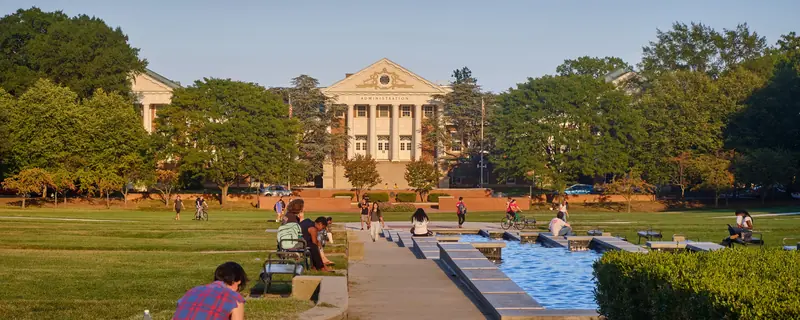 University of Maryland-College ParkComputer Engineering · College Park · 8 mi · $152,422 annual earnings 4 years after graduation, a median across 72 graduates$1.36M
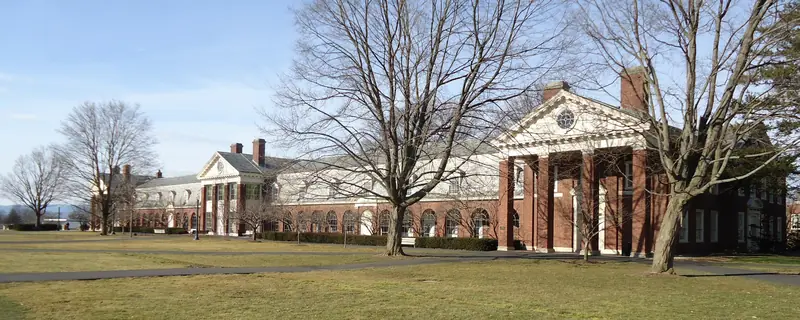 Bucknell UniversityComputer Engineering · Lewisburg · 142 mi · $156,885 annual earnings 4 years after graduation, a median across 31 graduatesadmits under 40%$1.34M
 Stevens Institute of TechnologyApplied Mathematics · Hoboken · 205 mi · $156,419 annual earnings 4 years after graduation, a median across 39 graduates$1.31M
Campus photographs: University of Maryland-College Park by Blacktupelo (CC BY-SA 4.0); Bucknell University by Tomwsulcer (CC0); Stevens Institute of Technology by Sharkface217 (Public domain)
Harder to get into than this college, by the same measure
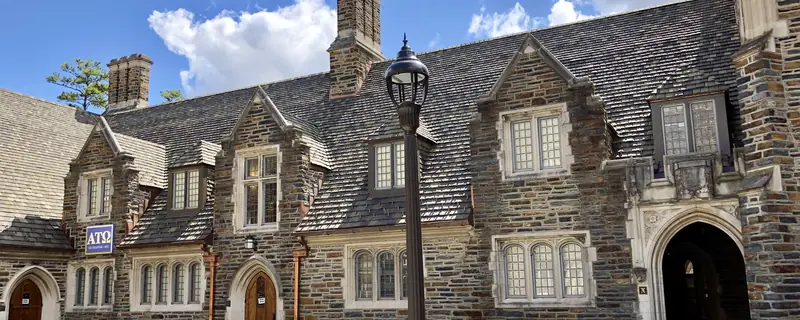 Duke UniversityMathematics · Durham · 226 mi · $297,029 annual earnings 4 years after graduation, a median across 17 graduatesadmits 6%$3.62M
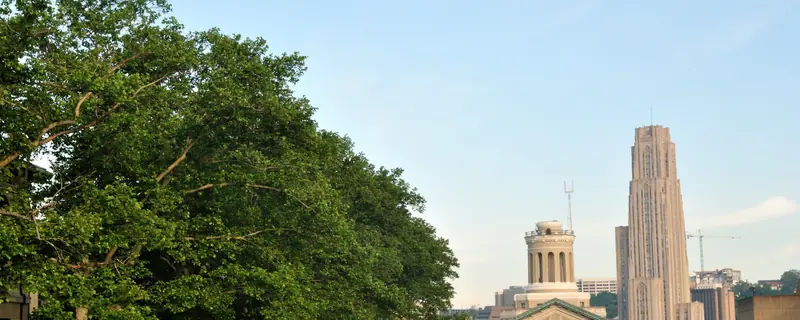 Carnegie Mellon UniversityComputer Science · Pittsburgh · 187 mi · $268,121 annual earnings 4 years after graduation, a median across 121 graduatesadmits 12%$3.07M
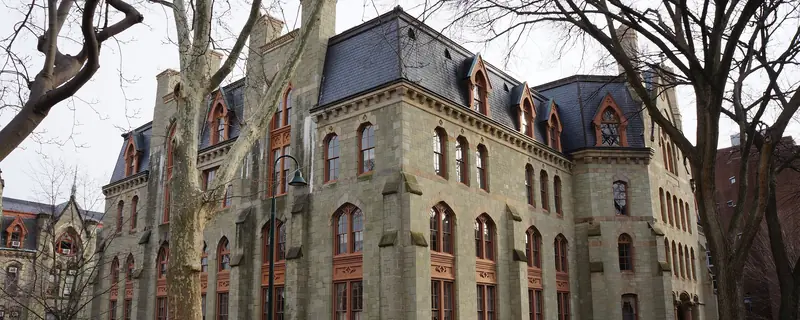 University of PennsylvaniaComputer and Information Sciences General · Philadelphia · 123 mi · $241,380 annual earnings 4 years after graduation, a median across 40 graduatesadmits 5%$2.85M
Campus photographs: Duke University by Warren LeMay (CC0); Carnegie Mellon University by Asamudra (CC BY 3.0); University of Pennsylvania by Michel Alexandre Salim (CC BY-SA 2.0)
Holding the subject fixed and changing the college, for this college’s three strongest programs. The list above compares whole colleges at their best; this one answers the narrower question a student who already knows their subject is actually asking.
Carnegie Mellon UniversityPittsburgh · 187 mi · $268,121 annual earnings 4 years after graduation, a median across 121 graduatesadmits under 40%$3.07M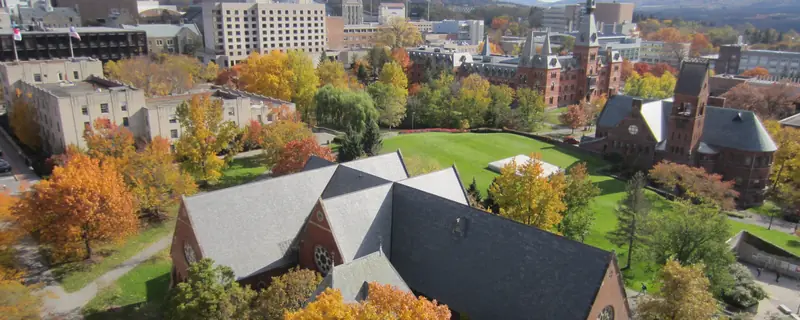 Cornell UniversityIthaca · 247 mi · $223,309 annual earnings 4 years after graduation, a median across 296 graduates2 campusesadmits under 40%$2.53M
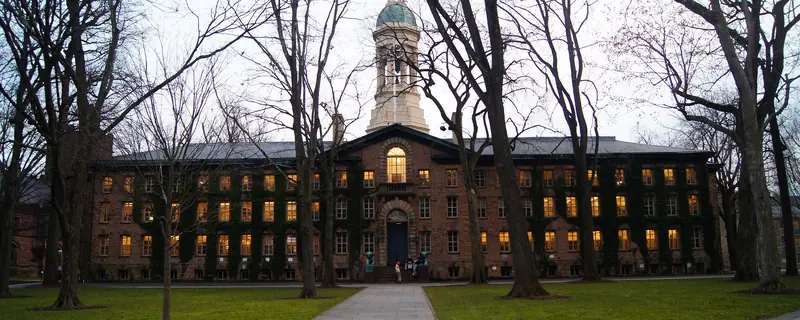 Princeton UniversityPrinceton · 162 mi · $217,973 annual earnings 4 years after graduation, a median across 30 graduatesadmits under 40%$2.50M
Campus photographs: Carnegie Mellon University by Asamudra (CC BY 3.0); Cornell University by Maeshima hiroki (CC BY-SA 3.0); Princeton University by Rohit Hirway (CC BY-SA 3.0)
University of PennsylvaniaPhiladelphia · 123 mi · $202,069 annual earnings 4 years after graduation, a median across 111 graduatesadmits under 40%$2.29M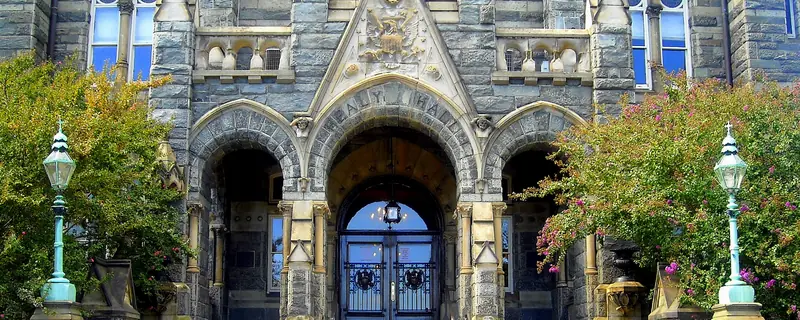 Georgetown UniversityWashington · 2 mi · $152,744 annual earnings 4 years after graduation, a median across 121 graduatesadmits under 40%$1.52M
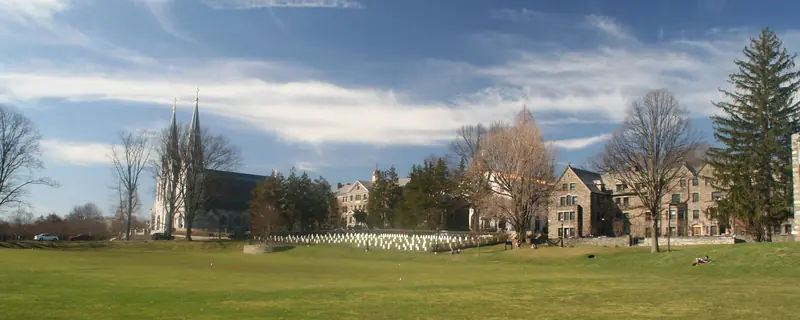 Villanova UniversityVillanova · 120 mi · $131,996 annual earnings 4 years after graduation, a median across 275 graduatesadmits under 40%$1.12M
Campus photographs: University of Pennsylvania by Michel Alexandre Salim (CC BY-SA 2.0); Georgetown University by AgnosticPreachersKid (CC BY-SA 3.0); Villanova University by Alertjean (CC BY 3.0)
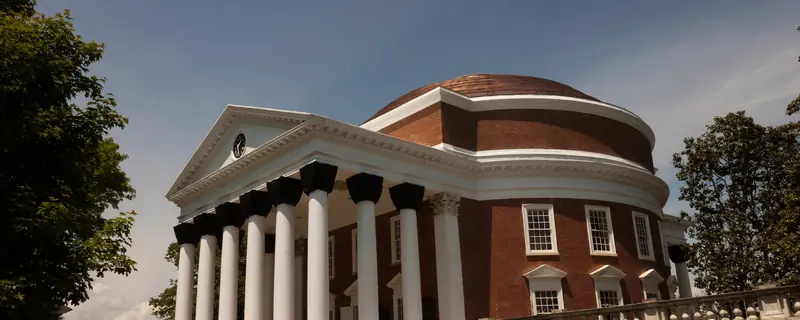 University of Virginia-Main CampusCharlottesville · 99 mi · $144,830 annual earnings 4 years after graduation, a median across 59 graduatesadmits under 40%$1.37M
Campus photograph: University of Virginia-Main Campus by Robert Emerson (CC BY-SA 3.0)
Measured from federal filings, not from a survey. Each figure is compared against four-year colleges, because medians differ too much between sectors for a national comparison to describe anything but the sector.
Students and recent alumni of George Washington University, in their own words, on Reddit. Every quotation links to the thread it came from.
Why aren’t GWU students raising an alarm on the quality of food in the dining halls? We pay a lot of money for the plan, but it seems most students use dining dollars instead.r/gwu
it seems like most freshmen already have a group of friends either from their high school or some where else. I don’t have that yet and am worried about having missed my opportunity to do so.r/gwu
I would like to know how transfer friendly it is and just an overview of the school by transfer students and non transfer students.r/gwu
Astrophysics is strong here. There are some great professors that get undergrads involved in cool research.r/gwu
I have applied for Spring 2027, but did not receive any notifications yet.r/gwu
One of the best things about GW is its cultural diversity. Many of my current friends are from different countries and socioeconomic backgrounds than mine. ... I have had a ton of amazing internships and work opportunities. I love my classes, and I have loved experiencing college in Washington, DC.r/gwu
With the exception of my gen ed anthropology class, all of my classes have been 30 people or less, and I'd say about half of those were 20 people or less. ... I met almost all of my current friends in different clubs, which thankfully we have a TON of. ... I've always been an introvert so I'm glad I was able to make friends pretty easily.r/gwu
I was able to get an internship with the Department of Treasury partially because during the Spring and Fall, the normally crazy competitive summer internship is a lot easier to navigate through. ... DC hosts many networking and professional events that gives opportunities to meet with people that usually aren’t available outside DC.r/gwu
i took a north korean history class taught by a guy who is a north korea analyst at state. he had lived there for a few years even!! phenomenal class.r/gwu
I transferred from a large state school to GWU this fall and absolutely love it! I’ve actually found it so much easier to meet people than I expected/was told. I was nervous about the change but you couldn’t pay me to go back.r/gwu
I love my professors— GW really punches above its weight with the quality of faculty— and spend as much time with them as I can.r/gwu
there's a sense of camaraderie within all of the unfortunate Vernies and I still have some of those friendships.r/gwu
Political organizing on GW's campus has been the single most fulfilling work I've done in 5 years here, given me friendships, connections, and skills I use every day in my work, and a sense of self-worth beyond my resume.r/gwu
it was genuinely a really interesting class, and Sine was one of my favorite professors at GW, he fosters a really great environment for discussions, and really encourages people to think critically.r/gwu
* yearly tuition increases while little/ nothing actually improves * dining hall food continues to be subpar while forcing students who want to live on campus to have a meal plan * reducing of scholarships -meal options outside of Dhalls (district) quality drop over the years -GW continues to over admit students, worsening the already bad housing crisis, ESPECIALLY for upperclassmen wanting to live on campusr/gwu
with my scholarship and grants i have almost full tuition but the remaining cost of room and board is still insane.r/gwu
Every time I call, email, or speak with someone, I get a completely different answer about the exact same situation.r/gwu
I woke up this morning and found that my grant was completely removed from my ebill statement, making my total 35k per semester.r/gwu
im in the same boat... any update? i havent even gotten an offer from them. they told me my application got "lost"r/gwu
At GW, the same recipe chicken will be dry one day, unseasoned the second and perfect the third day. Idk for the tuition price, the quality of the whole experience is complete shit.r/gwu
Last year it was pretty bad for me because I didn’t have hot water for a while and they started ignoring my fixit requests. GW admin also REPEATEDLY lost tuition checks and tried to charge me fees for their mistakes.r/gwu
Law school deans office and career services suck. So many unnecessary bureaucratic hurdles and staff don’t care unless you are useful to them but like you are here?? To help us??r/gwu
Compare George Washington University with another college · up to four side by side, on return and on what each place is like.
Share of the 2,459 students who entered as first-year undergraduates in 2024. The states shown are the three largest outside District of Columbia, so these do not add to 100%.
Total gain after 20 years is what a graduate is ahead at that point: what the degree pays above a high-school graduate in the same state, less four years of net price and the wages given up while studying, weighted by the share of students who finish. At this college that share is 84%, and it is the same for every program on this page because the federal data reports completion for the institution rather than for individual programs. Four-year and open-admission colleges are ranked separately and never pooled.
Annual earnings 4 years after graduation is the median earnings of that program’s graduates at that point, for students who received federal aid, and is published by program. There is no program-level cost anywhere in the federal data, so net price is the college’s figure applied to each program alike. That is sound for ordering programs against one another and should not be read as a precise figure for any one of them.
Cost on this page is always net price, never the published sticker price. Net price is the college’s full cost of attendance for a year, meaning tuition, required fees, books and supplies, and housing and food, with grant and scholarship aid from federal, state and institutional sources subtracted. Loans are not subtracted, because a loan is not a discount. It is an average for first-time full-time undergraduates receiving federal aid, reported by the college in the income bands shown, so it describes a typical family in that band rather than any particular one. A student living at home, paying out-of-state rates or holding an outside scholarship will not see this figure.
Federal loan debt comes from the College Scorecard and is a median among students who borrowed, not an average across everyone. A college where few students take loans can show a high figure and a small bill for most families, so the share who borrow is printed above it and neither should be read without the other. It counts federal student loans only: private loans and Parent PLUS borrowing are not in it and are not published anywhere comparable, which makes this a floor on what a family owes rather than a total. The figure for students who leave without finishing is the same loans without the degree they were taken for. Default rates are deliberately absent: federal repayment was suspended, so the published three-year rate is zero at almost every college in the country and says nothing about any of them.
Most-awarded programs are degrees conferred in AY2025, first majors only, so a double major counts once. Where two programs are within a few degrees of each other the order between them is not meaningful.
Quotations from students were found by a language model searching Reddit, and selected from threads discussing this college in the window shown beside them. Reddit only, so this is not a survey and not a representative sample: who posts and how much varies enormously by the size and type of a college, and for that reason nothing there is scored, totalled or compared between colleges. Post dates are the model’s own reckoning rather than a retrieved field, so treat them as inside the window and not as exact. Each quotation links to its thread.
What this college is like compares each measure against four-year colleges, because medians differ too much between sectors for a national comparison to describe anything but the sector. A position of “higher than 90%” means the college matches or beats nine in ten of them on that measure, which is why the measured figure is printed beside it. Six of those measures have a better end and carry a mark; the rest are positions with no better end and carry none. There is no overall score, because combining them would need weights and the weights would be our opinion rather than a measurement.
Sources. IPEDS, the Department of Education’s annual survey, except where stated. Each block in the column beside shows its own year, because the underlying files are released on different schedules and a single date across all of them would be false. Published tuition is a sticker price and is never used as a cost; net price is. Test scores are the middle 50% of enrolled students who submitted a score, not of admitted applicants, which is why they differ from the figures other guides print. Where a US News rank is shown it is the current edition, published as a fact about the college rather than an endorsement of the ranking.
The photograph at the top of this page was taken by a member of the public and published under a license that permits reuse with credit. It is not supplied by the college, is not endorsed by it, and shows one building on one day rather than the campus as a whole. We do not generate campus images or buy stock photographs of real places, because a picture of a campus that is not that campus is a lie about somewhere real. Full credit: “University Yard, George Washington University, 2012.JPG”, Another Believer, via Wikimedia Commons. CC BY-SA 3.0. Source: https://commons.wikimedia.org/wiki/File:University_Yard,_George_Washington_University,_2012.JPG. License/status: https://creativecommons.org/licenses/by-sa/3.0/.