College Sonar
Compare collegesHow it worksFor colleges

Loading

Explore

Look up a collegeDegrees near youCompare collegesTop degrees by stateWhat colleges are like

Understand

How it worksHow badges are awarded

About

For collegesContact us

College Sonar by Optivara © 2026

University of Florida

Gainesville, FL

Photo: Kate Haskell · CC BY 2.0

Selective · 68 of 72 programs pay back

36,466 undergraduates, 16 students for every faculty member · Division I-FBS athletics

What this college is like

Best Financial Gain

Estimated over 20 years

$1.16M

Computer Engineering

Worst Financial Gain

Estimated over 20 years

-$43k

Fine and Studio Arts

Customize by family incomeUnder $30k$30k to $48k$48k to $75k$75k to $110kOver $110k
Program20 yr Financial Gain
  1. 1Computer Engineering$128,140 annual earnings 4 years after graduation, a median across 95 graduates2 campuses$1.16M
  2. 2Computer and Information Sciences General$126,268 annual earnings 4 years after graduation, a median across 201 graduates2 campuses$1.14M
  3. 3Systems Engineering$122,299 annual earnings 4 years after graduation, a median across 103 graduates2 campuses$1.08M
  4. 4Chemical Engineering$109,607 annual earnings 4 years after graduation, a median across 114 graduates2 campuses$910k
  5. 5Management Sciences and Quantitative Methods$109,220 annual earnings 4 years after graduation, a median across 83 graduates2 campuses$905k
  6. 6Construction Engineering Technology/Technician$109,139 annual earnings 4 years after graduation, a median across 74 graduates2 campuses$904k
  7. 7Electrical Electronics and Communications Engineering$107,543 annual earnings 4 years after graduation, a median across 128 graduates2 campuses$882k
  8. 8Finance and Financial Management Services$106,153 annual earnings 4 years after graduation, a median across 233 graduates2 campuses$863k
  9. 9Statistics$98,409 annual earnings 4 years after graduation, a median across 32 graduates2 campuses$758k
  10. 10Fire Protection$97,839 annual earnings 4 years after graduation, a median across 30 graduates2 campuses$750k
View all 72 programs →
  1. 11Mechanical Engineering$97,113 annual earnings 4 years after graduation, a median across 287 graduates2 campuses$741k
  2. 12Accounting and Related Services$94,941 annual earnings 4 years after graduation, a median across 59 graduates2 campuses$711k
  3. 13Aerospace Aeronautical and Astronautical/Space Engineering$94,375 annual earnings 4 years after graduation, a median across 76 graduates2 campuses$703k
  4. 14Mathematics$93,022 annual earnings 4 years after graduation, a median across 59 graduates2 campuses$685k
  5. 15Marketing$92,626 annual earnings 4 years after graduation, a median across 184 graduates2 campuses$680k
  6. 16Biological/Biosystems Engineering$89,799 annual earnings 4 years after graduation, a median across 20 graduates2 campuses$641k
  7. 17Economics$89,075 annual earnings 4 years after graduation, a median across 197 graduates2 campuses$632k
  8. 18Biomedical/Medical Engineering$88,078 annual earnings 4 years after graduation, a median across 40 graduates2 campuses$618k
  9. 19Materials Engineering$87,779 annual earnings 4 years after graduation, a median across 28 graduates2 campuses$614k
  10. 20Civil Engineering$86,453 annual earnings 4 years after graduation, a median across 141 graduates2 campuses$596k
  11. 21Business Administration Management and Operations$82,615 annual earnings 4 years after graduation, a median across 422 graduates2 campuses$544k
  12. 22Environmental/Environmental Health Engineering$80,635 annual earnings 4 years after graduation, a median across 38 graduates2 campuses$517k
  13. 23Registered Nursing Nursing Administration Nursing Research and Clinical Nursing$79,839 annual earnings 4 years after graduation, a median across 266 graduates2 campuses$506k
  14. 24Engineering-Related Technologies/Technicians$78,933 annual earnings 4 years after graduation, a median across 23 graduates2 campuses$494k
  15. 25Health Services/Allied Health/Health Sciences General$74,152 annual earnings 4 years after graduation, a median across 120 graduates2 campuses$429k
  16. 26Physiology Pathology and Related Sciences$73,679 annual earnings 4 years after graduation, a median across 124 graduates2 campuses$423k
  17. 27Agricultural Business and Management$70,862 annual earnings 4 years after graduation, a median across 137 graduates2 campuses$385k
  18. 28Political Science and Government$70,434 annual earnings 4 years after graduation, a median across 283 graduates2 campuses$379k
  19. 29Geological and Earth Sciences/Geosciences$69,943 annual earnings 4 years after graduation, a median across 27 graduates2 campuses$372k
  20. 30Public Relations Advertising and Applied Communication$69,600 annual earnings 4 years after graduation, a median across 407 graduates2 campuses$368k
  21. 31Physics$68,682 annual earnings 4 years after graduation, a median across 22 graduates2 campuses$355k
  22. 32Public Health$68,605 annual earnings 4 years after graduation, a median across 219 graduates2 campuses$354k
  23. 33Architecture$67,399 annual earnings 4 years after graduation, a median across 86 graduates2 campuses$338k
  24. 34Geography and Cartography$67,276 annual earnings 4 years after graduation, a median across 34 graduates2 campuses$336k
  25. 35Romance Languages Literatures and Linguistics$65,765 annual earnings 4 years after graduation, a median across 33 graduates2 campuses$316k
  26. 36Design and Applied Arts$65,656 annual earnings 4 years after graduation, a median across 50 graduates2 campuses$314k
  27. 37Communication Disorders Sciences and Services$65,370 annual earnings 4 years after graduation, a median across 70 graduates2 campuses$310k
  28. 38Parks Recreation and Leisure Facilities Management$64,497 annual earnings 4 years after graduation, a median across 64 graduates2 campuses$298k
  29. 39Microbiological Sciences and Immunology$64,285 annual earnings 4 years after graduation, a median across 81 graduates2 campuses$296k
  30. 40Food Science and Technology$64,078 annual earnings 4 years after graduation, a median across 19 graduates2 campuses$293k
  31. 41Natural Resources Conservation and Research$62,683 annual earnings 4 years after graduation, a median across 29 graduates2 campuses$274k
  32. 42Radio Television and Digital Communication$62,227 annual earnings 4 years after graduation, a median across 255 graduates2 campuses$268k
  33. 43Dietetics and Clinical Nutrition Services$62,145 annual earnings 4 years after graduation, a median across 19 graduates2 campuses$267k
  34. 44Music$61,446 annual earnings 4 years after graduation, a median across 28 graduates2 campuses$257k
  35. 45Sustainability Studies$61,281 annual earnings 4 years after graduation, a median across 55 graduates2 campuses$255k
  36. 46Sports Kinesiology and Physical Education/Fitness$60,497 annual earnings 4 years after graduation, a median across 133 graduates2 campuses$244k
  37. 47International/Globalization Studies$59,432 annual earnings 4 years after graduation, a median across 71 graduates2 campuses$230k
  38. 48Journalism$58,150 annual earnings 4 years after graduation, a median across 101 graduates2 campuses$212k
  39. 49Criminology$57,953 annual earnings 4 years after graduation, a median across 216 graduates2 campuses$210k
  40. 50Psychology General$57,053 annual earnings 4 years after graduation, a median across 323 graduates2 campuses$198k
  41. 51Chemistry$56,179 annual earnings 4 years after graduation, a median across 42 graduates2 campuses$186k
  42. 52Teacher Education and Professional Development Specific Subject Areas$55,284 annual earnings 4 years after graduation, a median across 83 graduates2 campuses$174k
  43. 53History$54,448 annual earnings 4 years after graduation, a median across 91 graduates2 campuses$162k
  44. 54Biology General$53,645 annual earnings 4 years after graduation, a median across 198 graduates2 campuses$151k
  45. 55Plant Sciences$53,270 annual earnings 4 years after graduation, a median across 52 graduates2 campuses$146k
  46. 56Teacher Education and Professional Development Specific Levels and Methods$53,079 annual earnings 4 years after graduation, a median across 81 graduates2 campuses$144k
  47. 57Philosophy$52,656 annual earnings 4 years after graduation, a median across 44 graduates2 campuses$138k
  48. 58Ethnic Cultural Minority Gender and Group Studies$51,791 annual earnings 4 years after graduation, a median across 53 graduates2 campuses$126k
  49. 59Human Development Family Studies and Related Services$51,497 annual earnings 4 years after graduation, a median across 95 graduates2 campuses$122k
  50. 60Sociology$51,039 annual earnings 4 years after graduation, a median across 174 graduates2 campuses$116k
  51. 61Multi/Interdisciplinary Studies Other$50,633 annual earnings 4 years after graduation, a median across 42 graduates2 campuses$110k
  52. 62English Language and Literature General$49,046 annual earnings 4 years after graduation, a median across 157 graduates2 campuses$89k
  53. 63Forestry$48,755 annual earnings 4 years after graduation, a median across 68 graduates2 campuses$85k
  54. 64Linguistic Comparative and Related Language Studies and Services$48,198 annual earnings 4 years after graduation, a median across 61 graduates2 campuses$77k
  55. 65Animal Sciences$47,724 annual earnings 4 years after graduation, a median across 86 graduates2 campuses$71k
  56. 66Visual and Performing Arts General$47,546 annual earnings 4 years after graduation, a median across 55 graduates2 campuses$69k
  57. 67Anthropology$47,348 annual earnings 4 years after graduation, a median across 140 graduates2 campuses$66k
  58. 68Dance$42,624 annual earnings 4 years after graduation, a median across 22 graduates2 campuses$1,915
  59. 69Zoology/Animal Biology$41,961 annual earnings 4 years after graduation, a median across 25 graduates2 campuses-$7,073
  60. 70Drama/Theatre Arts and Stagecraft$41,707 annual earnings 4 years after graduation, a median across 55 graduates2 campuses-$11k
  61. 71Wildlife and Wildlands Science and Management$40,434 annual earnings 4 years after graduation, a median across 54 graduates2 campuses-$28k
  62. 72Fine and Studio Arts$39,332 annual earnings 4 years after graduation, a median across 83 graduates2 campuses-$43k

This college's programs pay very differently from one another, so any single figure for the college as a whole would hide more than it shows.

Other colleges to consider

This college’s best program returns more than any other within 250 miles, so these are the next strongest options rather than higher-returning ones.

Some of these admit a different share of applicants, marked on each row. A more selective college is a different application, not a free upgrade, and part of why its graduates earn more is who it admitted in the first place.
  1. 1University of Florida-OnlineComputer Engineering · Gainesville · 1 mi · $128,140 annual earnings 4 years after graduation, a median across 95 graduates2 campusesadmits 40-70%$1.07M
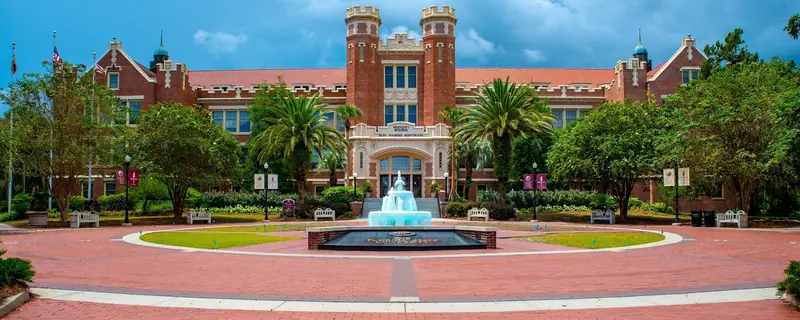
  2. 2Westcott Building and fountain at Florida State UniversityFlorida State UniversityComputer Engineering · Tallahassee · 129 mi · $114,802 annual earnings 4 years after graduation, a median across 22 graduates$891k
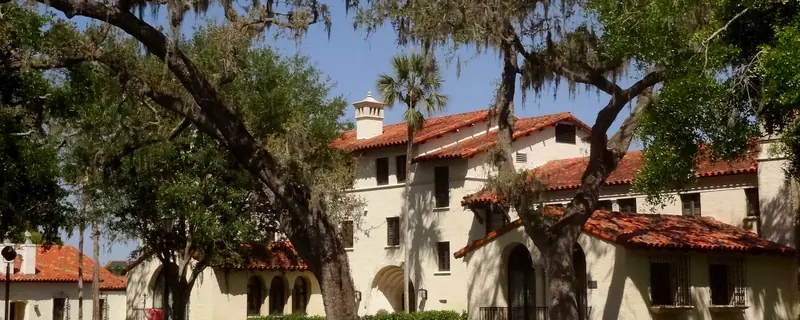
  3. 3Rollins College CampusRollins CollegeComputer and Information Sciences General · Winter Park · 95 mi · $118,277 annual earnings 4 years after graduation, a median across 24 graduatesadmits 40-70%$768k
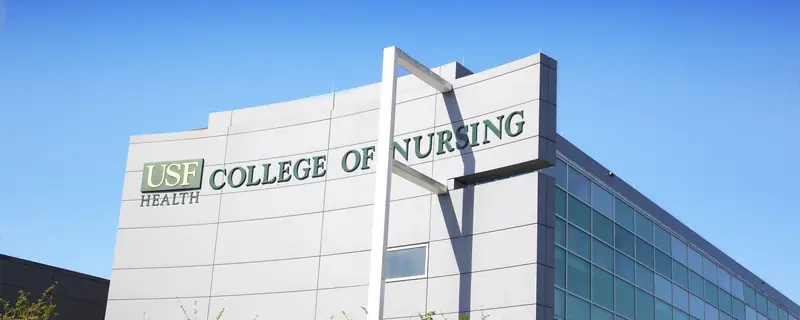
  4. 4University of South Florida College of NursingUniversity of South FloridaComputer Engineering · Tampa · 110 mi · $109,054 annual earnings 4 years after graduation, a median across 63 graduatesadmits 40-70%$720k
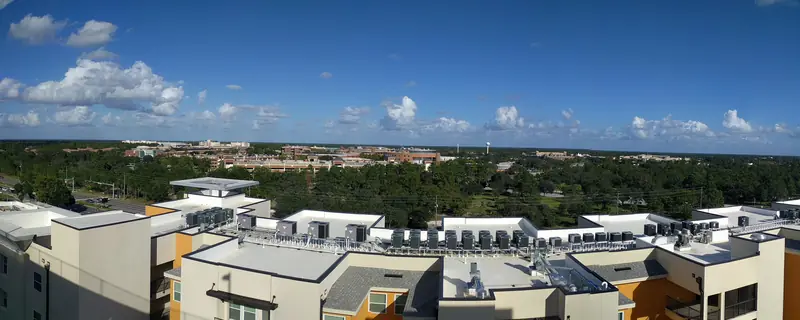
  5. 5UCF Main CampusUniversity of Central FloridaComputer Engineering · Orlando · 100 mi · $106,680 annual earnings 4 years after graduation, a median across 65 graduatesadmits 40-70%$703k
  6. 6Savannah College of Art and DesignFamily and Consumer Sciences/Human Sciences Business Services · Savannah · 183 mi · $128,600 annual earnings 4 years after graduation, a median across 20 graduatesadmits 70%+$660k

Campus photographs: Florida State University by Ernie Stephens (CC0); Rollins College by Rizka (CC BY-SA 4.0); University of South Florida by José F. Donneys / University of South Florida College of Nursing (CC BY-SA 4.0); University of Central Florida by elisfkc (CC BY-SA 2.0)

The same programs elsewhere

Holding the subject fixed and changing the college, for this college’s three strongest programs. The list above compares whole colleges at their best; this one answers the narrower question a student who already knows their subject is actually asking.
Computer Engineering16 colleges pay more, none of them nearby
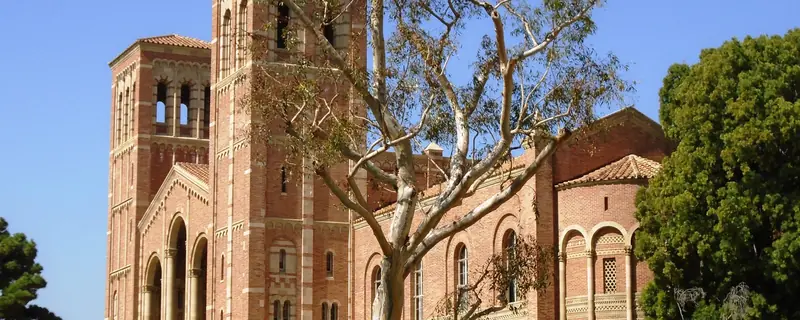
  1. 12019 UCLA Royce Hall 1University of California-Los AngelesLos Angeles · 2129 mi · $228,705 annual earnings 4 years after graduation, a median across 28 graduates$2.48M
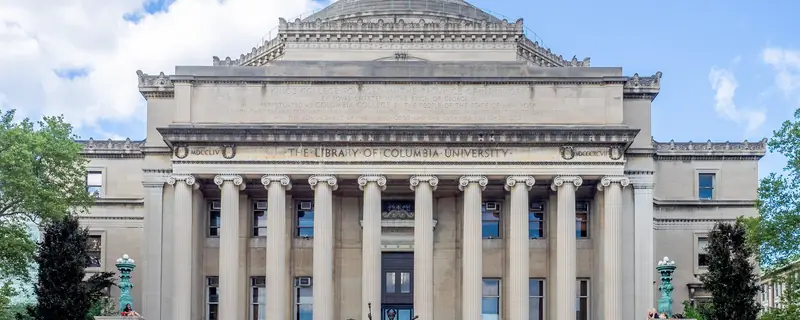
  2. 2Columbia University - Low Memorial LibraryColumbia University in the City of New YorkNew York · 904 mi · $194,365 annual earnings 4 years after graduation, a median across 18 graduates$2.16M
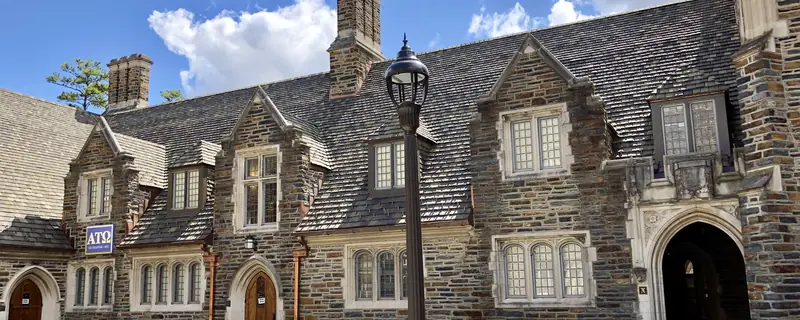
  3. 3Craven Quad, West Campus, Duke University, Durham, NCDuke UniversityDurham · 482 mi · $174,522 annual earnings 4 years after graduation, a median across 73 graduates$1.86M

Campus photographs: University of California-Los Angeles by Beyond My Ken (CC BY-SA 4.0); Columbia University in the City of New York by Ajay Suresh (CC BY 2.0); Duke University by Warren LeMay (CC0)
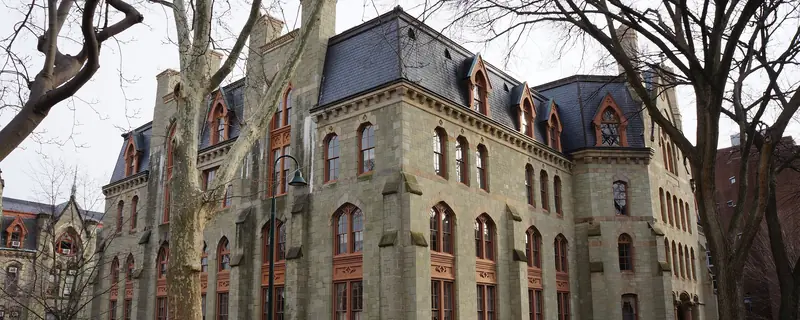
Computer and Information Sciences General19 colleges pay more, none of them nearby
  1. 1College Hall, University of PennsylvaniaUniversity of PennsylvaniaPhiladelphia · 819 mi · $241,380 annual earnings 4 years after graduation, a median across 40 graduates$2.85M
  2. 22019 UCLA Royce Hall 1University of California-Los AngelesLos Angeles · 2129 mi · $216,722 annual earnings 4 years after graduation, a median across 136 graduates$2.31M
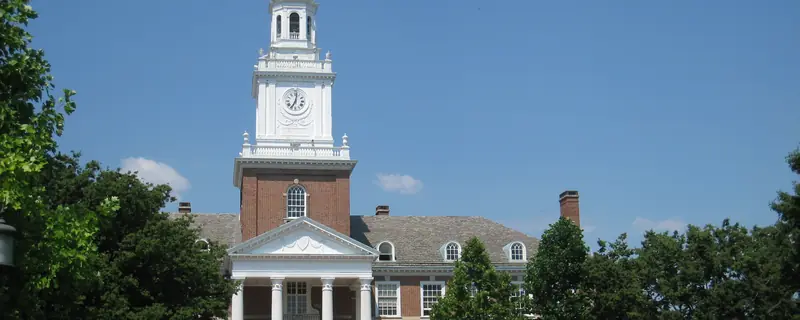
  3. 3Gilman Hall, Johns Hopkins University, Baltimore, MDJohns Hopkins UniversityBaltimore · 744 mi · $196,467 annual earnings 4 years after graduation, a median across 58 graduates$2.12M

Campus photographs: University of Pennsylvania by Michel Alexandre Salim (CC BY-SA 2.0); University of California-Los Angeles by Beyond My Ken (CC BY-SA 4.0); Johns Hopkins University by Daderot (Public domain)
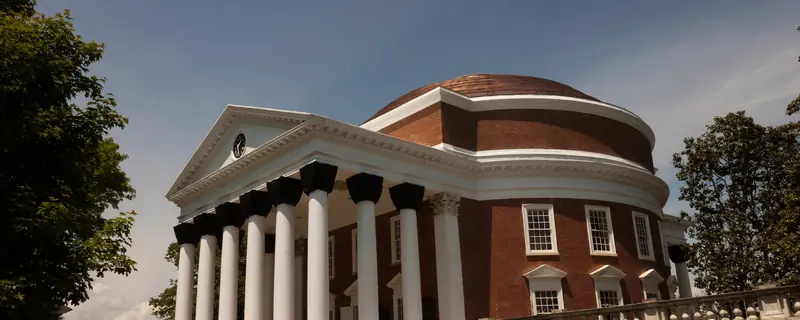
Systems Engineering1 college pays more, none of them nearby
  1. 1Rotunda - University of VirginiaUniversity of Virginia-Main CampusCharlottesville · 620 mi · $144,830 annual earnings 4 years after graduation, a median across 59 graduates$1.37M

Campus photograph: University of Virginia-Main Campus by Robert Emerson (CC BY-SA 3.0)

Read these with care. The federal earnings data for this college is reported under an identifier shared by 2 campuses, so each figure describes those campuses together rather than this one alone.

What this college is like

Measured from federal filings, not from a survey. Each figure is compared against four-year colleges, because medians differ too much between sectors for a national comparison to describe anything but the sector.

Teaching
Students per instructor?
16:1
▼more students per instructor than 69% of four-year colleges
Staying and finishing
Come back after year one?
98%
▲higher than 98% of four-year colleges
Finish their credential?
74.5%
▲higher than 93% of four-year colleges
Cost and aid
Yearly cost, family under $30,000?
$-208
▲cheaper than 100% of four-year colleges
Get a grant from the college?
38%
▼a lower share than 90% of four-year colleges
Receive a Pell Grant?
21%
a lower share than 84% of four-year colleges
The campus
Undergraduates?
36,466
larger than 99% of four-year colleges
Beds per 100 undergraduates?
32
fewer than 79% of four-year colleges
Study fully online?
3.8%
about typical for four-year colleges
Graduate students, share of enrollment?
27.2%
more than 78% of four-year colleges
Play a varsity sport?
1.7%
fewer than 97% of four-year colleges
Who else is there
Mix of student backgrounds?
68 of 100
more varied than 70% of four-year colleges
Choice of subject
Broad subject areas awarded?
27
▲more than 96% of four-year colleges
Also on record
Women and men
55% / 45%
reported, not ranked
Setting
City
reported, not ranked
On-campus housing
Yes
residential
Athletic division
NCAA Division I-FBS
reported, not ranked

Compare every college in this metro

What students are saying

Students and recent alumni of University of Florida, in their own words, on Reddit. Every quotation links to the thread it came from.

What came up most

several threads · August to October 2026
NegativeRemoval or inaccessibility of the academic calendar was discussed mostly negatively.
There used to be an academic calendar pdf of each year that had dates marked of school days and breaks. I last looked at it a week ago but now it says “Not Found” or doesn’t show up.
r/ufl
NegativeCourse scheduling and registration tools or processes were discussed mostly negatively.
Does anyone know why UFScheduler is paused right now? I was trying to make a mock schedule 💔 I loved this free resource
r/ufl
MixedMaking friends and finding student clubs were discussed with a mixed tone: students described difficulty, while others offered encouragement and suggestions.
I’ve been at UF for a few weeks now, but I still have no idea how to find those fun clubs.
r/ufl
NegativeBright Futures disbursement and resulting tuition concerns were discussed mostly negatively.
Hi guys I’m in danger of having my fall classes cancelled because my Bright Futures hasn’t hit my account yet. I’m not sure what to do and the UF Bursar has been no help:(
r/ufl
NegativeAdmission and transfer-decision timing was discussed mostly negatively.
I applied May 13th and have heard absolutely nothing. I also think it's ridiculous that they don't even show you a timeline on your application status.
r/ufl

What students criticized

several threads · November to October 2026
NegativeStudents complained that required-course registration bottlenecks could delay academic progress.
My registration date was today (I’m a freshman) and I got ZERO of the classes I need for my pre-med track.
r/ufl
NegativeStudents criticized insufficient course and lab capacity, including waitlists for every needed class.
I actually am in waitlist for every class in fall. Idk if I can even get physics 2+L.
r/ufl
NegativeA student criticized a core course for AI-generated assessments, little teaching, and conflicting instructions.
We were told to use AI for everything, with very little actual teaching happening during lectures.
r/ufl
NegativeA student said large-class professors' lack of concern for student success contributed to a declining mental-health experience.
My mental health has declined since I’ve come here and it is super discouraging to be at a school where the professors simply do not care about whether you succeed or not when you are in the larger classes.
r/ufl
NegativeA third-year student complained that campus and nearby student parking was both difficult to find and costly.
The parking is a nightmare and parking passes for campus + off campus apartments are super expensive.
r/ufl
NegativeStudents reported delays or uncertainty in financial-aid disbursement.
Anyone else still waiting on disbursement for part of their aid?
r/ufl
NegativeA freshman complained that their expected Bright Futures funding had not arrived.
I never got my bright futures money even though I filled out all the forms and accounts in high school and saw it in my financial aid for one uf over the summer so still have to figure that out.
r/ufl

Compare University of Florida with another college · up to four side by side, on return and on what each place is like.

1,385Average annual costAfter grants · In-state · Family income $30k–$48k
91%Finish within six years
36,466Undergraduates
24%Applicants admitted

Where students come from

  • Floridain state73%
  • New York3%
  • New Jersey3%
  • Pennsylvania1%
  • Outside the US7%

Share of the 7,513 students who entered as first-year undergraduates in 2024. The states shown are the three largest outside Florida, so these do not add to 100%.

At a glance
SettingCity
Undergraduates?36,466
Graduate students13,659
Accepts24%
U.S. News national?#34
Admitted students who enroll?42%
WebsiteVisit ufl.edu
AdmissionsAY2024
Applicants73,557
Admitted17,804
Enrolled7,513
SAT middle 50%?1320-1480
ACT middle 50%29-33
Test scores?required
CostAY2022
Published price, out of state?$28,659
Published price, in state?$7,442
Room and board$11,500
Full year’s cost after grants, by income, in state
Under $30k$0
$30k-$48k$1,385
$48k-$75k$5,590
$75k-$110k$11,831
Over $110k$13,836

These are in-state figures. A public college charges more to students from other states, and no out-of-state net price is published, so if you would not be a resident here, read the published prices above for the size of the difference.

Aid · AY2023
Average grant?$5,329 to 38%
Pell students?21%
Federal loan debt · October 2026
Students who borrow?10%
Owed at graduation?$13,496
Monthly, over 10 years?$153/mo
Owed if they leave early?$7,500
Outcomes2018 cohort
Graduate in 4 years75%
Graduate in 6 years91%
Return after year 1?98%
Students per faculty16:1
Most-awarded programs, bachelor'sAY2025
Business Administration Management and Operations650 degrees
Psychology General637 degrees
Computer and Information Sciences General619 degrees
Biology General555 degrees
Public Relations Advertising and Applied Communication368 degrees
AthleticsAY2024
DivisionNCAA Division I-FBS
Athletes555
Share of undergraduates?2%
Athletic aid$16,295,859
StudentsAY2024
Women / men55% / 45%
White49%
Hispanic25%
Asian12%
Black5%
Two or more5%
International3%

Notes and sources

Total gain after 20 years is what a graduate is ahead at that point: what the degree pays above a high-school graduate in the same state, less four years of net price and the wages given up while studying, weighted by the share of students who finish. At this college that share is 91%, and it is the same for every program on this page because the federal data reports completion for the institution rather than for individual programs. Four-year and open-admission colleges are ranked separately and never pooled.

Annual earnings 4 years after graduation is the median earnings of that program’s graduates at that point, for students who received federal aid, and is published by program. There is no program-level cost anywhere in the federal data, so net price is the college’s figure applied to each program alike. That is sound for ordering programs against one another and should not be read as a precise figure for any one of them.

Cost on this page is always net price, never the published sticker price. Net price is the college’s full cost of attendance for a year, meaning tuition, required fees, books and supplies, and housing and food, with grant and scholarship aid from federal, state and institutional sources subtracted. Loans are not subtracted, because a loan is not a discount. It is an average for first-time full-time undergraduates receiving federal aid, reported by the college in the income bands shown, so it describes a typical family in that band rather than any particular one. A student living at home, paying out-of-state rates or holding an outside scholarship will not see this figure.

Federal loan debt comes from the College Scorecard and is a median among students who borrowed, not an average across everyone. A college where few students take loans can show a high figure and a small bill for most families, so the share who borrow is printed above it and neither should be read without the other. It counts federal student loans only: private loans and Parent PLUS borrowing are not in it and are not published anywhere comparable, which makes this a floor on what a family owes rather than a total. The figure for students who leave without finishing is the same loans without the degree they were taken for. Default rates are deliberately absent: federal repayment was suspended, so the published three-year rate is zero at almost every college in the country and says nothing about any of them.

Most-awarded programs are degrees conferred in AY2025, first majors only, so a double major counts once. Where two programs are within a few degrees of each other the order between them is not meaningful.

Quotations from students were found by a language model searching Reddit, and selected from threads discussing this college in the window shown beside them. Reddit only, so this is not a survey and not a representative sample: who posts and how much varies enormously by the size and type of a college, and for that reason nothing there is scored, totalled or compared between colleges. Post dates are the model’s own reckoning rather than a retrieved field, so treat them as inside the window and not as exact. Each quotation links to its thread.

What this college is like compares each measure against four-year colleges, because medians differ too much between sectors for a national comparison to describe anything but the sector. A position of “higher than 90%” means the college matches or beats nine in ten of them on that measure, which is why the measured figure is printed beside it. Six of those measures have a better end and carry a mark; the rest are positions with no better end and carry none. There is no overall score, because combining them would need weights and the weights would be our opinion rather than a measurement.

Sources. IPEDS, the Department of Education’s annual survey, except where stated. Each block in the column beside shows its own year, because the underlying files are released on different schedules and a single date across all of them would be false. Published tuition is a sticker price and is never used as a cost; net price is. Test scores are the middle 50% of enrolled students who submitted a score, not of admitted applicants, which is why they differ from the figures other guides print. Where a US News rank is shown it is the current edition, published as a fact about the college rather than an endorsement of the ranking.

The photograph at the top of this page was taken by a member of the public and published under a license that permits reuse with credit. It is not supplied by the college, is not endorsed by it, and shows one building on one day rather than the campus as a whole. We do not generate campus images or buy stock photographs of real places, because a picture of a campus that is not that campus is a lie about somewhere real. Full credit: “Century Tower (University of Florida).jpg”, Kate Haskell, via Wikimedia Commons. CC BY 2.0. Source: https://commons.wikimedia.org/wiki/File:Century_Tower_(University_of_Florida).jpg. License/status: https://creativecommons.org/licenses/by/2.0/.

Full methodology