Loading
Ann Arbor, MI
Selective · 57 of 59 programs pay back
34,441 undergraduates, 11 students for every faculty member · Division I-FBS athletics
Estimated over 20 years
$1.79M
Computer and Information Sciences General
Estimated over 20 years
-$2,363
Rhetoric and Composition/Writing Studies
This college's programs pay very differently from one another, so any single figure for the college as a whole would hide more than it shows.
Every college here returns more than this one’s best program, within 250 miles. Nothing within 50 miles returns more, so the search was widened to 250 miles rather than showing you almost nothing.
Colleges of comparable difficulty come first here. Any that admit far fewer applicants than this one sit below them and are marked with what they admit. A more selective college is a different application, not a free upgrade, and part of why its graduates earn more is who it admitted in the first place.
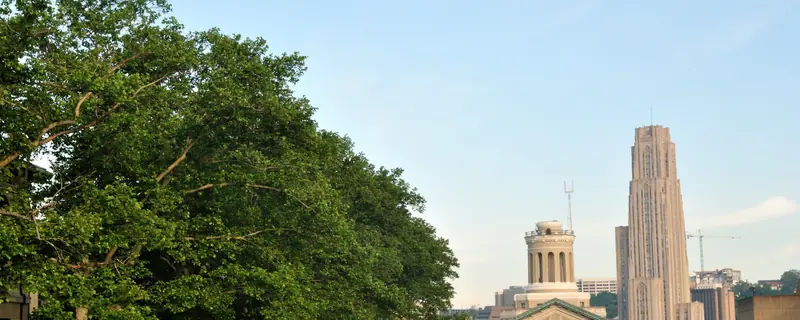 Carnegie Mellon UniversityComputer Science · Pittsburgh · 234 mi · $268,121 annual earnings 4 years after graduation, a median across 121 graduates$3.07M
Campus photograph: Carnegie Mellon University by Asamudra (CC BY 3.0)
Harder to get into than this college, by the same measure
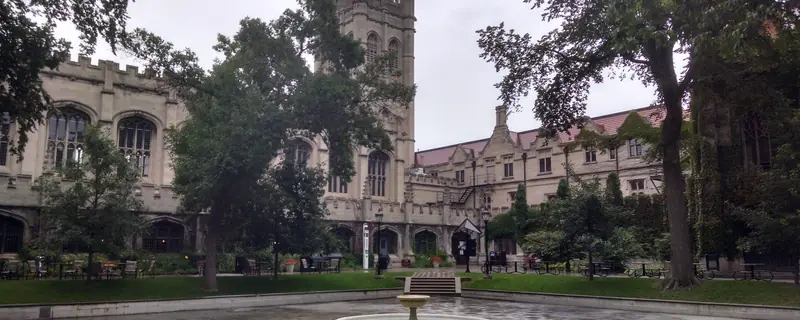 University of ChicagoComputer Science · Chicago · 201 mi · $178,068 annual earnings 4 years after graduation, a median across 32 graduatesadmits 4%$1.89M
Campus photograph: University of Chicago by Ndshankar (CC BY-SA 4.0)
Holding the subject fixed and changing the college, for this college’s three strongest programs. The list above compares whole colleges at their best; this one answers the narrower question a student who already knows their subject is actually asking.
Carnegie Mellon UniversityPittsburgh · 234 mi · $187,437 annual earnings 4 years after graduation, a median across 43 graduates$1.94MCampus photograph: Carnegie Mellon University by Asamudra (CC BY 3.0)
Carnegie Mellon UniversityPittsburgh · 234 mi · $160,783 annual earnings 4 years after graduation, a median across 119 graduates$1.57MCampus photograph: Carnegie Mellon University by Asamudra (CC BY 3.0)
Measured from federal filings, not from a survey. Each figure is compared against four-year colleges, because medians differ too much between sectors for a national comparison to describe anything but the sector.
Students and recent alumni of University of Michigan-Ann Arbor, in their own words, on Reddit. Every quotation links to the thread it came from.
Respectfully, UM Public Relations needs to stop worrying about what euphemism they use for “data center”: Ypsi knows damn well what it is, and sees perfectly clearly that you chose to drop it in their backyard instead of your own.r/uofm
I had two years from LCC with a 3.95 GPA, transferred to MSU and got a 4.0 for one semester then got accepted to LSA at UMich Ann Arbor.r/uofm
100% moving towards a participation award. You’re an adult now. Accept failure and learn from your mistakes. Also, further degrades the value of your own degree.r/uofm
Since graduating from the University of Michigan, it has come up in every job interview I’ve had. Employers were always impressed by the school, and it often helped me get the job.r/uofm
Current Data Science senior here - There isn't a better school in the world to provide someone with the optimal college experience. No one does academics, sports, social, and alum network better than U of M.r/uofm
I think umich makes it really easy to become a part of a program/project (at least from the engineering perspective) with little to no experience, and the environments are incredibly supportive.r/uofm
Really like the college town vibe. I went to a commuter school and the campus at my old school was pretty dead apart from the people I saw coming and going from classes.r/uofm
U-M is designed to be integrated into the city, so you don’t quite know where the school begins and where it ends.r/uofm
I love that U-M has so many student organizations! I really enjoyed going to Fesitfall when I was a student here and checking out what kind of student orgs we had.r/uofm
The program here gives you many opportunities to join clubs, make connections, and find internships that will actually benefit your career. One big benefit U-M has that other universities don’t is its massive alumni network, which personally helped me a lot when looking for internships.r/uofm
These are not unreasonable outcomes for a umich student/grad, and have been done many many times.r/uofm
not a single one of the FIVE CLASSES I am enrolled in have published their fucking Canvas site or sent out any form of communication.r/uofm
it was not communicated to me before that transferring my credits would effect my financial aidr/uofm
once you find one you basically decide between being far from campus, paying an egregious amount in rent, or just living somewhere shitty.r/uofm
If you care about your time, mental stability, and or fairness do not take this class.r/uofm
i hate the town and the people, just the lack of resources and competitiveness, the outrageous rent prices, the hidden fees, i just don't feel comfortable especially because it's a pwir/uofm
Genuinely don’t know what to do because I can’t afford a 16k increase in tuition.r/uofm
Compare University of Michigan-Ann Arbor with another college · up to four side by side, on return and on what each place is like.
Share of the 7,278 students who entered as first-year undergraduates in 2024. The states shown are the three largest outside Michigan, so these do not add to 100%.
Total gain after 20 years is what a graduate is ahead at that point: what the degree pays above a high-school graduate in the same state, less four years of net price and the wages given up while studying, weighted by the share of students who finish. At this college that share is 93%, and it is the same for every program on this page because the federal data reports completion for the institution rather than for individual programs. Four-year and open-admission colleges are ranked separately and never pooled.
Annual earnings 4 years after graduation is the median earnings of that program’s graduates at that point, for students who received federal aid, and is published by program. There is no program-level cost anywhere in the federal data, so net price is the college’s figure applied to each program alike. That is sound for ordering programs against one another and should not be read as a precise figure for any one of them.
Cost on this page is always net price, never the published sticker price. Net price is the college’s full cost of attendance for a year, meaning tuition, required fees, books and supplies, and housing and food, with grant and scholarship aid from federal, state and institutional sources subtracted. Loans are not subtracted, because a loan is not a discount. It is an average for first-time full-time undergraduates receiving federal aid, reported by the college in the income bands shown, so it describes a typical family in that band rather than any particular one. A student living at home, paying out-of-state rates or holding an outside scholarship will not see this figure.
Federal loan debt comes from the College Scorecard and is a median among students who borrowed, not an average across everyone. A college where few students take loans can show a high figure and a small bill for most families, so the share who borrow is printed above it and neither should be read without the other. It counts federal student loans only: private loans and Parent PLUS borrowing are not in it and are not published anywhere comparable, which makes this a floor on what a family owes rather than a total. The figure for students who leave without finishing is the same loans without the degree they were taken for. Default rates are deliberately absent: federal repayment was suspended, so the published three-year rate is zero at almost every college in the country and says nothing about any of them.
Most-awarded programs are degrees conferred in AY2025, first majors only, so a double major counts once. Where two programs are within a few degrees of each other the order between them is not meaningful.
Quotations from students were found by a language model searching Reddit, and selected from threads discussing this college in the window shown beside them. Reddit only, so this is not a survey and not a representative sample: who posts and how much varies enormously by the size and type of a college, and for that reason nothing there is scored, totalled or compared between colleges. Post dates are the model’s own reckoning rather than a retrieved field, so treat them as inside the window and not as exact. Each quotation links to its thread.
What this college is like compares each measure against four-year colleges, because medians differ too much between sectors for a national comparison to describe anything but the sector. A position of “higher than 90%” means the college matches or beats nine in ten of them on that measure, which is why the measured figure is printed beside it. Six of those measures have a better end and carry a mark; the rest are positions with no better end and carry none. There is no overall score, because combining them would need weights and the weights would be our opinion rather than a measurement.
Sources. IPEDS, the Department of Education’s annual survey, except where stated. Each block in the column beside shows its own year, because the underlying files are released on different schedules and a single date across all of them would be false. Published tuition is a sticker price and is never used as a cost; net price is. Test scores are the middle 50% of enrolled students who submitted a score, not of admitted applicants, which is why they differ from the figures other guides print. Where a US News rank is shown it is the current edition, published as a fact about the college rather than an endorsement of the ranking.
The photograph at the top of this page was taken by a member of the public and published under a license that permits reuse with credit. It is not supplied by the college, is not endorsed by it, and shows one building on one day rather than the campus as a whole. We do not generate campus images or buy stock photographs of real places, because a picture of a campus that is not that campus is a lie about somewhere real. Full credit: “Law Quadrangle, University of Michigan, University Avenue and State Street, Ann Arbor, MI - 54381402138.jpg”, w_lemay, via Wikimedia Commons. CC BY-SA 2.0. Source: https://commons.wikimedia.org/wiki/File:Law_Quadrangle,_University_of_Michigan,_University_Avenue_and_State_Street,_Ann_Arbor,_MI_-_54381402138.jpg. License/status: https://creativecommons.org/licenses/by-sa/2.0/.